

What is Climate?
| Do not confuse Climate and Weather. While weather describes the short-term atmospheric conditions, climate encompasses the long-term patterns and averages of weather in a specific region. It's crucial to differentiate between the two when discussing topics related to Earth's atmosphere and environmental changes.
| |
Climate ZonesClimate zone classifications are derived from the Köppen-Geiger climate classification system, which divides climates into five main climate groups divided based on seasonal precipitation and temperature patterns. The five main groups are: A (tropical), B (dry), C (temperate), D (continental), and E (polar). All climates except for those in the E group are assigned a seasonal precipitation sub-group (second letter). | For RoM islands, the climate zones are all tropical:
where Af signifies Tropical Rain forest and Am signifies Tropical Monsoon Climate. | |
What is Climate Change?It is difficult to talk about climate without mentioning the current climate change caused by human activities. Climate change, as per the United Nations Framework Convention on Climate Change, (UNFCCC), refers to a change in the state of climate that alters the composition of the global atmosphere and that is in addition to natural climate variability observed over comparable time periods. Climate change stems from changing the natural climate balance. This natural climate balance is the permanent interaction between the atmosphere (thin gas envelope composed mainly of nitrogen at 78% and oxygen at 21%), continents, oceans and ice. The relationships between these sets generate many physical, chemical and biological processes and influence temperatures, winds and precipitation. This climate complex is regulated by greenhouse gases (GHGs), which are present in small quantities in our atmosphere, they form a “barrier” around the Earth, and make it possible to retain the earth's heat emitted by the Sun. They allow an average temperature of 14 °C and for life to develop, and without them the temperature on Earth would be -18 °C. However, since the end of the 20th century, greenhouse gases have increased considerably as a result of human intervention. This increase in greenhouse gases is leading to global warming. | 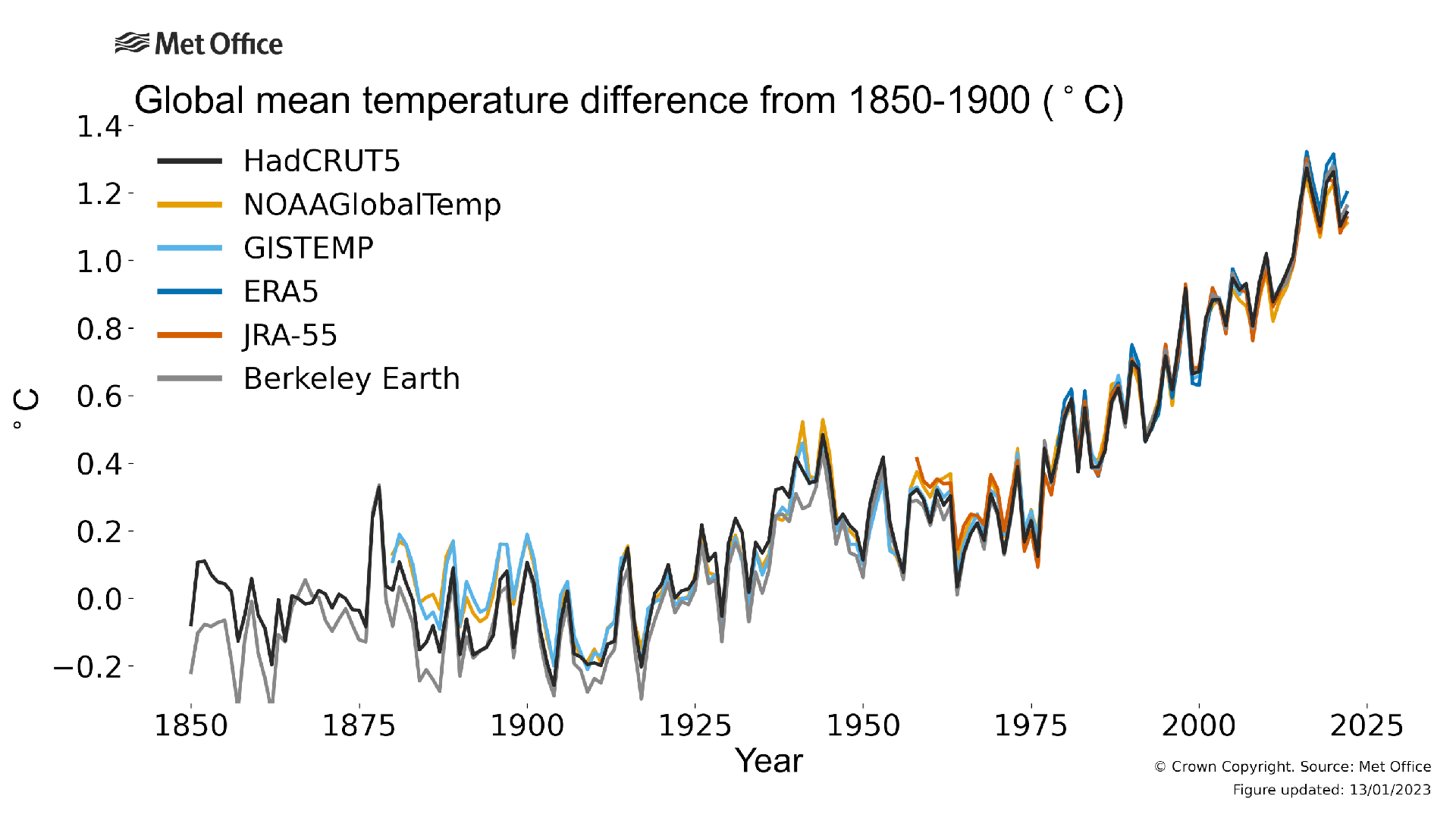 (source: UK Met Office, Accessed 19/09/2024) Since the 1850s, average global temperatures have increased by over 1°C. The years 2015 through 2020 rank as the warmest on record, underscoring a significant warming trend that began with the Industrial Revolution. As climate change progresses, many regions around the world may become increasingly difficult to inhabit. This could force people to leave their homes. While climate is just one of several factors influencing human migration, its impact is expected to grow in the future. | |
Understanding the Greenhouse Effect and Its Role in Climate ChangeThe greenhouse effect is a natural process where greenhouse gases like carbon dioxide trap heat within the Earth's atmosphere. These gases act like a blanket, allowing sunlight to pass through to the Earth's surface while trapping outgoing infrared radiation. This warms the planet and is essential for sustaining life by keeping temperatures at a livable level. However, human activities have intensified this effect by adding more greenhouse gases to the atmosphere, making the blanket thicker and trapping more heat. This enhanced greenhouse effect is causing the Earth to heat up, contributing to climate change.
Sources of Greenhouse GasesGreenhouse gases originate from various natural and human-made sources: Burning of Fossil Fuels: The combustion of coal, oil, and natural gas for energy and transportation is the primary source of carbon dioxide and a significant source of nitrous oxide. Agriculture: Practices such as rice cultivation, livestock raising (which produces methane through enteric fermentation), and the use of nitrogen-based fertilizers (which emit nitrous oxide) contribute substantially to greenhouse gas emissions. Deforestation: The removal of forests, particularly through burning, releases carbon dioxide stored in trees and reduces the planet's capacity to absorb existing carbon dioxide. Industrial Processes: Certain industrial activities emit various greenhouse gases, such as the production of cement, which releases carbon dioxide, and the use of refrigerants, which release fluorinated gases. Waste Management: Landfills produce methane as organic waste decomposes anaerobically. Additionally, wastewater treatment can also emit methane and nitrous oxide. Water Vapour: While not directly emitted through human activities, water vapour is the most abundant greenhouse gas and plays a critical role in the climate system. As the Earth’s surface warms, more water evaporates, increasing atmospheric water vapour, which in turn traps more heat and enhances the greenhouse effect in a positive feedback loop. These sources combine to increase the concentration of greenhouse gases in the atmosphere, intensifying the greenhouse effect and contributing to global warming. | 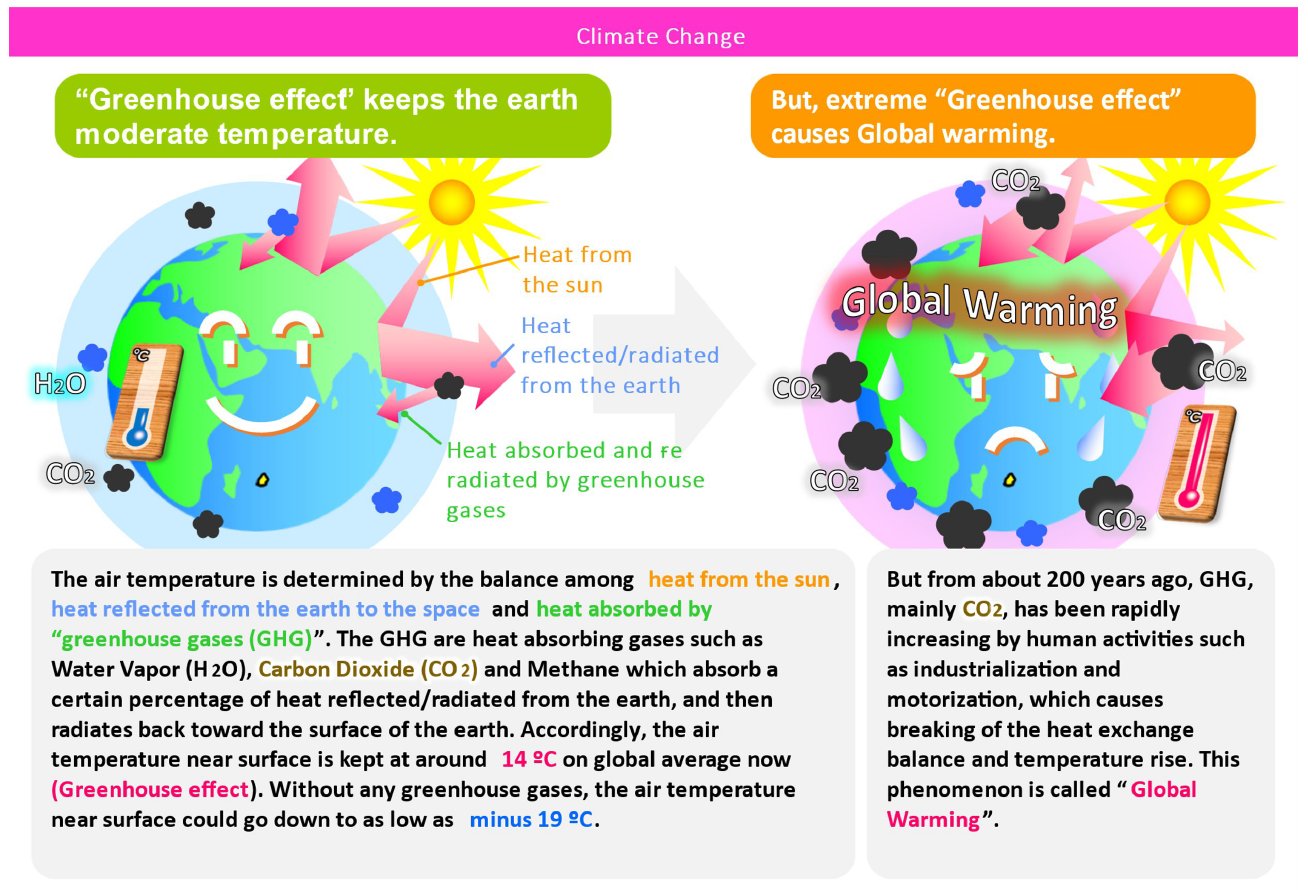
| |
Key Impacts of Climate ChangeHuman activities, including the emission of greenhouse gases and aerosols along with changes in land use, are the main catalysts of climate change. This phenomenon has profound impacts on climate systems, ecosystems, and human communities globally, leading to changes that threaten the balance necessary for both natural environments and human societies to thrive. | ||
Impacts on the Climate SystemRising Ocean Levels: Melting glaciers and ice sheets, exacerbated by rising global temperatures, cause seawater to expand thermally, leading to higher ocean levels that threaten coastal regions worldwide. | Impacts from Natural DisastersIncreased Frequency and Severity: Climate change contributes to the increased frequency and intensity of natural disasters like cyclones, hurricanes, and floods. These events lead to significant immediate and long-term economic impacts due to damages and the costs associated with recovery and reconstruction. | |
Impacts on EcosystemsOcean Acidification: The oceans' increased absorption of carbon dioxide results in greater acidity, negatively impacting marine life, often described as the 'evil twin' of climate change. | Impacts on Human CommunitiesExtreme Weather Events: The intensity and frequency of extreme conditions such as heatwaves, droughts, and severe storms disrupt lives and infrastructure. | |
Are Extremes becoming more frequent?Trends Observed
Implications
| 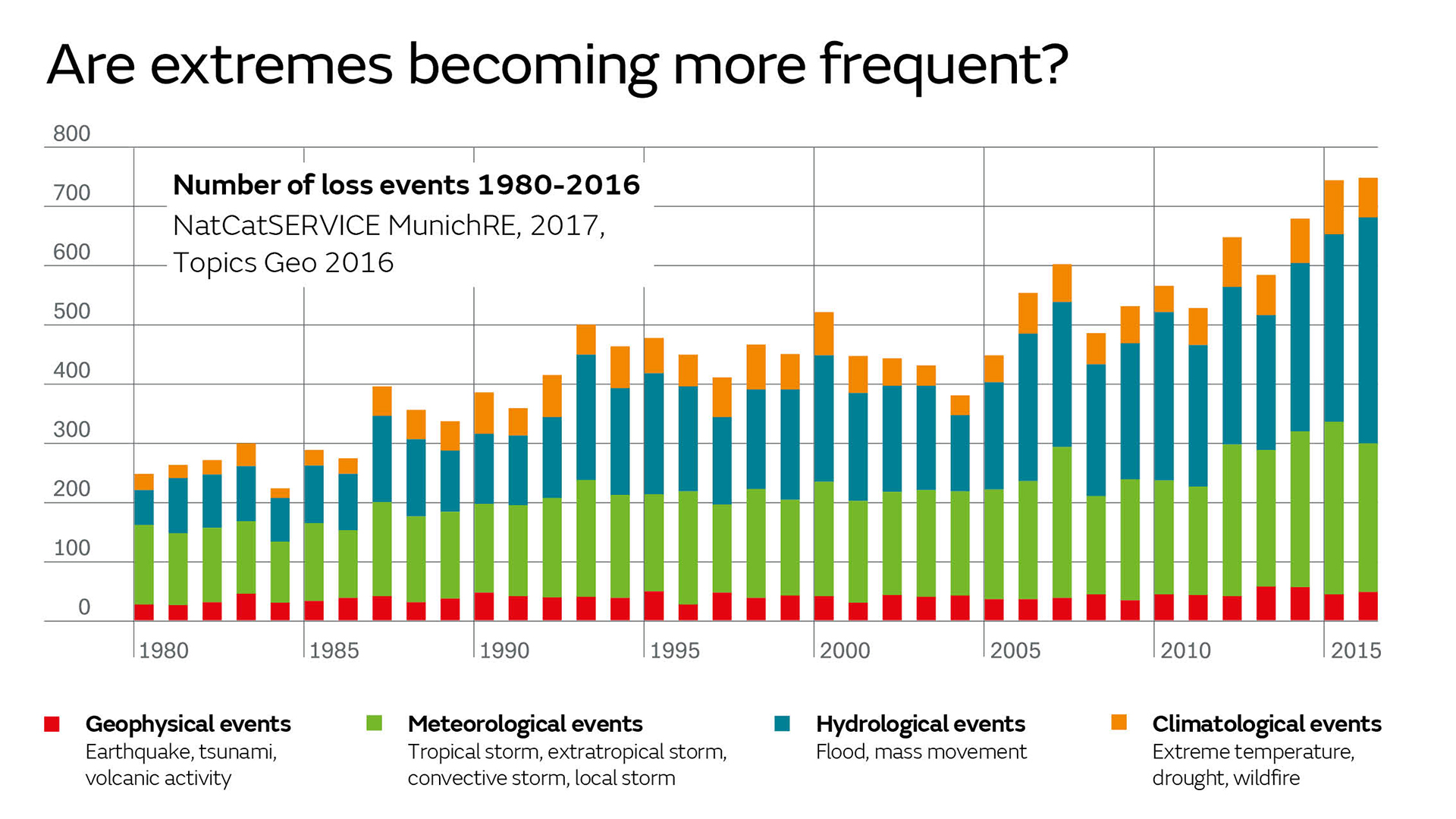 source: Munich RE's Topics Geo Natural Catastrophes report (This graph underscores the increasing frequency of climate-related natural disasters over time, highlighting the need for enhanced disaster preparedness and adaptation strategies to mitigate these risks.) | |
Addressing climate changeAddressing climate change requires a multifaceted approach that spans policy, technology, and individual actions. There are numerous approaches to achieve this, and governments, businesses, organizations, and individuals globally can all play a role:
| What is Net Zero?"Net zero" refers to achieving a balance between the amount of greenhouse gases emitted and the amount removed from the atmosphere. Essentially, net zero is reached when the activities within a country, sector, company, or individual produce net zero carbon emissions, meaning that any emissions are counterbalanced by absorbing an equivalent amount from the atmosphere. The key components of net zero: Reduction of Emissions: The first step toward net zero is to drastically reduce greenhouse gas emissions across all sectors, including energy, transportation, agriculture, and manufacturing. This involves transitioning to renewable energy sources, enhancing energy efficiency, and adopting cleaner technologies and practices. Carbon Removal: Any remaining emissions need to be neutralized through natural or technological solutions that remove carbon dioxide from the atmosphere. This can involve reforestation or afforestation projects, soil carbon sequestration practices, or technologies like direct air capture and carbon storage. Sustainable Development: Reaching net zero is not only about reducing emissions but also ensuring sustainable development that does not compromise the ability of future generations to meet their needs. Net zero targets are crucial for limiting global warming to well below 2 degrees Celsius, a goal of the Paris Agreement to mitigate climate change impacts. Countries, regions, cities, and companies around the world are setting net zero goals, aiming to achieve this balance by specific dates, typically around mid-century. | |
Adaptation and Resilience Strategies for SIDS
| ||