
Ocean Governance
Legal, Regulatory and Institutional Frameworks
Mauritius has developed a robust legal, regulatory, and institutional framework to manage and protect its coastal and marine environments, ensuring sustainable development and environmental stewardship through a combination of domestic legislation and international commitments.
1. Domestic Legal Framework:
- Environment Act: Enhances environmental stewardship and sustainable development, focusing on pollution control and conservation within coastal zones.
- Maritime Zones Act: Establishes Mauritius' jurisdiction over its Exclusive Economic Zone (EEZ), regulating the management of natural resources and maritime activities.
- Fisheries Act (2023): Aims to conserve and manage fisheries and marine ecosystems.
- Integrated Coastal Zone Management (ICZM) Framework (2010): Promotes sustainable development in coastal areas, optimizing long-term socioeconomic and environmental benefits.
2. Institutional Framework:
- Supported by the Ministry of Environment, Solid Waste Management, and Climate Change, which ensures the implementation of environmental policies.
- The Ministry of Blue Economy, Marine Resources, Fisheries, and Shipping focuses on the sustainable use of marine resources.
- Beach Authority Act and Prohibition of Drift Net Act manage and regulate activities affecting public beaches and fishing practices.
3. International Commitments:
- Mauritius is a signatory to several international agreements, including the Convention on Biological Diversity (1992), UN Convention on the Law of the Sea (1982), the Convention on Safety of Life at Sea (1974), the Nairobi Convention (1985) and the UN Framework Convention on Climate Change and others, which guide its environmental policies and practices.
4. Hydrographic and Coastal Management:
- The Ministry of Housing and Land Use Planning oversees hydrographic surveying and nautical charting, supported by the Mauritius Hydrographic Service, which was established in 2013 to provide essential data for marine spatial planning and safe navigation.
5. Blue Economy and Strategic Initiatives:
- The government has established frameworks like the Disaster Risk Reduction Strategic Framework and the National Climate Change Adaptation Policy Framework to mitigate climate change impacts and promote sustainable practices across the Blue Economy sectors.
These frameworks collectively help Mauritius manage its coastal and marine resources effectively, addressing both environmental protection and economic development needs.
Tourism Authority Regulations | ||
Flic en Flac - WolmarSpeed Limit for Pleasure CraftsTourism Authority (Flic en Flac and Wolmar Speed Limit for Pleasure Crafts) 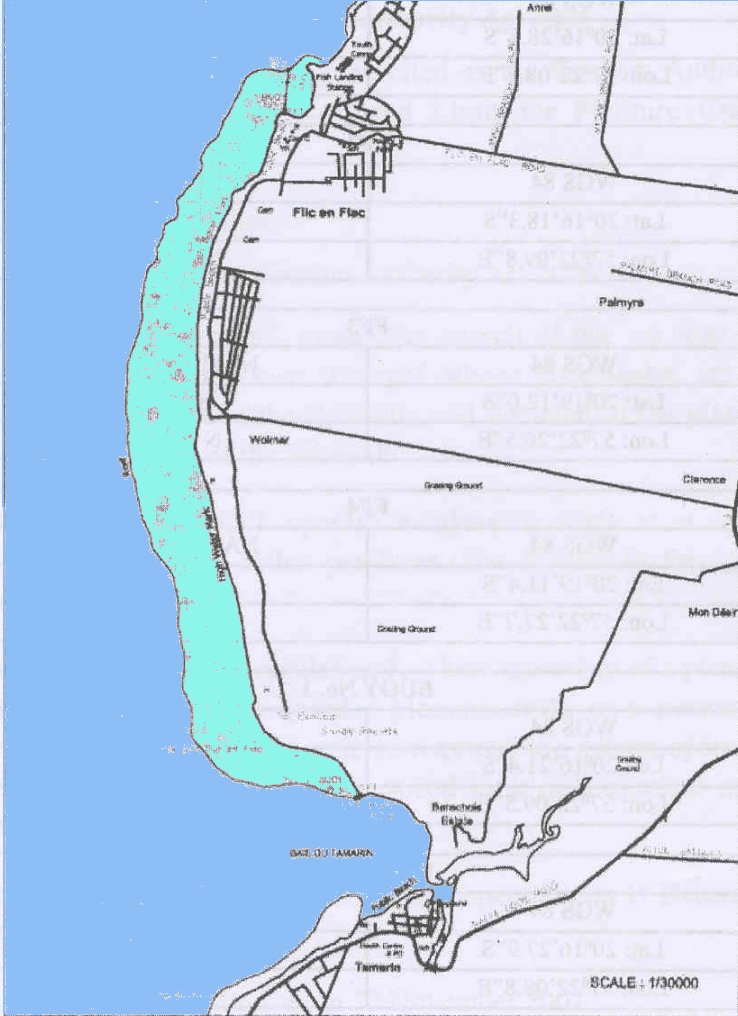 | Belle MareSnorkelling Zone and Speed Limit Zones for Pleasure CraftTourism Authority (Snorkelling Zone and Speed Limit Zones for Pleasure Craft) 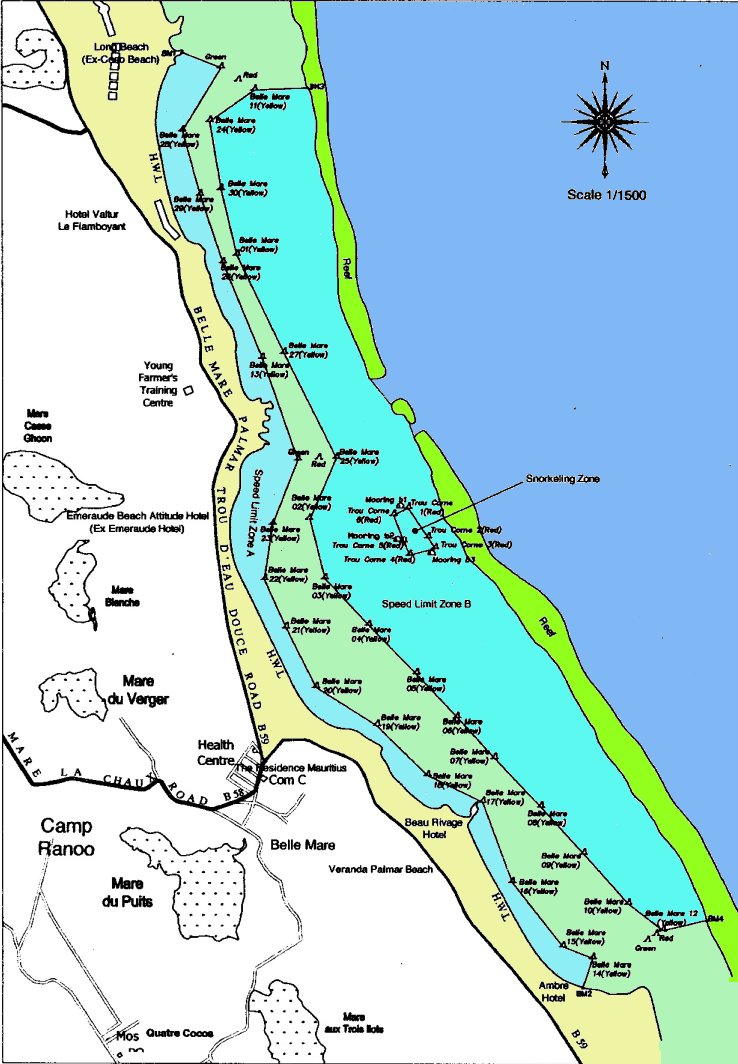 | |
Bel OmbreSpeed Limit Zone for Pleasure CraftTourism Authority (Speed Limit Zone for Pleasure Craft) (Bel Ombre) Regulations 2008 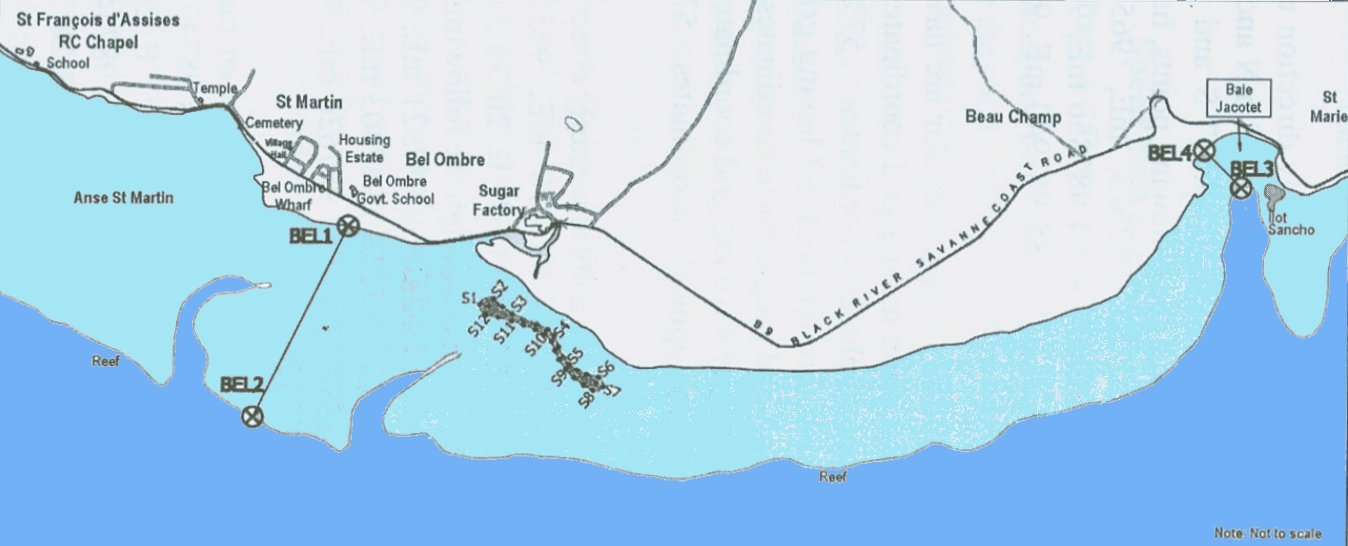 | ||
Trou d'Eau DouceSpeed Limit and Prohibited Activity Zone for Pleasure Craft | ||
Prohibited Activity Zone 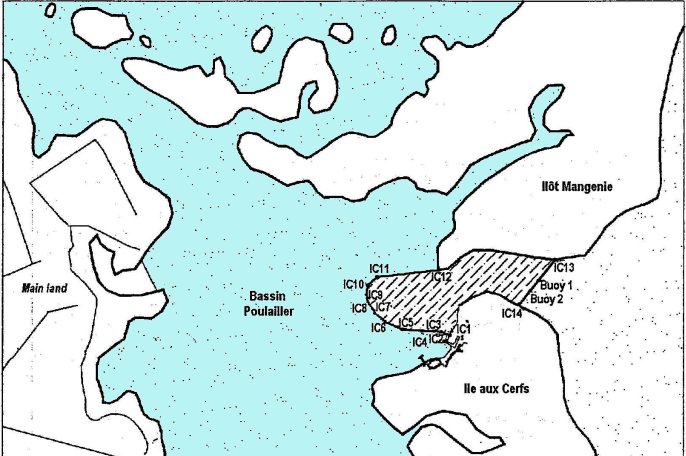
| Speed Zone Limit 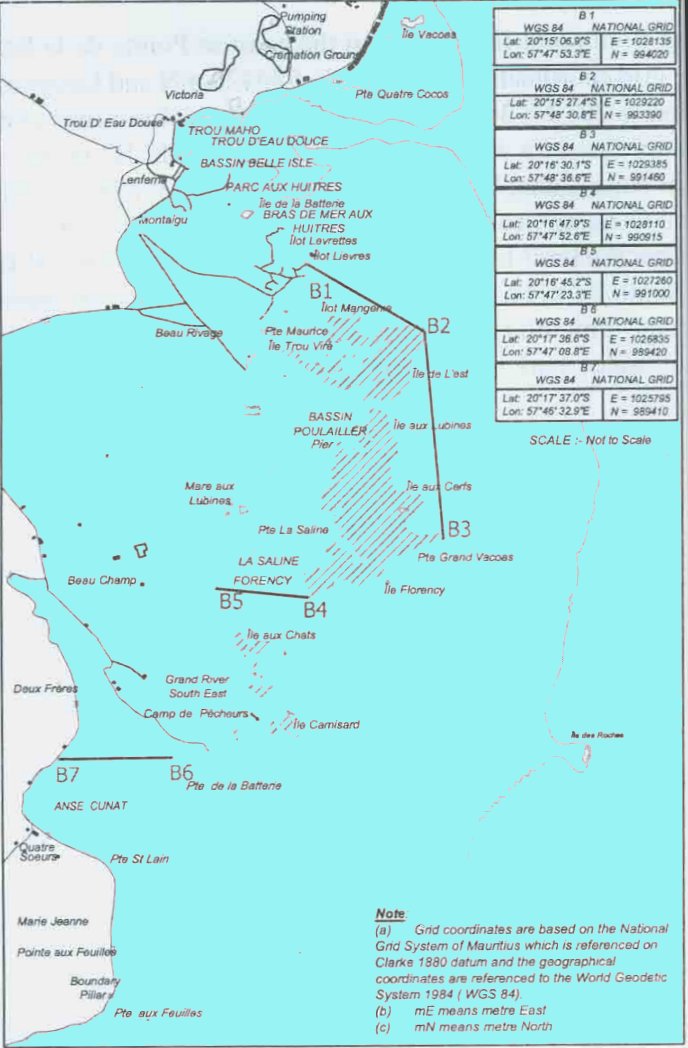 | |