
Mauritius and its outer islands, including Rodrigues, do experience periods of drought, although these are not as frequent or severe as other natural disasters like cyclones. Droughts in Mauritius typically arise from prolonged periods of below-average rainfall, particularly during the summer months when water demand is higher. The impact of droughts is primarily on water supply, agriculture, and overall water resource management.
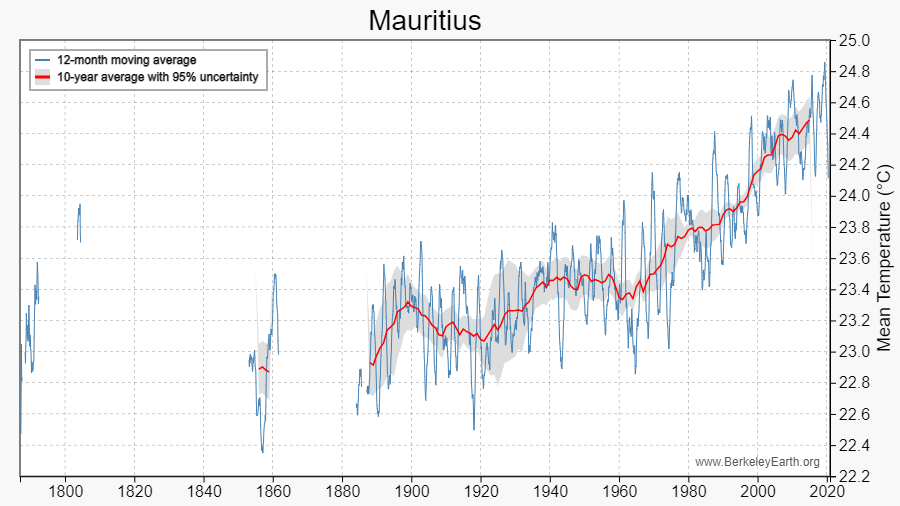
Climate change has increased the frequency of dry spells and droughts significantly. From 1990 to 2014, droughts accounted for 96.8% of the total economic losses reported across the nation. Particularly, Rodrigues experiences more extended periods of water scarcity than the main island of Mauritius.

Notable Drought Events in Mauritius:
- 1991 Drought: The year 1991 saw a severe drought affecting Mauritius, significantly impacting water reserves and leading to stringent water rationing. This drought highlighted vulnerabilities in the country's water management system and led to the implementation of early measures to improve water storage and conservation strategies.
- 1999 Drought: Late in the 1990s, another significant drought occurred, further straining the island's water resources. This drought caused the sugar cane sector to incur losses of $160 million compared to its revenue in 1998. The situation prompted further actions from the government to enhance water management, including initiating projects to increase water storage capacity and promoting water-saving techniques among the population.
- 2001-2002 Drought: This period witnessed significantly reduced rainfall, leading to one of the most severe water shortages in recent history. Water rationing was implemented in many parts of the island.
- 2005 Drought: Another year of insufficient rainfall, affecting agricultural production and leading to restrictions on water use.
- 2010-2011 Drought: Mauritius faced one of its worst droughts, with major reservoirs falling to critical levels, prompting the government to implement severe water rationing measures and emergency water management strategies. This water crisis also led to restrictions on water supplies for irrigation, resulting in shortages of locally consumed vegetables.
- 2016 Drought: Rodrigues particularly suffered during this drought, impacting livestock and crop yields significantly.
- 2019 Drought: Reduced rainfall levels during the usual rainy season led to prolonged dry conditions, affecting water supply across Mauritius.
Drought Management and Adaptation:
- Droughts in Mauritius and its outer islands are managed through a combination of preparedness, conservation, and infrastructural improvements (see below). These efforts are aimed at reducing the vulnerability of water resources to extended periods of dry weather and ensuring sustainable water supply for the population and the economy.
- Water Conservation Measures: The government often implements water rationing during drought periods and promotes water conservation practices among the public.
- Rainwater Harvesting: Encouragement of rainwater harvesting has been a critical measure to mitigate the impacts of reduced water availability during dry periods.
- Investment in Water Infrastructure: Mauritius has invested in enhancing its water infrastructure, including the construction of new reservoirs and the upgrading of water treatment plants to improve resilience against drought.
- Public Awareness Campaigns: These campaigns aim to educate the public about the importance of conserving water and the need to prepare for potential drought impacts.