

The Agriculture, Forestry, and Other Land Use (AFOLU) sector is a significant source of greenhouse gas emissions in Mauritius, with diverse activities contributing to the release of methane, nitrous oxide, and carbon dioxide.
Agriculture, Forestry, and Other Land Use (AFOLU) (IPCC Sector 3)
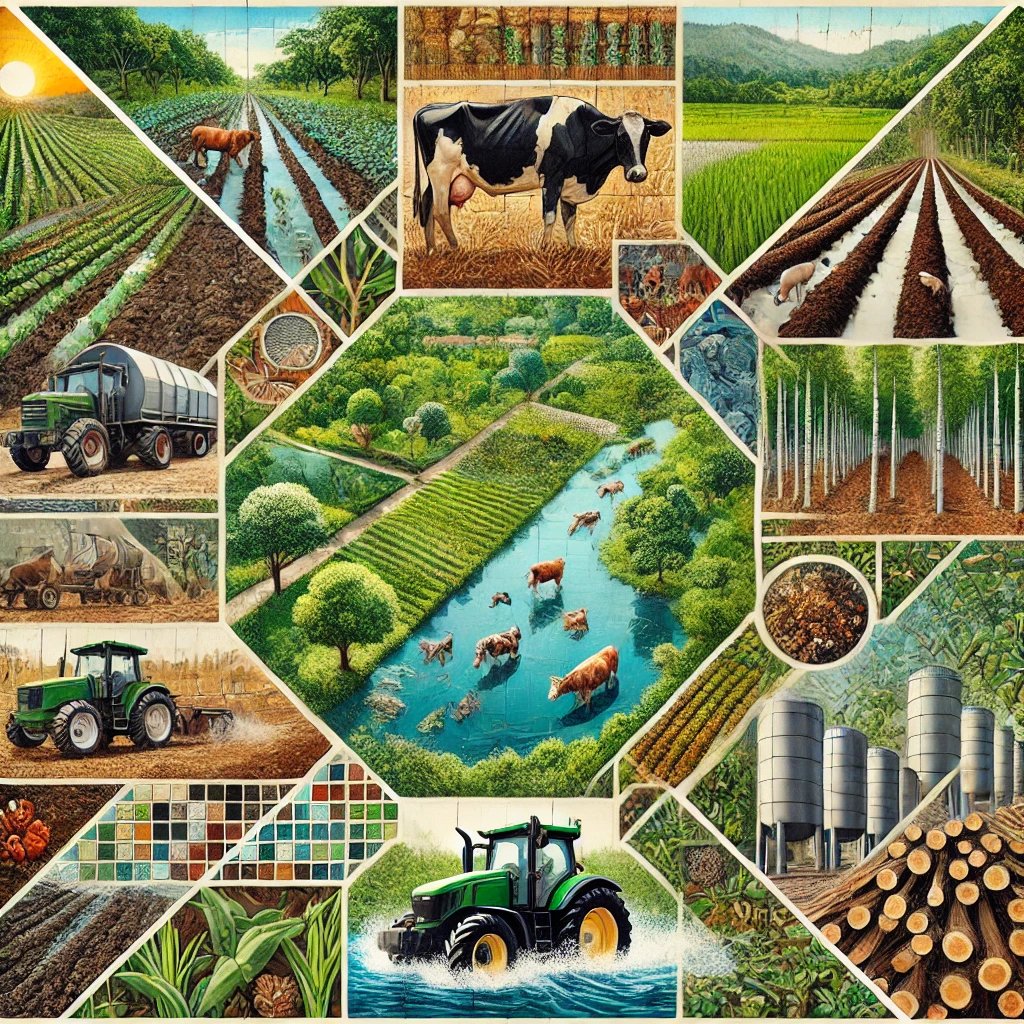 This sector deals with emissions from agricultural practices, land use changes, and forestry activities. | 3A - Livestock
3B - Land
3C - Aggregate Sources and Non-CO2 Emissions Sources on Land
3D - Other
|
Overview of Emissions from the AFOLU Sector | ||
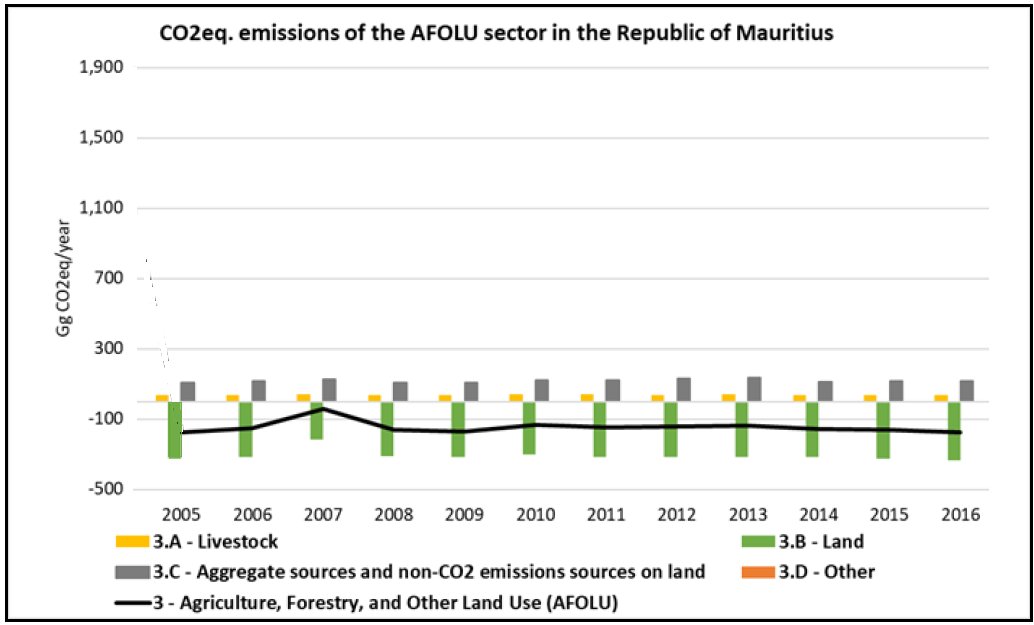
The AFOLU sector in the Republic of Mauritius functions as a net sink. This sector encompasses GHG emissions from agricultural activities, including methane (CH4) from enteric fermentation and both methane and nitrous oxide (N2O) from cattle manure management. Another significant source within the AFOLU sector is the aggregate sources and non-CO2 emissions on land (3.C), which includes emissions from biomass burning and both direct and indirect N2O emissions from managed soils and manure management. While harvested wood products (3.D.1) represent a smaller emissions category, the primary sink category is land use, particularly forest land (3.B.1), which contributes to the sector's overall net sink status in Mauritius. Agriculture contributes to greenhouse gas emission primarily through the emission and consumption of GHGs such as methane (CH4), nitrous oxide (N2O) and carbon dioxide (CO2). Methane emissions primarily arise from enteric fermentation in livestock, particularly cattle, as well as from manure management practices that result in anaerobic decomposition. Rice cultivation is another source of methane, especially in flooded fields where anaerobic conditions promote the production of this potent greenhouse gas. The application of synthetic and organic fertilizers on agricultural soils leads to nitrous oxide emissions, a greenhouse gas with a much higher global warming potential than carbon dioxide. Forestry and land use change are critical components of this sector, with deforestation and land degradation contributing to carbon dioxide emissions. When forests are cleared for agriculture or other land uses, the carbon stored in trees and soil is released into the atmosphere, exacerbating climate change. Conversely, forests, wetlands, and other natural ecosystems serve as carbon sinks, sequestering carbon dioxide from the atmosphere and playing a crucial role in mitigating emissions. Reforestation, afforestation, and sustainable land management practices are key strategies to enhance these carbon sinks and reduce emissions from land use change. The AFOLU sector's emissions and mitigation potential are closely tied to land management practices, making it a vital area for action in the broader context of climate change mitigation in Mauritius. This structured overview delineates the diverse sources of GHG emissions within agriculture and underscores its critical economic, social, and environmental roles in Mauritius, illustrating both challenges and contributions to sustainability.
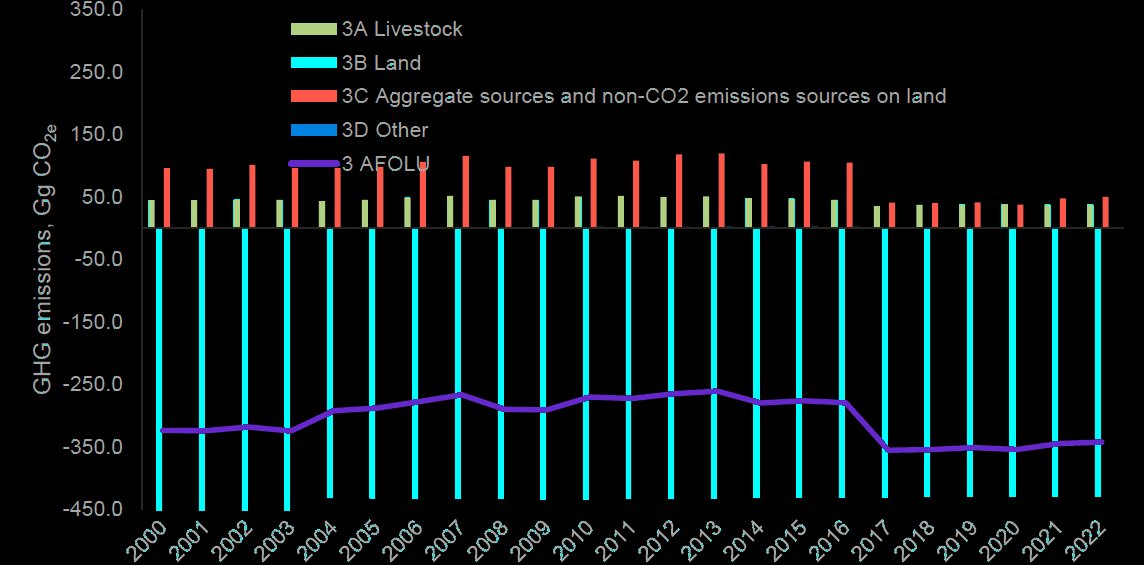
GHG emission trend of AFOLU sector of RoM from 2000 to 2022. source: BTR/NID 2024 The AFOLU sector in the Republic of Mauritius serves as a net sink. From 2000 to 2022, net removals (emissions minus removals) in Mauritius decreased by 5.5%. GHG emissions from agriculture (categories 3.A and 3.C) dropped by 37% over this period, from 140 Gg CO2e to 88 Gg CO2e. Similarly, GHG removals from Land Use, Land-Use Change, and Forestry (LULUCF), specifically categories 3.B and 3.D, fell by 7.4%. In 2022, the predominant category for removals was Forest Land (3.B.1), which accounted for -430 Gg CO2e. Emissions from livestock (3.A) also decreased by 16%, from 44.7 Gg CO2e in 2000 to 37.3 Gg CO2e in 2022. | ||
Sources of GHGs in Agriculture:Methane (CH4):
Nitrous Oxide (N2O):
Carbon Dioxide (CO2):
| Impact of Agriculture:Economic and Social Role:
Crops and Land Use:
Environmental Impact:
| |
AFOLU- Overall - Net Removals:CO2 Equivalents:
| ||
CO2eq. Emissions of the AFOLU Sector - Main Components
|  | |
SUB-COMPONENTS
3A 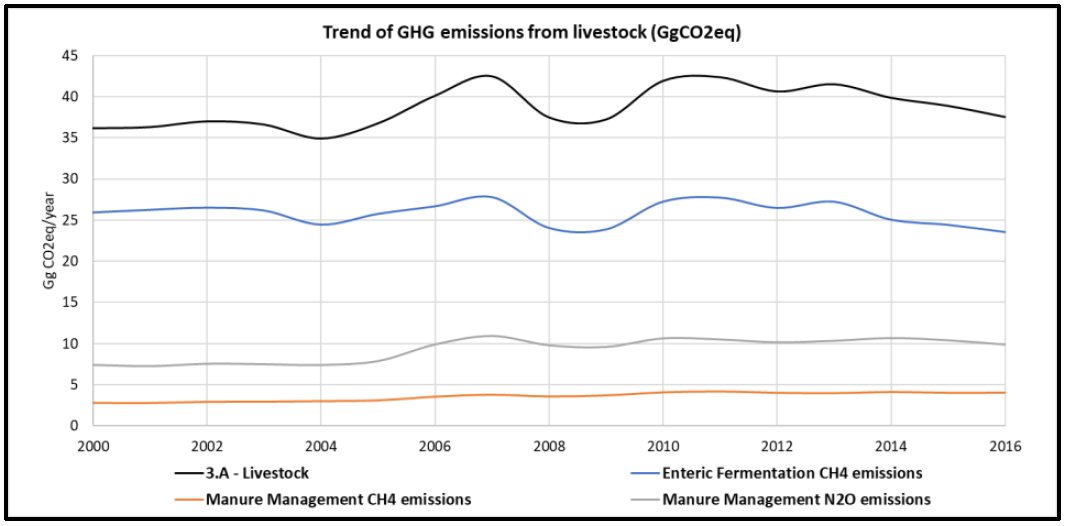 | 3A1 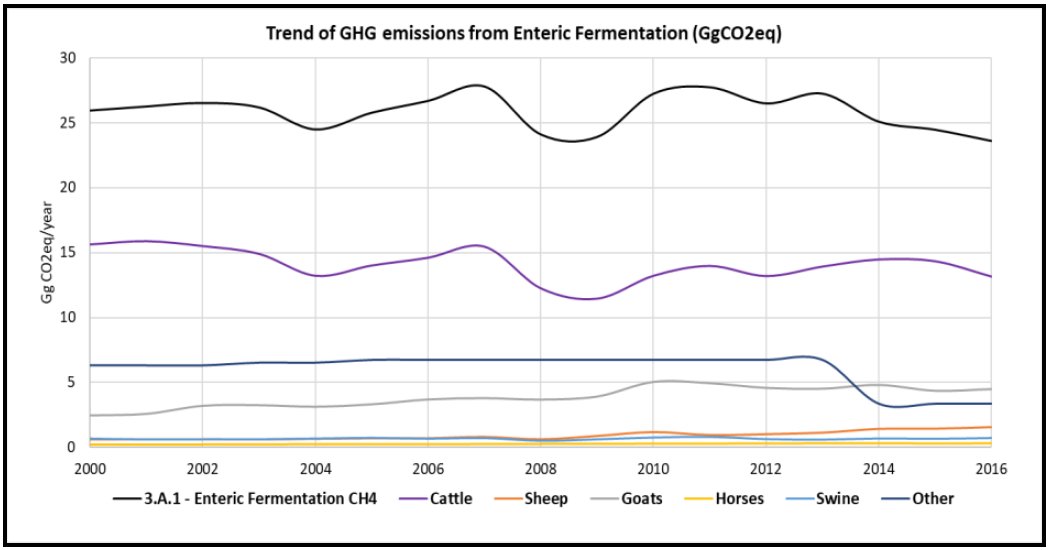 |
3A2-CH4 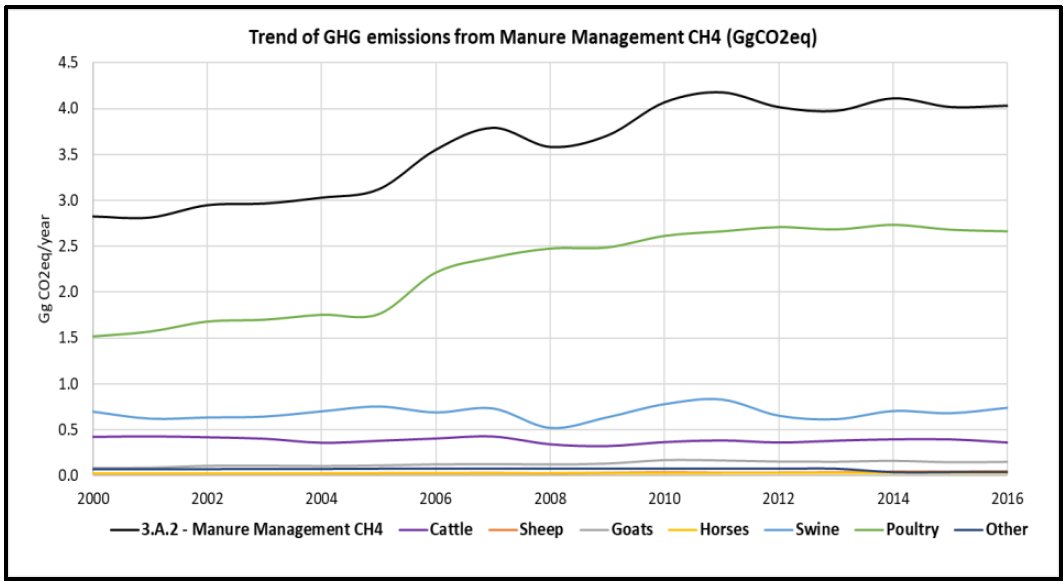 | 3A2-N2O 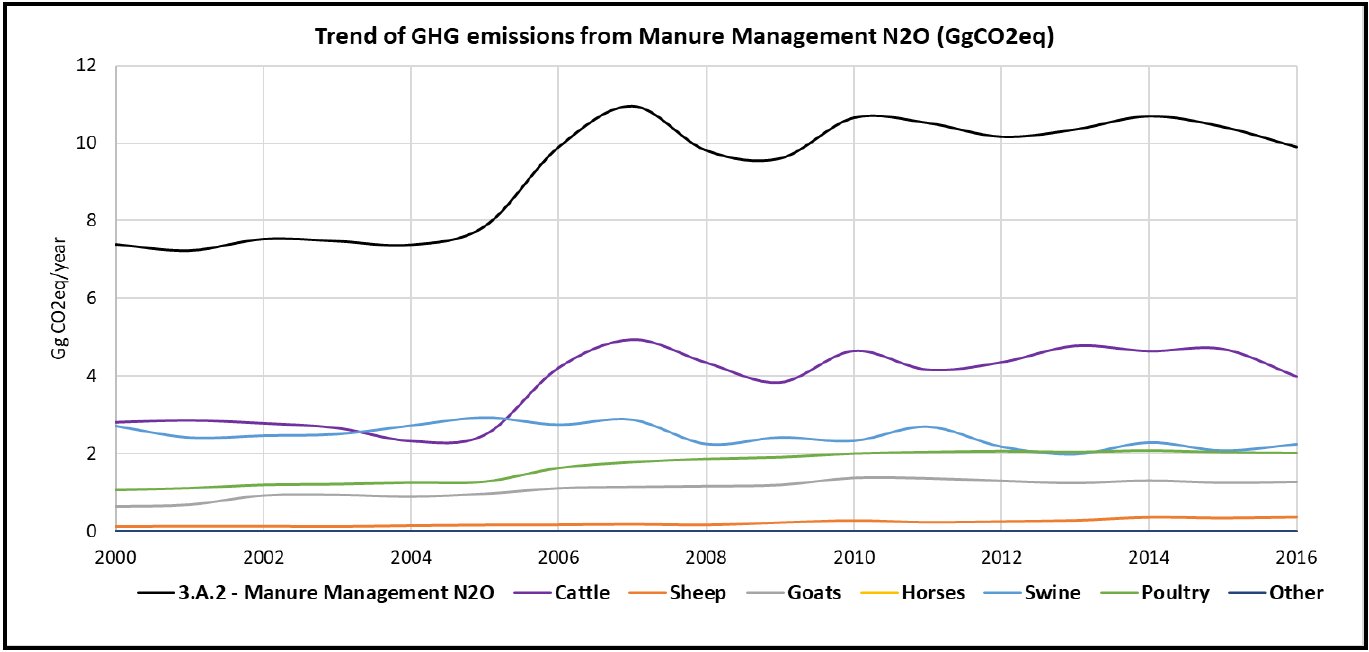 |
3B 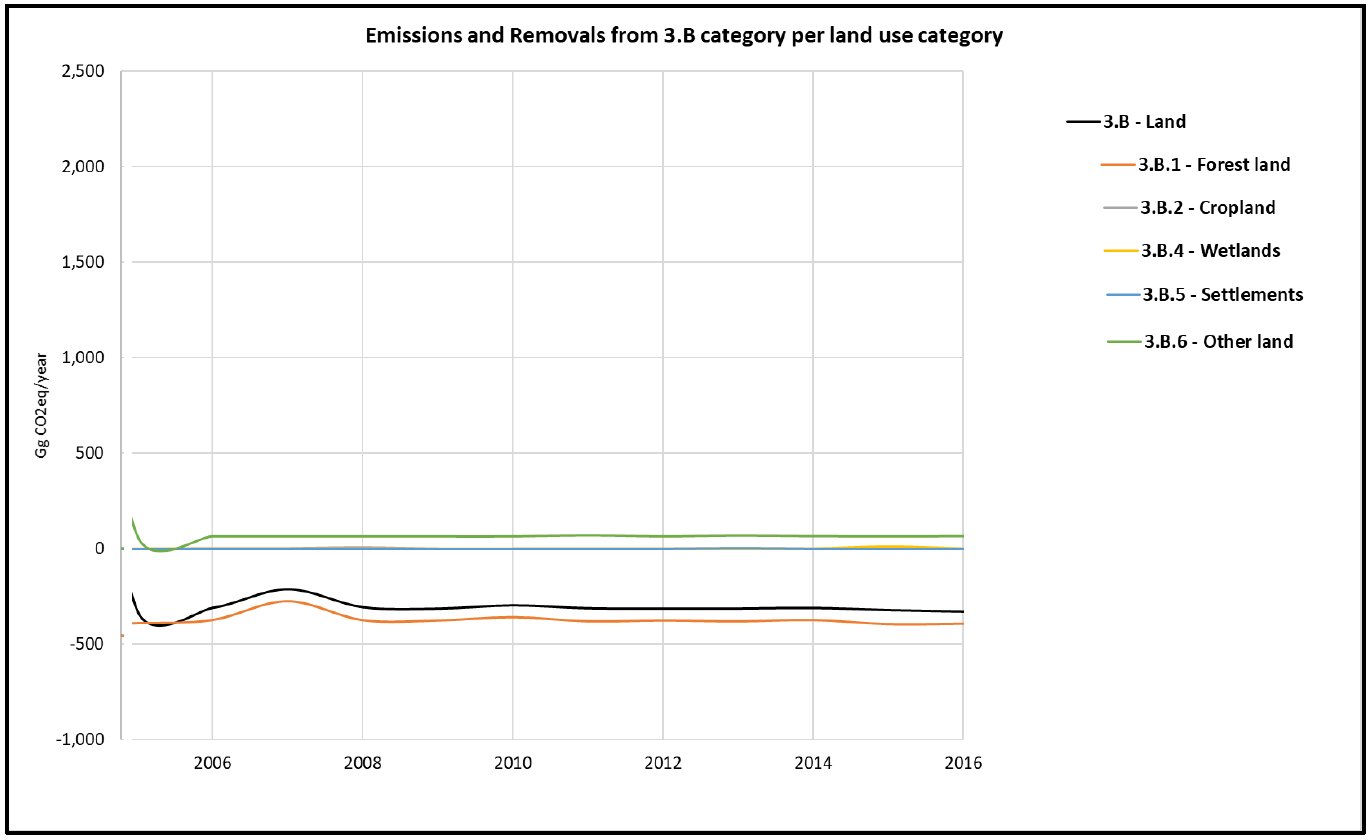 | 3C 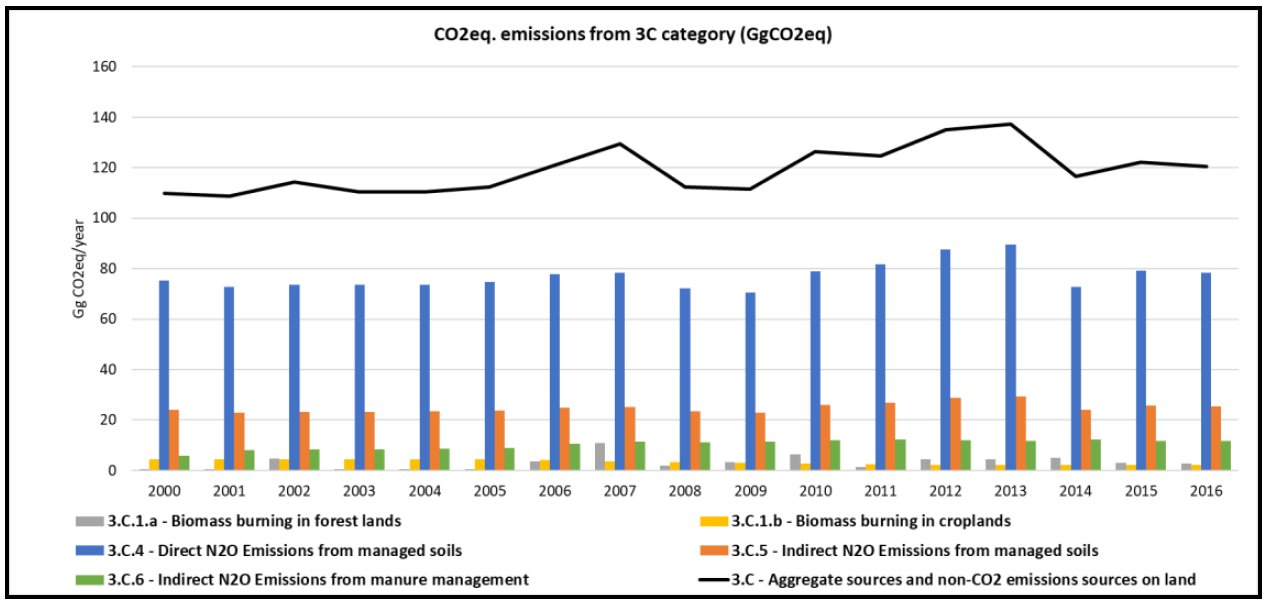 |
3d 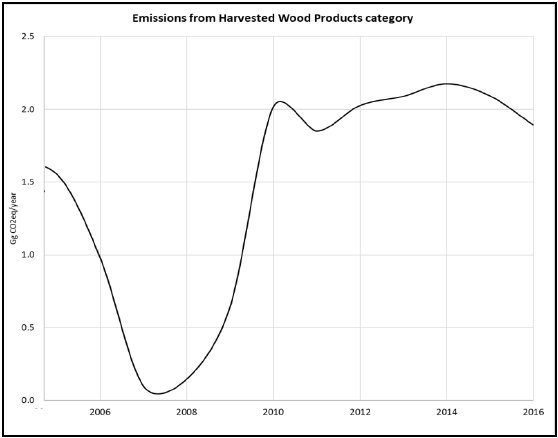 |