
Waste (IPCC Sector 4)
 This includes emissions from waste management practices such as solid waste disposal, wastewater treatment, and incineration. |
|
In the waste sector, GHG emissions are primarily estimated from solid waste disposal (4.A), which is the major emissions category. Subsectors like biological treatment of solid waste (4.B) and incineration (4.C), with energy-related waste incineration covered under the energy sector, also contribute significantly to emissions. Wastewater treatment and discharge (4.D), involving domestic, commercial, and industrial sources, typically represents the second largest source of emissions within this sector. The scope of waste covered in this sector aligns with the definitions provided in the 2006 IPCC Guidelines.
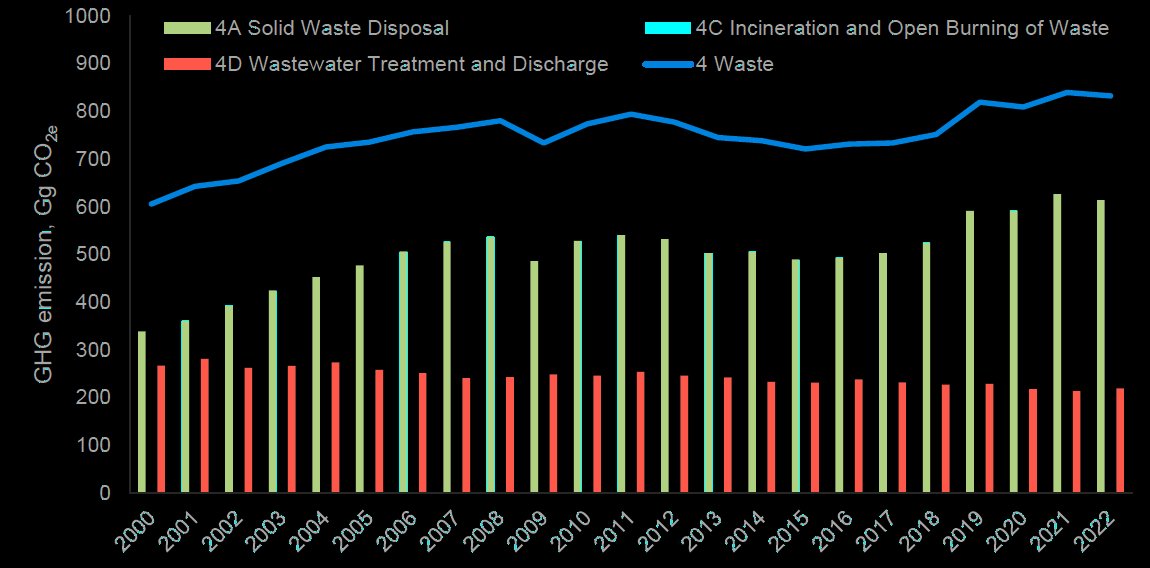
GHG emission trend of Waste sector of RoM from 2000 to 2022. source: BTR/NID 2024 The Waste sector in Mauritius is an important source of greenhouse gas emissions, primarily through the decomposition of organic materials in landfills, which generates methane, a potent greenhouse gas. Solid waste disposal sites, particularly those that manage municipal and industrial waste, are the main contributors to these emissions. As organic waste decomposes anaerobically in landfills, it produces methane, which can escape into the atmosphere if not properly managed through landfill gas capture systems. In addition to landfill emissions, the biological treatment of solid waste, including composting and anaerobic digestion, can also produce greenhouse gases, though these methods are generally considered more sustainable when managed correctly. Waste incineration, while reducing the volume of waste, emits carbon dioxide and other pollutants, depending on the composition of the waste being burned. Wastewater treatment and discharge is another critical component of the Waste sector, where methane and nitrous oxide emissions arise from the treatment processes used in sewage and industrial effluents. The efficiency and technology employed in wastewater treatment plants can significantly influence the level of emissions. Efforts to mitigate emissions from the Waste sector include improving waste management practices, increasing recycling rates, enhancing composting and anaerobic digestion technologies, and upgrading wastewater treatment facilities to reduce methane and nitrous oxide emissions. These strategies not only help in reducing the sector's greenhouse gas footprint but also contribute to broader environmental sustainability goals in Mauritius. GHG emissions from the Waste Sector in Mauritius increased by 37.4% from 2000 to 2022, rising from 605 GgCO2e to 832 GgCO2e. In 2022, the most significant source of emissions within this sector was the solid waste disposal category, accounting for 73.7% of the sector’s total emissions. The second major contributor was wastewater treatment and discharge, which represented 26.2% of the sector's emissions. However, emissions from this category decreased by 18%, from 266.4 GgCO2e in 2000 to 218 GgCO2e in 2022. From 2017 to 2022, there were no emissions from the biological treatment of solid waste due to non-operational equipment. Incineration accounted for only 0.01% of the waste sector's emissions in 2022. The GHG emission trends for Mauritius's waste sector from 2000 to 2022. | ||
CO2eq Emissions of the Waste sector - Main ComponentsThe graph illustrates greenhouse gas (GHG) emissions from the waste sector in Mauritius, as from 2000. Key Observations:
| 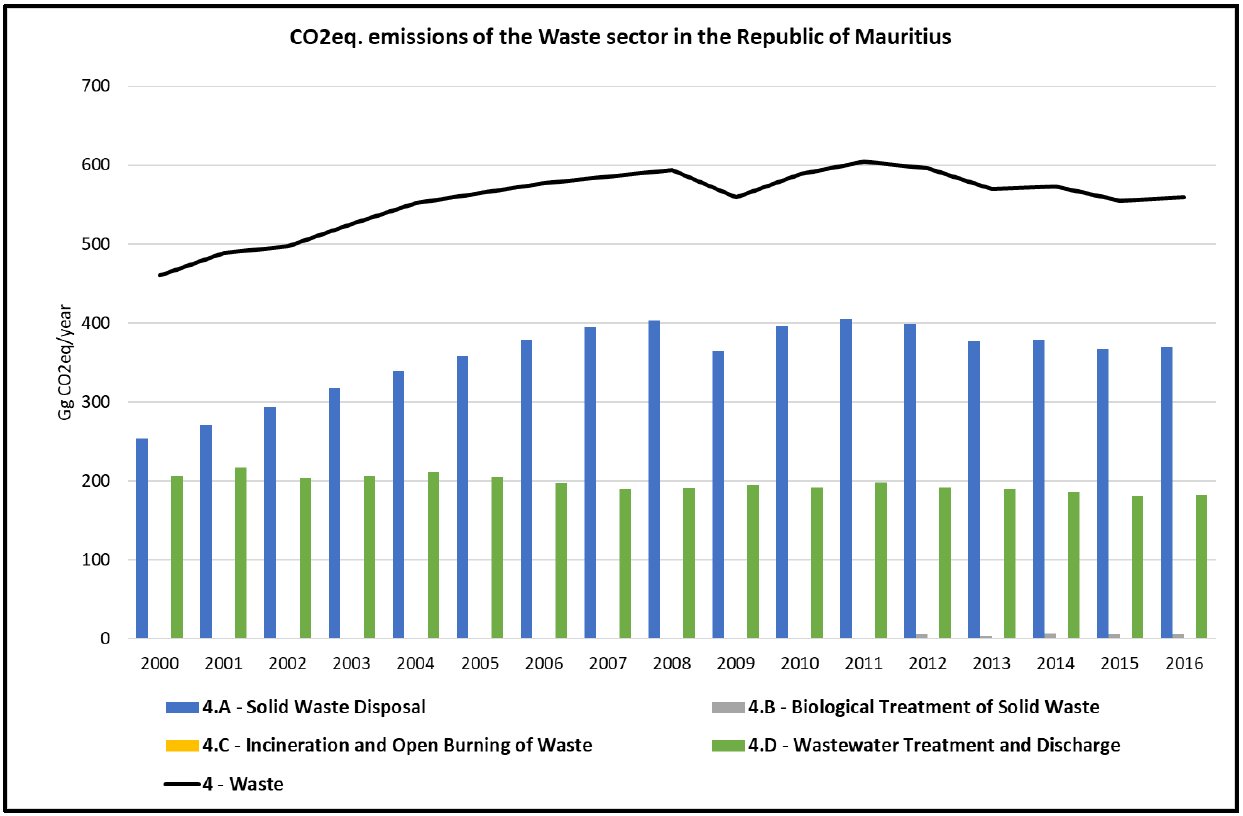 source: BUR1, 2021
| |
Source Description | ||
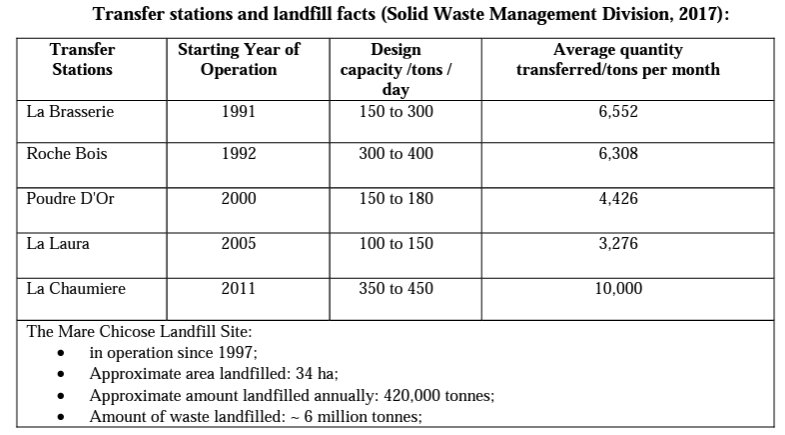
4A & 4B - Solid Waste sectorThe amount of solid wastes generated in Mauritius was over 425,000 tonnes in 2016. Most of the solid wastes are landfilled and a few of them have started to be composted as from 2012. LFG, produced in the landfill, are currently captured for electricity production. Recycling is carried out only at small scales.
|
Facts
| |
4C - Incineration and Open Burning of Waste | ||
4D - Liquid Waste sectorThe amount of liquid wastes generated in Mauritius is increasing and in 2015 the treated wastewater reached 49.37 million m3 (Statistics Mauritius 2016) with an annual growth of ~5.6%. In 2014, the Government investment was around MUR 15 billion in the wastewater sector for the construction of wastewater treatment plants, pumping stations, trunk and street sewers and reticulation networks. For the coming years, investment in respect of wastewater infrastructure is expected to be around MUR 5.4 billion (WMA 2017). | 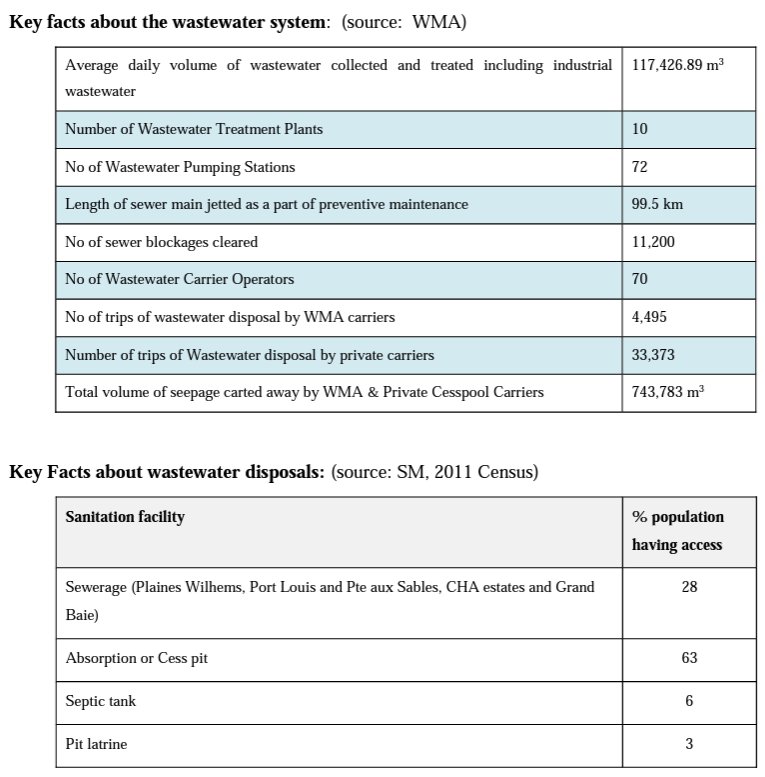 | |