Mauritius and its outer islands, including Rodrigues, Agalega, and the Cargados Carajos Shoals, are susceptible to high waves, particularly during the cyclone season from November to May. High waves are typically generated by strong winds associated with tropical cyclones, and occasionally by distant storm systems that do not necessarily impact the islands directly.
Warning System in Mauritius - Heavy swell warning
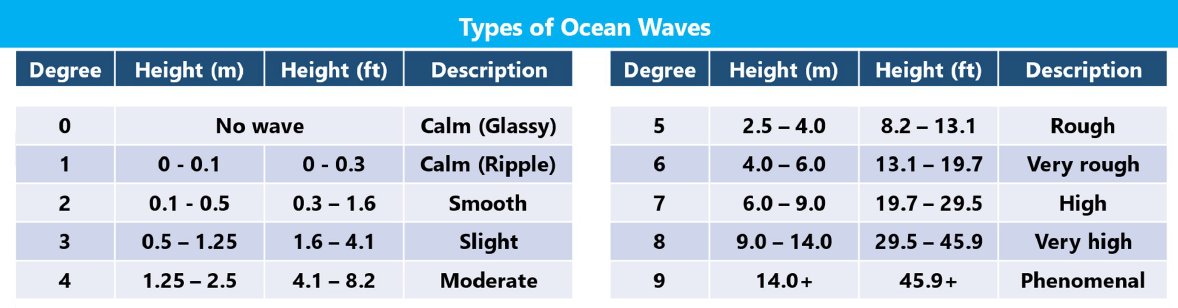
The Mauritius Meteorological Services issues a heavy swell warning, as far as practicable, about 12 hours in advance before swell waves of 4.0 metres or above are likely to affect the sea state in the vicinity of the Island of Mauritius, Rodrigues, Agaléga or St Brandon.
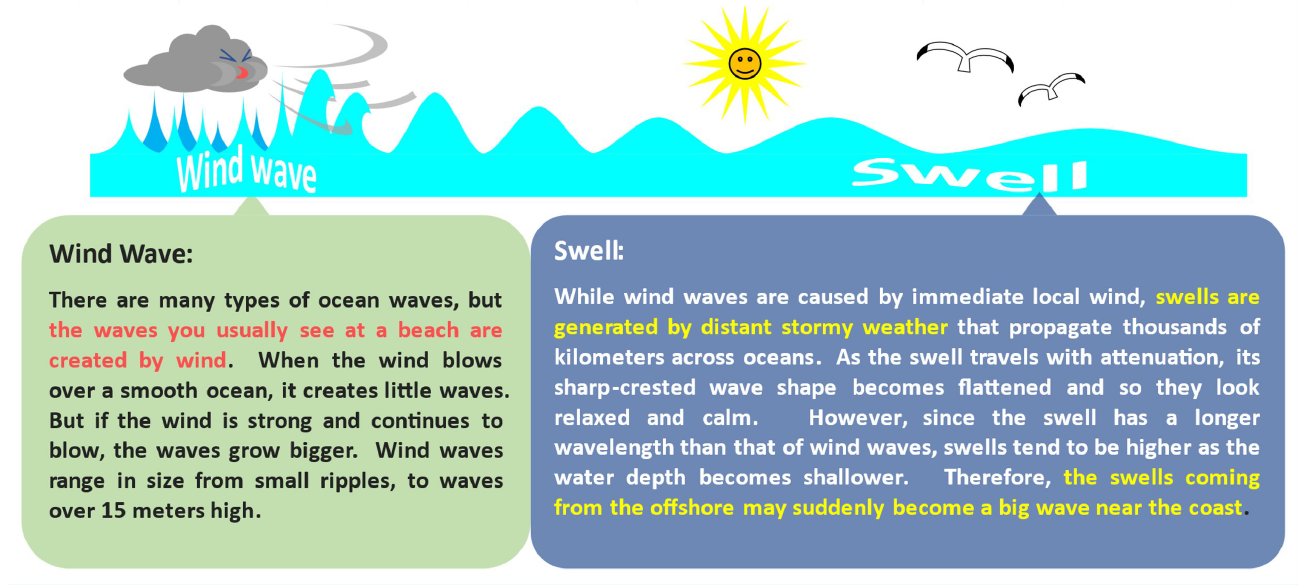
A Swell is an ocean wave system raised at some distance away due to winds blowing over that area and not raised by the local wind blowing at the time of observation. Swell waves travel from their source, usually out of a stormy or a fetch of windy area and continue on in the direction of the winds that originally formed them as sea waves. The swell may travel for thousands of miles before dying away. As the swell wave advances, its crest becomes flattened and rounded and its surface smooth. Swell waves are characterized by a relatively long and regular period. At all times swells may be present in a sea but the amplitude varies from time to time. The amplitude and impacts of the swells in a particular region will depend on: Amplitude of the swells at source: High amplitude swell at source is likely to be more energetic even distances far away from its source. State of Astronomical Tide: The amplitude of any swells in a particular location will be more significant during spring tide (which occurs during full moon or new moon). Phase of Astronomical Tide: The amplitude and impact any swell is further exacerbated by the tide phase (high or low tide). This is of particular importance in the lagoons, where during high tides, it can lead to significant bulge of water.
Notable Events Involving High Waves in Mauritius
Annual Cyclone Season: Each year, during the cyclone season, high waves are a common occurrence as cyclones pass within proximity of the islands, generating strong ocean swells.
Cyclone Hollanda (1994): This cyclone brought very high waves that caused significant coastal damage, including to boats and infrastructure along the coastlines of Mauritius.
Cyclone Dina (2002): Another powerful cyclone that generated large waves, leading to coastal erosion and damage to marine and coastal infrastructure.
Cyclone Berguitta (2018): While primarily known for its rainfall, Cyclone Berguitta also produced high sea swells that affected the coastal regions of Mauritius.
Cyclone Calvinia (2019-2020): This cyclone caused disruptions during the peak tourist season, with high waves leading to temporary closures of beaches and some waterfront areas.
Preparedness and Response
Coastal Management: Mauritius has implemented various coastal management practices to mitigate the impact of high waves, including seawalls, groynes, and other coastal defense structures.
Early Warning Systems: The Mauritius Meteorological Services provides forecasts and alerts about high waves, particularly during the cyclone season. These alerts are crucial for the safety of mariners and coastal communities.
Public Awareness and Safety Measures: Authorities regularly update the public on high wave alerts and often close beaches or restrict access to certain coastal areas during severe events to ensure public safety.
Adaptation and Resilience Building: Ongoing efforts to build resilience against high waves include the reinforcement of coastal infrastructure and promoting coastal revegetation projects to reduce erosion.
High waves are a recurrent challenge in Mauritius, particularly impacting coastal activities, marine operations, and coastal ecosystems. Effective monitoring, preparedness, and community engagement are key to managing the risks associated with high waves.