Mauritius’s agriculture sector, a vital economic pillar, faces significant impacts from climate change, environmental hazards, and non-environmental challenges. Historically dominated by sugarcane, which occupies much of the 48.3% (980 km²) of arable land, the sector has diversified into fruits, vegetables, and flowers, driven by government incentives. Consuming some two-thirds of the nation’s water, agriculture is constrained by limited land, an aging farmer population, and increasing climate variability, all of which threaten food security and economic stability. This section outlines the key impacts on the sector and strategies to mitigate them.
Climate and Environmental Impacts
The agriculture sector in Mauritius is highly vulnerable to climate change and environmental hazards, which disrupt crop yields, livestock health, and livelihoods, particularly given the island’s status as a small island developing state.
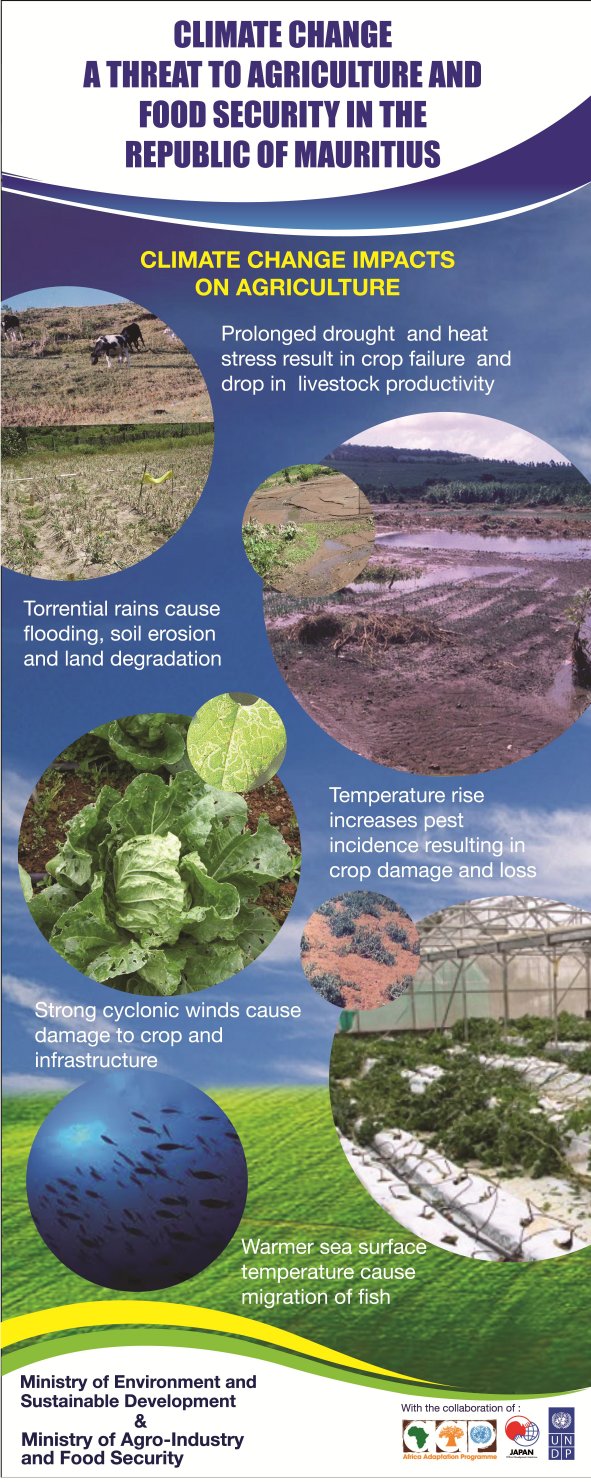
Rising Temperatures: A 0.74–1.1°C increase (1998–2008 vs. 1951–1960) disrupts crop growth cycles, shortens flowering periods, and induces heat stress, reducing yields by inhibiting photosynthesis and accelerating respiration.
Reduced Rainfall: An 8% decline in rainfall over 60 years (1998–2008 vs. 1951–1960) limits irrigation water, worsened by higher evapotranspiration rates, leading to water scarcity.
Sea Level Rise: Salinization of coastal farmlands and irrigation water degrades soil fertility, particularly in low-lying areas.
Pests and Diseases: Warmer, humid conditions increase pest and disease outbreaks, threatening crops and livestock. These effects are projected to reduce agricultural production by 25–30% by 2050, with crops like tomatoes facing yield declines of 8.2% short-term and 13.3% long-term due to a 1°C temperature rise and 10% precipitation drop (Jonsson, 2011).
Environmental and Non-Environmental Hazards
Sudden hazards exacerbate the sector’s challenges:
Cyclones and Floods: Intense cyclones and heavy rainfall cause flooding, soil erosion, and damage to infrastructure like greenhouses, leading to significant production losses.
Droughts: Prolonged dry periods reduce crop survival and water availability.
Supply Chain Disruptions: Economic fluctuations, policy changes, or global trade issues limit access to seeds, fertilizers, and markets, impacting profitability.
Technological Failures: Reliance on agricultural technology introduces risks of equipment or cyber disruptions, delaying critical farming operations. These impacts increase crop failure rates, reduce agricultural biodiversity, elevate food prices, and threaten food security, undermining the sector’s sustainability.
Mitigation and Adaptation Strategies
To counter these impacts, the Government of Mauritius is implementing sustainable practices to bolster food security, reduce environmental footprints, and enhance sectoral resilience.
Key strategies include:
Eco-Friendly Practices: Promoting organic farming and Fair Trade products to lower emissions and enhance carbon sequestration.
Climate-Smart Agriculture: Developing resilient crop varieties and improving water management to address water scarcity and salinization.
Resource Efficiency: Optimizing land, fertilizer, and pesticide use to stabilize yields and reduce vulnerability.
Capacity Building: Training farmers and institutions to adopt modern practices and leverage ecosystem services, reducing reliance on imports.
Research and Technology: Investing in climate-resilient crop genotypes, precision agriculture, and technologies like IoT, AI, and geospatial tools to improve crop management, pest detection, and yield modeling. These strategies, detailed in the Third National Communication (TNC, 2016), aim to transform challenges into opportunities by boosting yields, sustaining employment, and minimizing environmental degradation.
Impacts on the Sugar Sector and Resilience Efforts
The sugar sector, contributing 2.2% to GDP, faces significant climate-related impacts but is adapting through targeted resilience efforts. The 2016 Mauritius Sugar Industry Research Institute (MSIRI) plan promotes sustainable practices using sugarcane’s versatility to reduce reliance on fossil fuels, fertilizers, and water. Technological advancements, including IoT, AI, and geospatial toolkits, enhance crop management and identify climate-resilient genotypes. Highlighted at COP26, these efforts shift the sector toward climate-resilient systems, ensuring long-term productivity and economic stability despite environmental challenges.
Conclusion
Mauritius’s agriculture sector is critically impacted by climate change, environmental hazards, and non-environmental disruptions, threatening food security and economic stability. Through sustainable practices, climate-smart technologies, and resilience-focused strategies, the government and sugar sector are addressing these challenges. By enhancing productivity, reducing environmental impacts, and ensuring food security, Mauritius aims to secure its agricultural sector’s future in a rapidly changing environment.