
Context (Climate Change)

Climate change is an existential threat to Mauritius, demanding immediate and sustained action across all sectors of society. Mauritius is not spared by climate change despite Republic of Mauritius’s contribution to global greenhouse gas emissions being relatively insignificant, representing less than 0.01% of the global emissions (NDC 2025). Climate change is adversely affecting the natural and ecological system, and the physical and human environment.

Introduction to Global Climate Change

Climate change refers to the long-term alteration of temperature and typical weather patterns on Earth. This phenomenon is primarily driven by human activities, including the burning of fossil fuels (coal, oil, and gas), deforestation, and industrial processes, which release significant amounts of greenhouse gases (GHGs) such as carbon dioxide, methane, and nitrous oxide into the atmosphere.

Key Drivers of Climate Change
  1. Greenhouse Gas Emissions: The largest contributor, GHGs trap heat in the Earth's atmosphere, leading to the warming of the planet.

  2. Deforestation: Large-scale clearing of forests for agriculture or urban development reduces the Earth's capacity to absorb carbon dioxide.

  3. Industrial Activities: Manufacturing and energy production processes increase GHG concentrations.

  4. Agricultural Practices: Livestock farming and rice cultivation emit methane, while fertilizer use releases nitrous oxide.


Global Impacts
  • Rising Global Temperatures: The average global temperature has risen significantly, leading to more frequent and intense heatwaves.

  • Melting Ice and Rising Sea Levels: Polar ice caps and glaciers are melting, contributing to sea-level rise and threatening coastal regions worldwide.

  • More Extreme Weather Events: Increased frequency and severity of cyclones, droughts, and floods are linked to a warming climate.

  • Ocean Warming and Acidification: Warmer oceans disrupt marine ecosystems and lead to coral bleaching, while increased carbon dioxide absorption causes ocean acidification.

  • Biodiversity Loss: Many species are losing their habitats and struggling to survive in changing ecosystems, contributing to biodiversity decline.


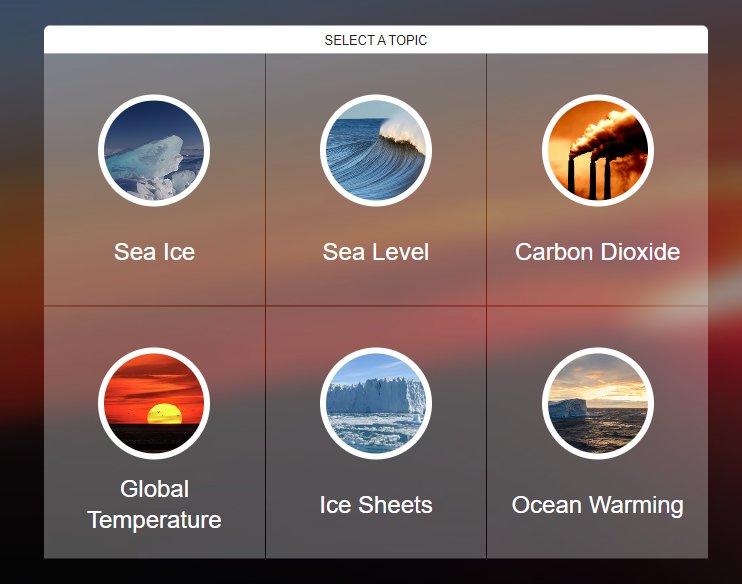
NASA's Climate Time Machine: This series of visualizations shows how some of Earth's key climate indicators are changing over time.

These global changes have far-reaching consequences for ecosystems, economies, and human health, highlighting the urgent need for coordinated global efforts to mitigate and adapt to climate change.

Mauritius in the Global Context

As a small island state, Mauritius faces disproportionate risks from climate change. While global climate change impacts are significant for all countries, small islands like Mauritius are particularly vulnerable due to their unique geographical and socio-economic characteristics.

Key Vulnerabilities of Mauritius
  1. Small Landmass: Limited land resources restrict the ability to relocate populations and infrastructure threatened by rising sea levels and coastal erosion.

  2. Coastal Dependence: Much of Mauritius’ population, infrastructure, and economy (including tourism and fisheries) are concentrated along its coast, making it highly exposed to sea-level rise, storm surges, and extreme weather events.

  3. Rising Sea Levels: Global sea-level rise is accelerating, with small islands experiencing its impacts more acutely. Coastal erosion, saltwater intrusion, and loss of land are critical challenges for Mauritius.

  4. Economic Vulnerability: The reliance on climate-sensitive sectors like tourism and agriculture means that changes in weather patterns, ocean warming, and extreme events directly threaten the country’s economic stability.

  5. Limited Freshwater Resources: Changes in rainfall patterns and increasing droughts stress the island’s freshwater supply, exacerbating water scarcity for communities and agriculture.


Mauritius's Climate Change History

Mauritius has been proactive in addressing climate change, both domestically and as part of international efforts. Over the past few decades, the country has implemented key policies, engaged in global agreements, and taken significant steps toward climate adaptation and mitigation.


Key Milestones

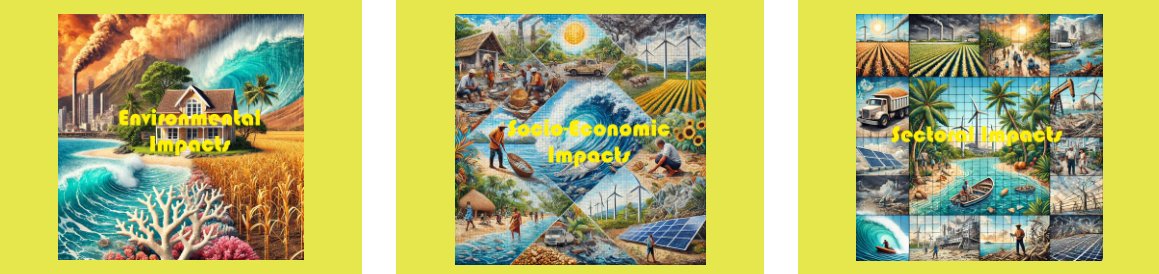
Click on image below for CC Impacts

Issues at Stake

The stakes are high, as the environmental, social, and economic wellbeing of the nation depend on effective climate action. The following issues underscore the urgency for Mauritius to adopt comprehensive and sustained measures to address the impacts of climate change:

1. Rising Sea Levels and Coastal Erosion:

  • Mauritius, being an island nation, faces significant threats from rising sea levels, which can lead to increased coastal erosion and loss of land, increased salinity which can devastate local agriculture and biodiversity, loss of coastal habitats, and impacts on infrastructure.These threaten the livelihoods of communities that rely on coastal tourism and fisheries. 

2. Extreme Weather Events:

  • The location of Mauritius in the cyclone belt of the Southwest Indian Ocean predisposes it to frequent and intense cyclones and other events like floods, and droughts. These extreme weather events endanger lives and can cause widespread damage to infrastructure, disrupt economic activities, and lead to significant economic losses.  Mauritius is among the most vulnerable countries to climate change. The 2025 World Risk Report had ranked Mauritius as the 106 out of 143 countries with the highest disaster risk.


3. Water Security Challenges:

  • Climate change poses a threat to water security in Mauritius due to altered rainfall patterns and increased frequency of droughts. This affects agriculture, drinking water supplies, and the overall water management system.

4. Impact on Biodiversity:

  • Mauritius has a rich biodiversity, but it is vulnerable to changing climatic conditions. This includes shifts in temperature and weather patterns that can affect native species, coral reefs, and marine life, leading to a loss of biodiversity.

5. Agricultural Vulnerability:

  • The agricultural sector in Mauritius is vulnerable to climate change due to its dependence on predictable weather patterns. Changes in temperature, unexpected droughts, and irregular rainfall can reduce crop yields and affect food security.

6. Health Risks:

  • Climate change can exacerbate health issues in Mauritius by increasing the prevalence of vector-borne diseases, heat-related illnesses, and respiratory problems due to increased humidity and temperature.  Climate change significantly impacts human health by increasing waterborne diseases through contamination from floods and higher temperatures. It also exacerbates non-communicable diseases due to poorer air quality and extreme heat, and affects food security. Additionally, climate change contributes to mental health issues, including depression and anxiety, through the direct stress of experiencing severe climate events and the chronic stress of ongoing environmental changes and uncertainties.

7. Economic Impact:

  • The economy of Mauritius, heavily reliant on tourism, agriculture, and fishing, is sensitive to climate change impacts. Damage to infrastructure, loss of productivity, and increased costs of adaptation are economic challenges that the nation faces.

8. Policy and Adaptation Measures:

  • Mauritius requires robust policy interventions and adaptation strategies to manage and mitigate the effects of climate change. This includes enhancing resilience through infrastructure upgrades, promoting sustainable practices, and investing in renewable energy.


The following observations have been made:

  • A significant warming over the period 1951-2023.

  • An increase in the annual number of hot days and warm nights.

  • The timing of summer rains has shifted, which puts pressure on the water sector to meet the increasing demands of agriculture, tourism, industry, and households.

  • The period between winter and summer, known as the intermediate dry season, has become longer. This change has implications for water availability and agricultural planning.

  • While the number of rainy days is decreasing, there has been an increase in heavy rainfall events, leading to flash floods and temporary disruptions of socio-economic activities during the summer months of February and March.

  • Fewer but more intense cyclones in the region. These powerful cyclones bring with them increased wind speeds and heavy rainfall, leading to greater damage to infrastructure and ecosystems.

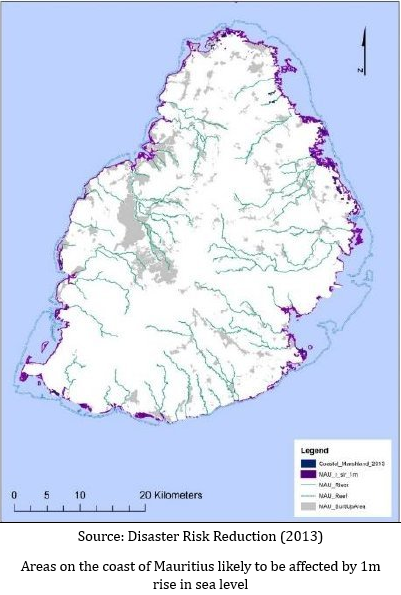
  • Mauritius is grappling with rising sea levels, which pose a significant threat to coastal areas, causing coastal erosion and threatening low-lying regions.

  • Elevated sea surface temperatures have been recorded, affecting marine ecosystems, particularly coral reefs. This phenomenon is linked to coral bleaching and the loss of biodiversity in reef ecosystems. Rising sea temperatures and nutrient-rich seepage into lagoons have contributed to episodes of algal blooms, which can lead to the mass mortality of corals and fish.

Seas of Mauritius - ScienceDirect

Source: Bhagooli, R., & Kaullysing, D. (2018). Seas of Mauritius. World Seas: An Environmental Evaluation (Second Edition), 253-277. https://doi.org/10.1016/B978-0-08-100853-9.00016-6

Challenges


Addressing climate change in Mauritius and its territories involves several challenges:

  • Financial Constraints: High costs of implementing mitigation and adaptation strategies strain limited government budgets.

  • Technological Needs: Limited access to advanced technologies for renewable energy, efficient water management, and climate resilience.

  • Public Awareness and Engagement: Ensuring that communities understand climate risks and participate actively in response measures.

  • Policy Coordination and Implementation: Developing coherent policies that are effectively enforced across all government levels and sectors.

Policy and Regulations


Key policies and regulatory measures include:

  • Mauritius' National Climate Change Adaptation Policy Framework: Aims to integrate climate change adaptation into all levels of planning and decision-making.

  • Renewable Energy Development: Incentives and subsidies to promote solar, wind, and other renewable energy sources to reduce dependency on imported fossil fuels.

  • Coastal Rehabilitation Projects: Regulations and initiatives to protect and restore coastal zones, which are vital for biodiversity and as natural barriers against sea-level rise.

  • Disaster Risk Reduction Strategies: Comprehensive policies that enhance disaster preparedness and response capabilities.


Strategic Actions

  • By uniting government efforts, private sector innovation, community initiatives, and international partnerships, the region can aspire to not only manage but thrive in the face of this global challenge:

  • Building Resilience: Strengthening infrastructure to withstand extreme weather events and investing in resilient agricultural practices.

  • Community-Based Adaptation: Empowering local communities through education and resources to adapt to climate change.

  • International Cooperation: Engaging with international bodies for technical and financial support in climate mitigation and adaptation efforts.

READ MORE - MAURITIUS - COUNTRY SPECIFIC INFORMATION