
| Environmental Culture |
Environmental culture is the attitudes, values, knowledge, and behaviours that people and communities develop toward the natural environment. It reflects how people understand and interact with nature, including their awareness of environmental issues and commitment to protecting natural resources. A strong environmental culture encourages responsible actions such as conserving water and energy, reducing pollution, recycling waste, and protecting wildlife, while supporting sustainable development for future generations.

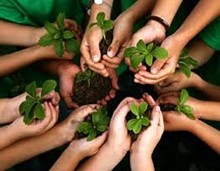
United Nations recognises environmental education as essential for environmental protection and sustainable development. Through agencies such as UNEP and UNESCO, the UN promotes education as a way to raise awareness, encourage responsible behaviour, and support sustainable lifestyles. Environmental education therefore helps societies address climate change and protect the environment for future generations.
Several approaches can help promote environmental culture:
Formal environmental education happens in schools and universities where students learn through planned lessons, textbooks, and exams. Topics related to the environment have been integrated in the textbooks at the pre-primary, primary, secondary, vocational and tertiary levels.
Informal environmental education is learning about the environment through everyday activities, experiences, media, social media, and personal observation outside a formal classroom setting, without a fixed curriculum or examinations.
Non-formal environmental education is organized learning outside the school system, like workshops, community programs, environmental clubs, or training activities that teach people about protecting the environment without formal exams or certificates. For example, the extra-curricular activities at school.
By integrating knowledge of environmental protection and sustainable development into school textbooks at the pre-primary, primary, secondary, vocational and tertiary level, formal environmental education helps shape citizens’ mindsets from an early age.
Public awareness campaigns, informal and non-formal education, and community programmes also help people understand the importance of environmental protection. Sustainable practices such as recycling, tree planting, saving water and energy, and reducing pollution further strengthen environmental culture. Government agencies support these efforts through policies that protect natural resources, while the private sector, and civil society can organise awareness and action-oriented programmes. Community participation, including the involvement of youth, women, senior citizens, families, and businesses, also helps build positive environmental values and sustainable habits.
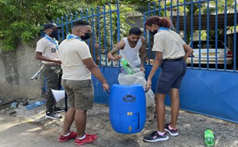
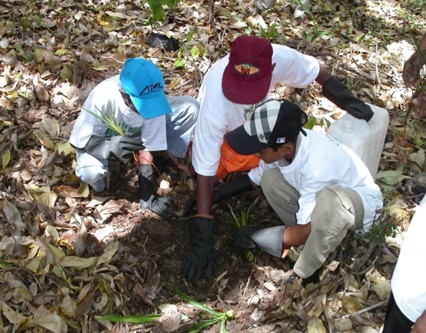
Environmental culture plays a key role in increasing awareness and understanding of issues such as pollution, climate change, and biodiversity loss. It encourages positive attitudes and sustainable practices like recycling, conserving resources, and reducing waste. It also develops a sense of responsibility and respect for nature, motivating individuals and communities to protect the environment. As these values become part of daily life, a stronger environmental culture is created.
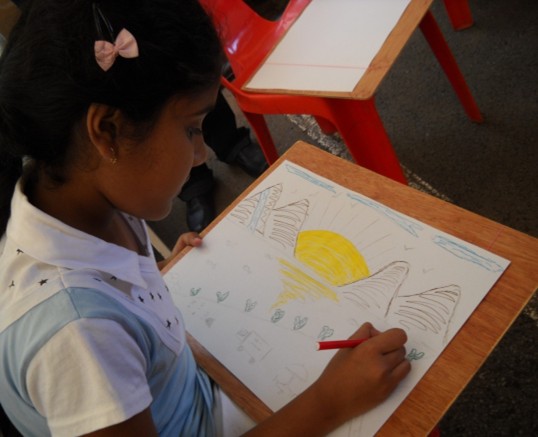
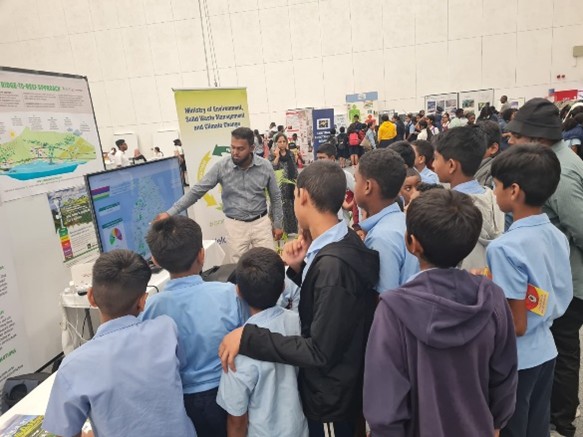
Various recent initiatives to promote environmental culture are listed below:
Ongoing awareness-raising initiatives are undertaken by the Ministry of Environment in primary, secondary and vocational institutions through talks, film screenings, and interactive activities, which aim to inform and sensitize younger community to environmental and sustainable development issues.
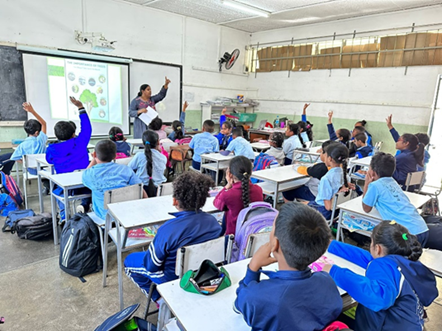
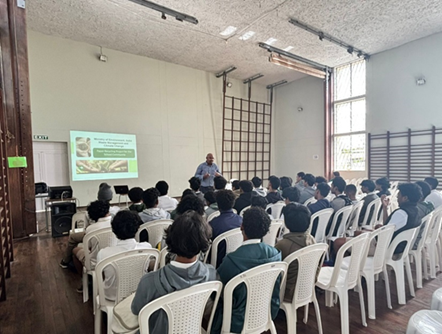
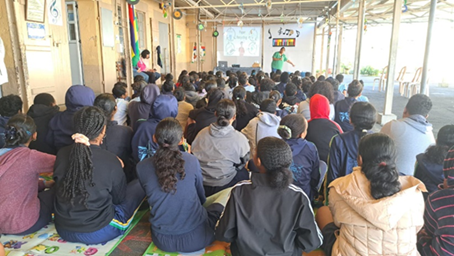
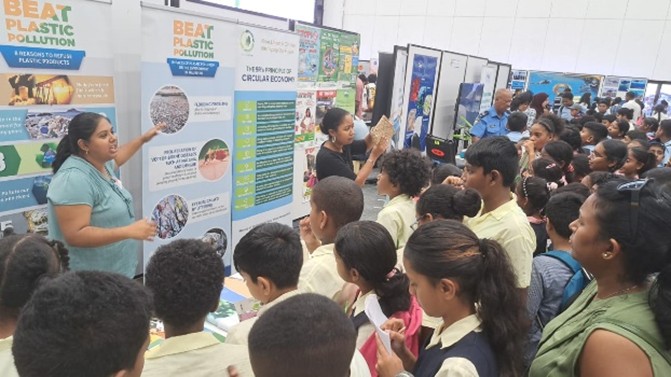
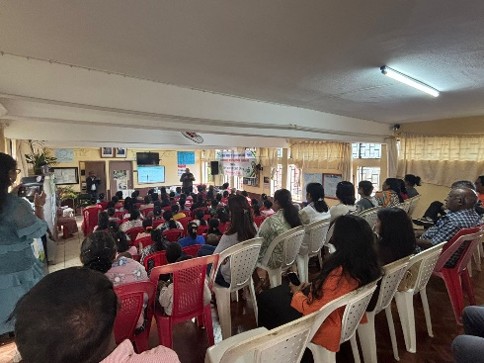
During the Financial Year 2025/2026, 120 awareness raising sessions have been carried out as follows:
120 awareness raising activities, namely talks and video projections have been carried out with different target groups including women, elderly, youth, students, and NGOs, in collaboration with the National Women Council, Social Welfare Centres, Community Centres, Rajiv Gandhi Science Centre, and the School community both Primary and Secondary Schools;
3 radio and TV programmes; and
15,000 people sensitised during awareness campaigns.
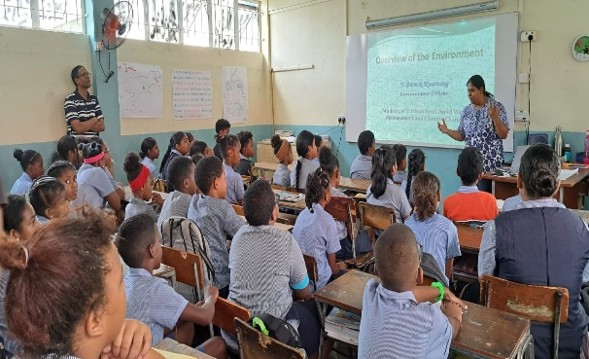
Talk at Clavet Community Centre (10.06.2026) / Awareness session at Sir Edgar Laurent Government School (10.02.2026)
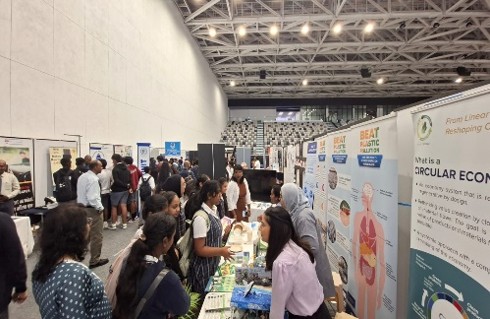
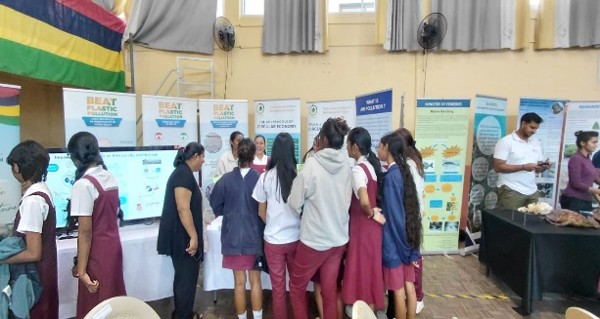
Exhibition at National Science Week by RGSC (1 to 5 June 2026) / Exhibition at Gaetan Raynal SSS (27.05.2026)
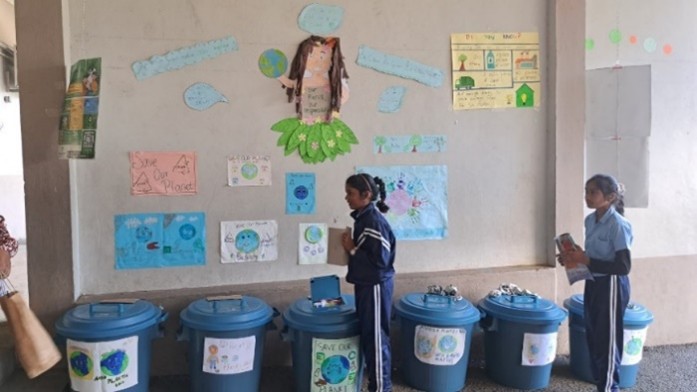
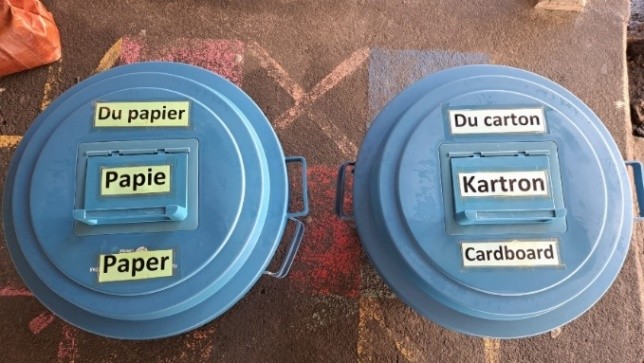
A Wastepaper Recycling project has been launched in 11 primary and 11 secondary schools on a pilot basis from March 2025 to March 2026 by the Ministry of Environment, Solid Waste Management and Climate Change in collaboration with the Ministry of Education and Human Resource. The project was successful as more than 18 tonnes of paper wastes were collected and it is now being extended to 246 additional schools in collaboration with We-cycle and Mafta. It aimed to inculcate recycling habits in children at an early age and educate them so as to become familiar with the national waste sorting project, which will become a reality in the future.
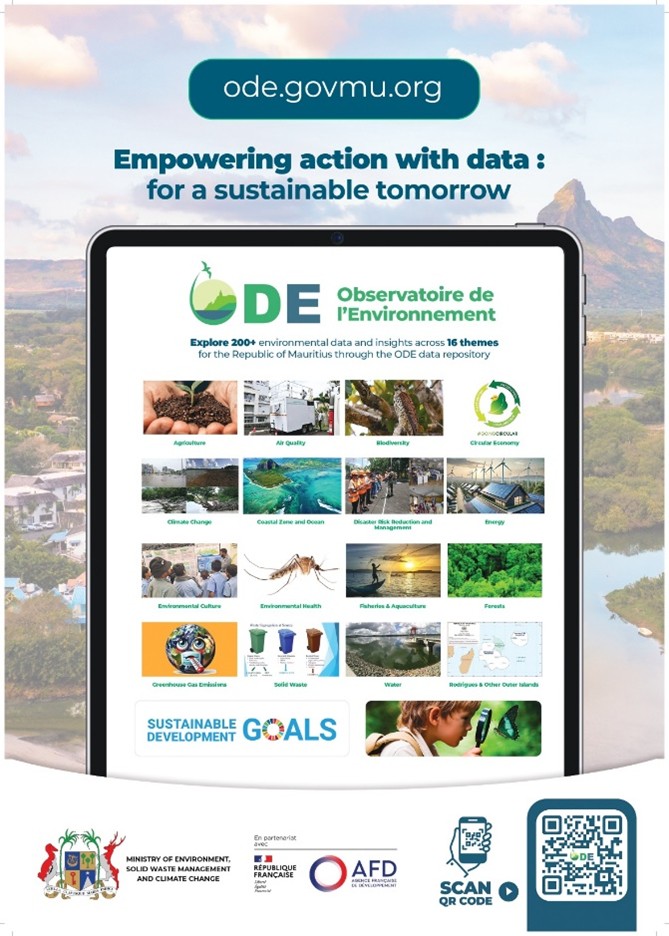
The Observatoire de l’Environnement (ODE) (https://ode.govmu.org) was launched on 17 November 2025. It is an online platform which acts as a dashboard for understanding the state of the environment both in Mauritius and globally. The ODE responds directly to this need by making verified, credible data available in a clear and comprehensible format, promoting science that guides meaningful action for every stakeholder, including students, teachers and academics. The ODE is a vital tool for sharing environmental information, raising public awareness, encouraging citizen engagement, and fostering a culture of environmental responsibility and sustainable development. It also provides for a Youth Corner, designed to empower the next generation, the Youth Corner provides young people with access to relevant, accurate information that enhances their critical thinking and prepares youth to become informed and responsible stewards of the planet. The ODE covers 16 thematic areas, one of which is environmental culture.
A series of resource materials including 10 factsheets and 10 cartoon videos entitled La Minutes Eco-Info, have been developed and disseminated in all schools on the occasion of the World Environment Day 2025. The topics covered include: the benefits of trees, Earth Overshoot Day, air quality, ozone layer depletion, plastic pollution, coastal ecosystems, water conservation, energy efficiency, sustainable lifestyles, and greenhouse gas emissions. These resource materials are being used during on-going awareness sessions.
Click on the link below to view the fact sheets and La Minute Eco Info Cartoon
An Environmental Charter for secondary schools was developed by the Ministry of Environment, Solid Waste Management and Climate Change in September 2024. The charter is the fruit of a collaboration between the Ministry of Environment and the Ministry of Education. It was aimed at strengthening environmental culture and empowering the younger generation to become eco-citizens by guiding and inspiring students and teachers to adopt ecological practices at school, at home, within the community. It also expressed a collective commitment to contribute to the protection of the environment, and promote values of respect and responsibility towards our planet.
Click on the link below to view the Environmental Charter
Government has also revamped the National Youth Environment Council, which is now under the aegis of the Ministry of Environment, Solid Waste Management and Climate Change. It serves as a platform for youth to contribute to environmental policy, to encourage youth participation in environmental protection, and to promote awareness of the youth community.
In addition, private sector organisations, NGOs and the civil society also undertake various awareness raising and action oriented programmes to promote environmental culture.
Launching of the official Facebook account of the Ministry - ‘Ble-Ver’
The Ministry launched its Facebook page on 5 June 2026 as an interface to communicate with the public, raise awareness on environmental issues, and promote environmental initiatives, campaigns and policies.
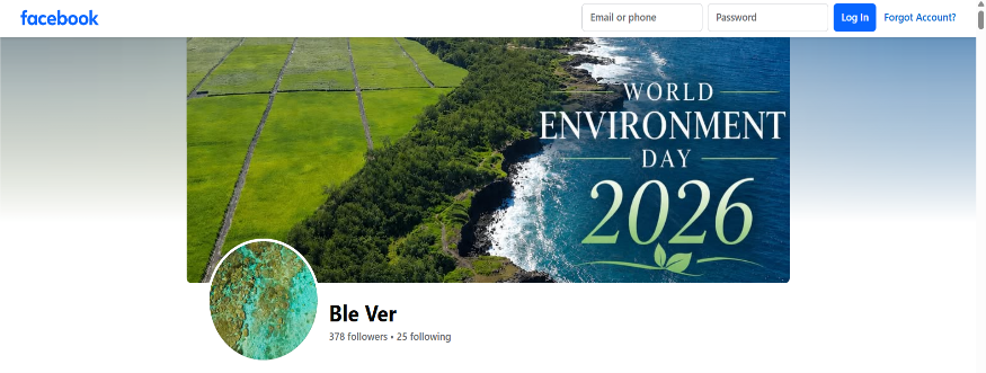
Facebook page Ble-Ver launched on 5 June 2026 on the occasion of the World Environment Day
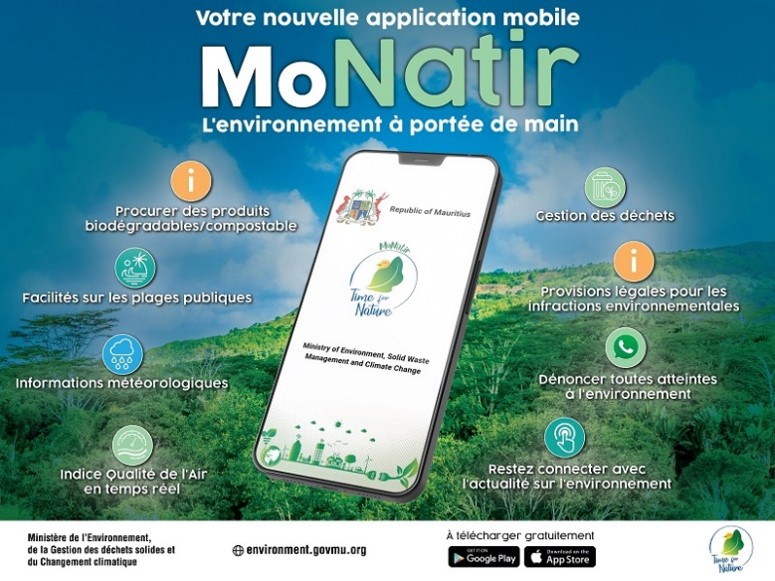
MoNatir mobile application
The MoNatir Mobile Application developed by the Ministry provides the public with timely and reliable environmental information including air quality index, a "Name and Shame" feature linking users to the Police de l'Environnement via WhatsApp, details on penalties for major environmental offences, information on waste management facilities and link to the Mauritius Meteorological Services website for weather updates.
The Ministry is updating the MoNatir mobile application on a quarterly basis and new feathers have been added including access to Observatoire de l’Environnment and the Mauritius E-licensing platform and locations of highly frequented public beaches and the amenities available.
Long-Term Objectives / Targeted Outcome
(Source: Environment Master Plan (2020-2030) for the Republic of Mauritius by Ministry of Environment, Solid waste Management and Climate Change)
A vibrant, thriving environmental culture is established and nurtured in Mauritius in which environmental values are deeply enshrined and eco-friendly attitudes, behaviours and actions are adopted to achieve the SDGs.
Policy Orientations
Policy 1: Reach out to all stakeholders through ‘une approche de proximité’ to inform and catalyse environment responsible behaviours and actions.
Policy 2: Establish partnerships with all social groups and/or organisations and enable a conducive environment to bring the needed change in mindset leading towards an ecological transition.
Policy 3: Review and update curriculum and/or extra-curricular activities (primary, secondary and tertiary levels) to instil an environmental culture.
Policy 4: Revisit policies of institutions (such as schools, Government and private bodies, SMEs, industries, and others) to encourage best environmental practices.
Policy 5: Empower different target groups through environmental education, training and awareness on topics such as climate change, coastal zone management, pollution prevention, biodiversity, waste management, sound environmental practices, amongst others, and on their interconnections.
Policy 6: Mainstream environmental considerations in decision-making at the level of policymakers (cross-cutting issue that is being captured under overarching policies).
Policy 7: Encourage, support and disseminate research on environmental culture at different levels in the Mauritian population.
The strategies and action plans for the thematic on Environment Culture are available at https://environment.govmu.org/DocumentsList/Masterplan%20for%20the%20Republic%20of%20Mauritius.pdf