
As at December 2024, 164 farmers/ organization are involved in chemical free/organic vegetable and fruit production.
Food Security
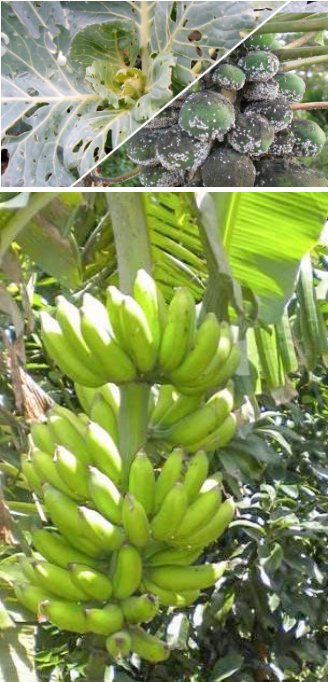
The Ministry of Agro-Industry has launched the Bio Farming Zone—a designated area covering 66 acres for the organic farming of various crops, such as bananas, carrots, and moringa. This initiative is part of the ambitious goal set in 2016 to attain 50 percent organic food production by 2020. Organic farming practices, which involve reduced or no pesticide use, aim to make locally grown food safer for consumption. Additionally, the demand for organic produce among Mauritian consumers has increased significantly, partly driven by widespread media coverage raising concerns about the quality of local produce.
Farming and Food
Over the years, Mauritius has been advancing its food and agricultural sector by executing key research, development, and training initiatives. There is a range of fruits and vegetables being cultivated which are native varieties, namely pumpkin, lettuce, calabash, squash, cucumber, guyava, jackfruit, breadfruit among others.
A pivotal contributor to this progression is the Food and Agricultural Research and Extension Institute (FAREI), established in 2014, as per the FAREI Act 2013, under the authority of the Ministry of Agro-Industry and Food Security. FAREI's primary goals include facilitating the adoption of suitable technologies for food security and promoting competitiveness, sustainability, and equitable participation throughout the agri-food value chains. Thus, the Institute has the responsibility to conduct research in non-sugar crops, livestock, and forestry and to provide an extension service to farmers in Mauritius including its outer islands. The Animal Production Division of the Ministry, on its end, offers various amenities, including feeds, poultry breeding centers, and veterinary services.
FAREI's Crop Research Department | |
The FAREI's Crop Research Department has the responsibility to support and oversee development in the non-sugar crop sector and ensure that the needs of the sector is addressed through research and adoption of new technologies. The Department through its division conduct adaptive research to address the needs of the nation. It also applies relevant knowledge as well as techniques gained from basic research elsewhere to adapt technologies to suit local conditions. It comprises six research divisions namely, Agronomy, Vegetable and Ornamental, Fruit, Resource Management, Entomology and Plant Pathology. Mission: To conduct applied and adaptive cost effective research for the introduction and development of novel technologies, to increase crop production and improve crop quality to enhance food security in a sustainable manner. Objectives
|  |
AGRO-INDUSTRYSEEDS FLOWERS/ORNAMENTAL PLANTS AGRICULTURAL LEASE It is the policy of the Government to grant agricultural leases to individuals, companies or cooperative societies. The agricultural leases may be for foodcrop, cane planting, flowers and livestock development. (Guidelines for Agricultural Lease for promoters) CONVERSION OF AGRICULTURAL LAND TO NON AGRICULTURAL USE Part V of the Sugar Industry Efficiency (SIE) Act 2001 governs the modus operandi under which conversion of agricultural land to non agricultural use is made. As per Section 27 & 28(2) of the SIE Act, agricultural land means either (a) land which has been under cultivation of sugar cane, tea or tobacco from the effective date of application for land conversion or (b) land which is declared as an irrigation area as per the Irrigation Authority Act or (c) land which forms part of a land which was subdivided for agricultural purposes. (Guidelines for Exemption from Application for Land Conversion Permit up to 2 hectares (4.7392 Arpents) | 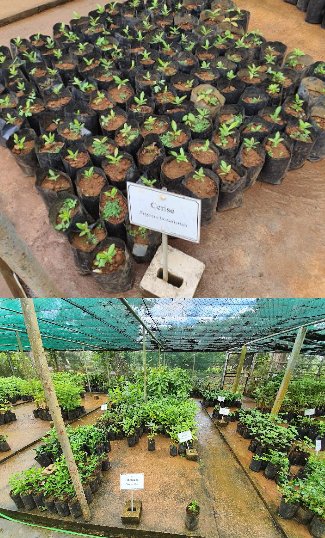 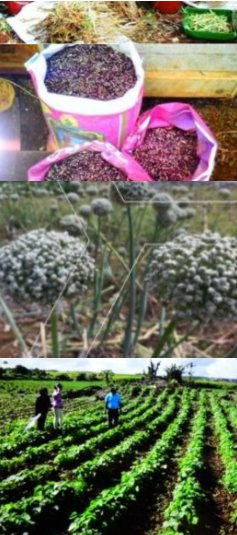 |
FOODCROPS
TEA