
Conservation efforts on offshore islet Nature reserves - Flat Island and Ilot Gabriel by Forestry Staffs and Scientific Researchers
1.0 The Northern Offshore IsletsThe Northern Islets, comprising of Round Island, Serpent Island, Flat Island, Ilot Gabriel and Gunner’s Quoin, which are known for their significant biodiversity, residing remnant population of flora and Fauna. Most restoration efforts by the Forestry Service have been concentrated on Flat Island and Gabriel Island. | |
| 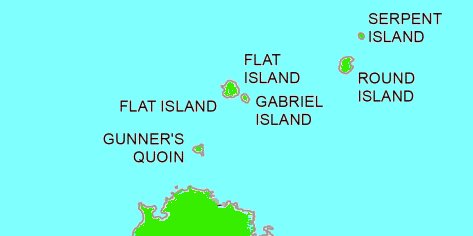 |
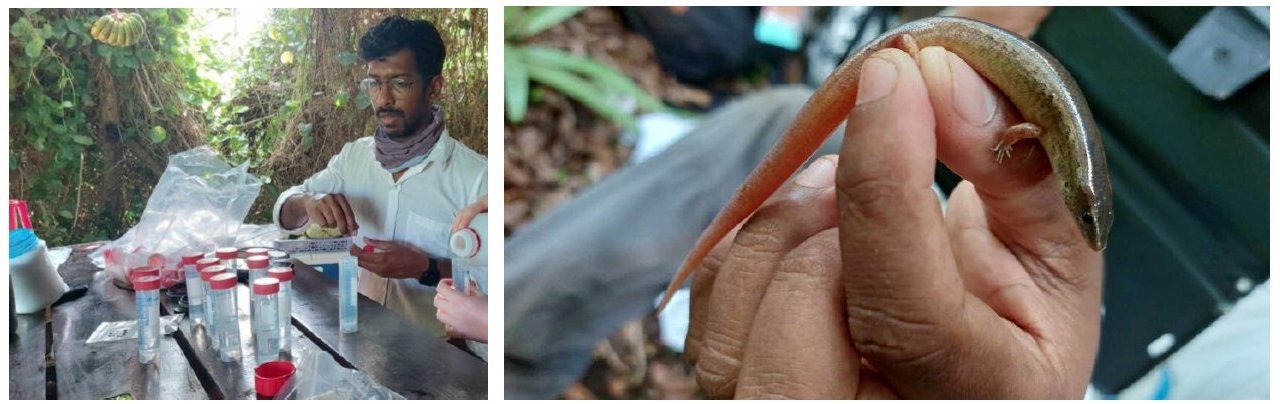
Round Island (Ile Ronde)Round Island supports one of the last remnant lowland population of palm savannah which include Palmiste bouteille (Hyophorbe lagenicaulis), Vacoas (Pandanus vandemeerschii), Latanier bleu (Latania loddigesii) and Dictyosperma album var. conjugatum. It is also a breeding site for sea birds such as the Round Island Petrel, Wedge-tailed shearwater, Red and white-tailed tropic birds, Sooty Terns as well as Boobies and Noddies. Pertaining to reptiles, it is home to endangered species like Keel-scaled Boa (Caserea dussumieri), Telfair’s skinks (Leiolopisma telfairii), Orange -tail skink (Gongylomorphus fontenayi), Round Island Day gecko (Phelsuma guentheri) and Lesser night gecko (Nactus coindemirensis). The Forestry Service, in joint collaboration with the Mauritius Wildlife Foundation MWF), Durell Wildlife Conservation Trust, National Parks and Conservation Service (NPCS), attempted to restore its remaining biodiversity with the establishment a field station in 2002, to support efforts of conservationist and other scientific expeditioners while it is permanently guarded with Wardens. Regular meetings are held with the MWF pertaining to the rehabilitation works undertaken on the island. | |
Serpent Island (Ile aux Serpents)Topographically, Serpent Island is a barren rock with a maximum height of 162m with no vegetation. However, it is home to some important seabird colony such as Sooty Terns and Noddies. No active management is currently being undertaken by the Forestry Service since the island remains untouched by human interactions. The island hosts 1 species of Tarantula Spider - the Mascareneus remotus, which is endemic to Mauritius. The population is thriving and as long as there is no IAS, it will likely to maintain its population. | |
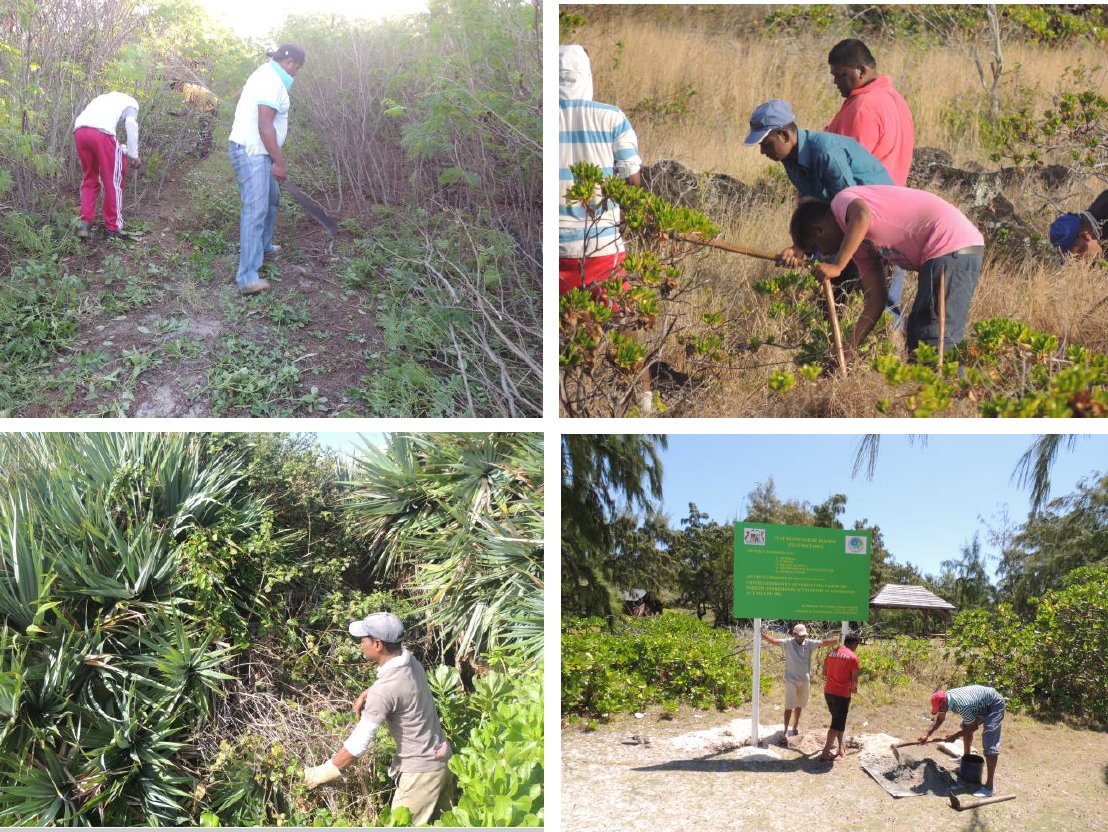
Gabriel Island (Ilot Gabriel)Ilot Gabriel is covered by Psiadia arguta, Scaevola taccada, Pemphis acidula, Pandanus vandermeeschii, Latania loddigesii and heliotropium foertherianum (Tournefortia argentea). The faunal population comprise of birds like white-tailed tropic birds, Wedge-tailed Shearwater, Striated Heron, Ruddy Turnstone, Whimbrel, Sooty Terns, Masked and Brown Boobies and Lesser Noddy. Bojer’s skink (Gongylomorphus bojerii), Boutons skink (Cryptoblepharus boutonii), Ornate day gecko (Phelsuma ornata) and Orange-tail skink (Gongylomorphus fontenayi) are reptiles that can be observed on the islet. Conservation management started by Forestry Service staffs dates back to 2015 and till date the Service undertakes active restoration and conservation of flora and fauna on the island through: Construction of a first field station in year 2018 followed by a second one in year 2019. Since 2018, except in bad weather conditions, there is permanent presence of at least (1) one Forest Officer alongside (2) two General Workers for maintenance weeding and to sensitise Tour Operators and visitors. Weeding operation was carried out over an extent of about 16 ha on Ilot Gabriel in 2023. The Forestry Service staff also carried out cleaning operations and regular patrols on Ile Plate. | 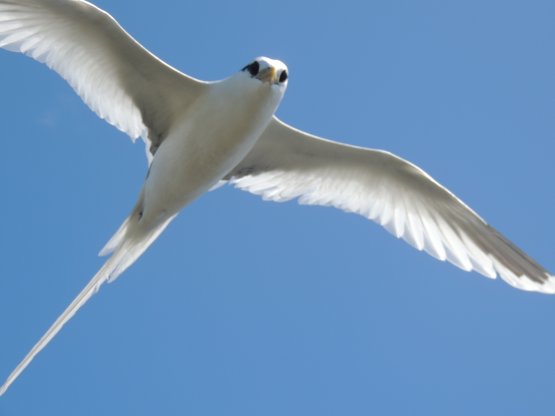 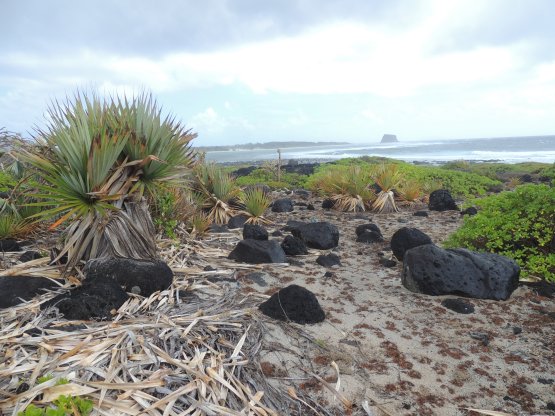 .png)
|
Flat Island (Ile Plate)The island is a popular day-trip destination for tourists to enjoy the quiet beaches and lagoon. Remnants of quarantine hospitals, cemetery and medical quarters can be observed which used to deal against outbreaks of cholera, malaria and small pox pandemic during the 19th century. An NCG station has also been constructed to ease the patrolling service around the northern islets. Its main vegetation includes Pemphis acidula, Sophora tomentosa. Pandanus vandermeeschii, Latania loddigesii, scaevola taccada, heliotropium foertherianum and Psiadia arguta. Once a week, depending on the availability of NCG boat or favourable tides, forestry staffs posted at Ilot Gabriel, patrolled the sandy area of Flat Island to check whether lease agreements are being respected. | |
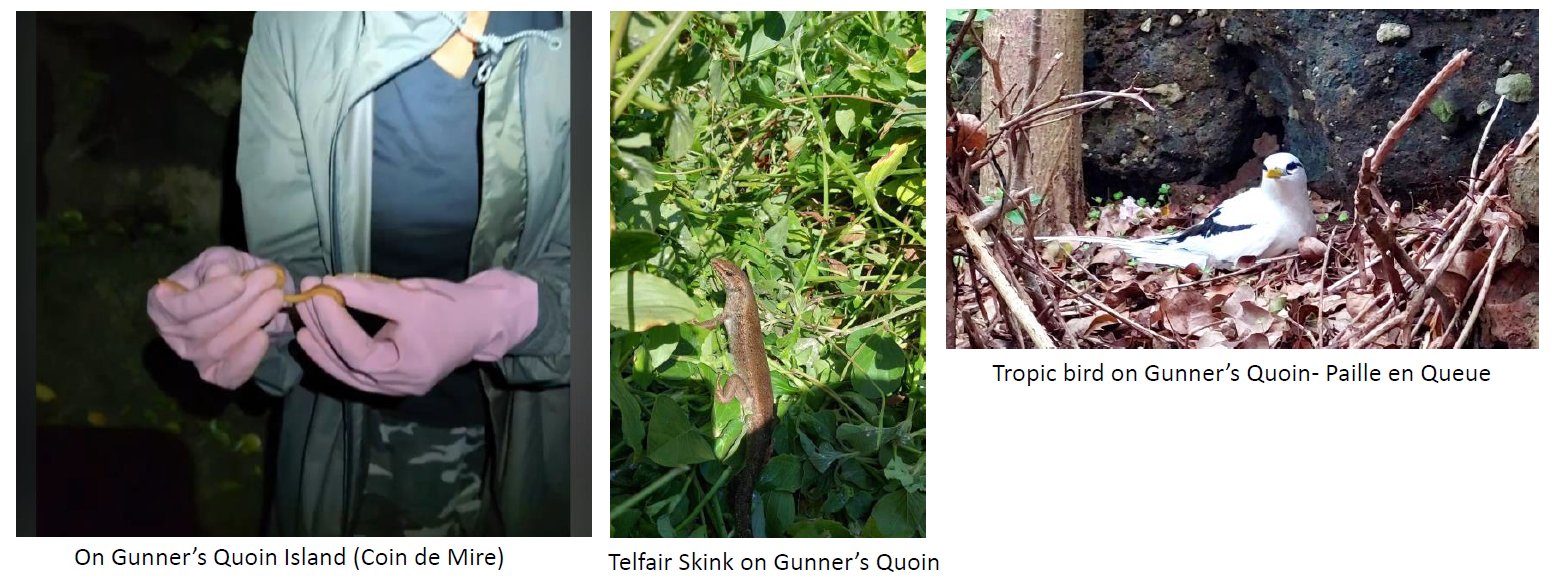
Gunner’s Quoin (Coin de Mire)The palm-rich savannah forest of the Island has been degraded by the invasion of Prune malgache (Flacourtia indica), beneficial to several native species including Acacia indigène (Gagnebina pterocarpan), Mazambron marron (Lomatophyllum tormentorii), and Dicliptera falcata, Dracena concinna, Latania loddigesii and Pandanus vandermeeschii . Anthropogenic activities such as tortoise hunting, poaching and deforestation also contributed in the degradation process. Gunner’s Quoin also has populations of seabirds comprising of the Wedge-tailed Shearwaters, Straited Heron, Ruddy Turnstone, Whimbrel, Brown Booby and other tropic birds and reptiles populations such as the Bojer’s skink (Gongylomorphus bojerii), Boutons skink (Cryptoblepharus boutonii), and the Ornate day gecko (Phelsuma ornata) and Lesser night gecko (Nactus coindemirensis). Orange-tail skinks (Gongylomorphus fontenayi) and Keel-scaled Boa (Caserea dussumieri), declared extinct, have been reintroduced from Round Island in collaboration with the NPCS, MWF and Durell Wildlife Conservation Trust. The proposed goal of conservation management of Gunner’s Quoin is to restore the ecosystem back to its native palm rich community / mixed woodland, and fauna. |
Southern Offshore Islets | |
Ile aux Aigrettes is a small island of 26 ha, situated in Mahebourg Bay, about 850 m off the south-east coast of Mauritius. Unlike the mainland which is of volcanic origin, Ile aux Aigrettes is made up of coralline limestone and is home to the last remnants of dry coastal forest, once found around most of Mauritius. Ilot Marianne, situated in the south- eastern coast of Mauritius, is an open Nature Reserve made of coralline limestone, which is managed jointly by the Forestry Service and the National Parks and Conservation Services. | |
Ile aux Aigrettes
Like the mainland, Ile aux Aigrettes was affected by tree logging and land clearing, and the introduction of exotic animals and plant species that almost destroyed the native fauna and flora. In 1965 the island was declared as a nature reserve and our intense conservation efforts have resulted in the restoration of the forest and reintroduction of rare species that had long since disappeared from the island.
The Mauritius Wildlife Foundation was granted a long-term lease by the Forestry Service for conservation purposes since 1987. Extensive restoration has been achieved, with the removal of introduced invasive plants and animals, planting of native coastal species and the reintroduction of endemic species of birds and reptiles. Now visitors to the island can experience the restored ecosystem as closely as possible to its pristine state before the arrival of man and the consequent destruction.
Regular meetings are held between the Forestry Service and the MWF to monitor restoration works undertaken on the island.
Ilot Marianne
Ilot Marianne has the highest level of native plant species of the Mahebourg Islets, with significant butterflies and other insect lifeforms.
Vegetation on the island is dominated by Veloutier vert and Veloutier blanc (Scaevola taccada and Tournefourtia argentea). The islet has no reptile life and it was suggested that the islet would be a potential area to conduct reintroduction experiments.
So far, the Lesser Night Gecko has recently been introduced on the islet. However, the impact of such an experiment on the thriving insect life would require in-depth research.
Sea birds also visit the islet but no nesting site has been found.
The Forestry Service facilitates and oversees patrolling and restoration activities on the islet.
Status of Coral Biodiversity or Research around offshore islets |
As per the Mauritius Oceanography Institute (MOI), no coral cover data are available for the following islets:
· Gunner's Quoin;
· Gabriel Island;
· Ile aux Serpents;
· Ilot Marianne; and
· Round Island.
However, for:
· Flat Island: MOI will set a station to collect coral cover data under the project "Long term ecological monitoring of the nearshore waters of Mauritius.
· Ile au Aigrettes: Coral cover data is being collected by MOI under the Integrated Environmental Monitoring Plan (IEMP) - Component Physical Impacts on corals caused by booms. Data collected is in response to MV Wakashio event and will have to be submitted to the Cabinet of Ministers of Mauritius.