
Mauritius is home to fishing banks - underwater ecosystems teeming with diverse fish populations and visited by Mauritian vessels.
Fishing banks are essentially underwater elevations that can take various forms. These unique structures create diverse habitats that attract a wide range of fish species. Coral reefs flourishing on these banks further add to the biodiversity, providing food and shelter for numerous fish. Fishing banks are considered as dependencies of Mauritius. The major fishing banks in Mauritius Exclusive Economic Zone (EEZ) include:
| 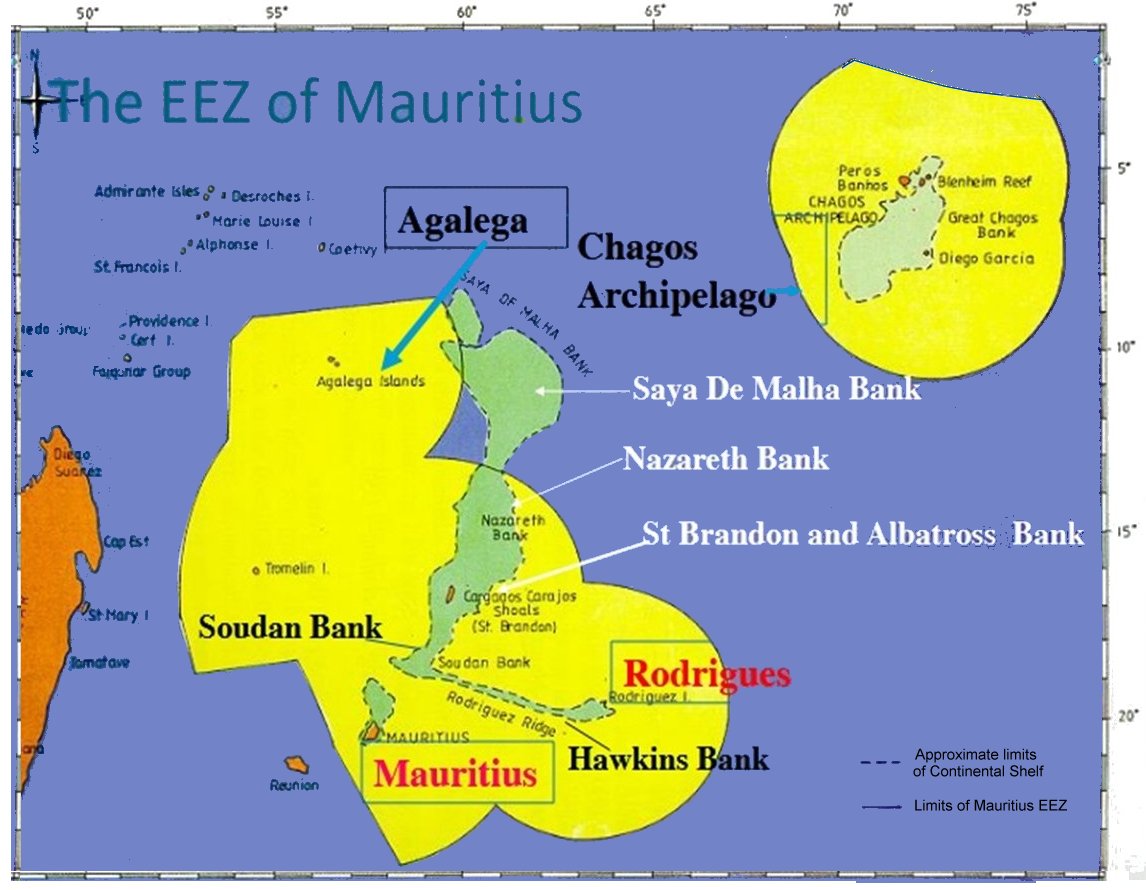 Courtesy: Ministry of Blue Economy, Marine Resources, Fisheries, and Shipping | |
Historical Context and Geological FeaturesTwo million years ago, these were large islands (more than ten times the size of Mauritius and Reunion). However, they have submerged under the ocean, except for some small islands in the Cargados Carajos. Some, like the Soudan Banks, are collections of underwater mountains and reefs. Others, like Saya de Malha, are massive submerged plateaus. Fishing Industry and Conservation EffortsMauritian fishing banks are renowned for their abundance of game fish. These prized fish, known for their size, strength, and fighting spirit, are a dream catch for many anglers. The legendary Soudan Banks boast marlin, sailfish, and giant trevally, while other banks offer opportunities to battle yellowfin tuna and various reef fish. While fishing is a significant economic activity for Mauritius, it's crucial to ensure the long-term health of these fishing banks. Mauritius implements regulations to promote sustainable fishing practices, ensuring the continued prosperity of these marine ecosystems for future generations. Fishing Expeditions and TourismFishing charters offer a fantastic way to explore these underwater treasures. Experienced captains navigate the waters, sharing their knowledge of the specific bank and the fish species that call it home. Modern fishing gear and techniques are employed, allowing anglers of all skill levels to participate in this exciting activity. | ||
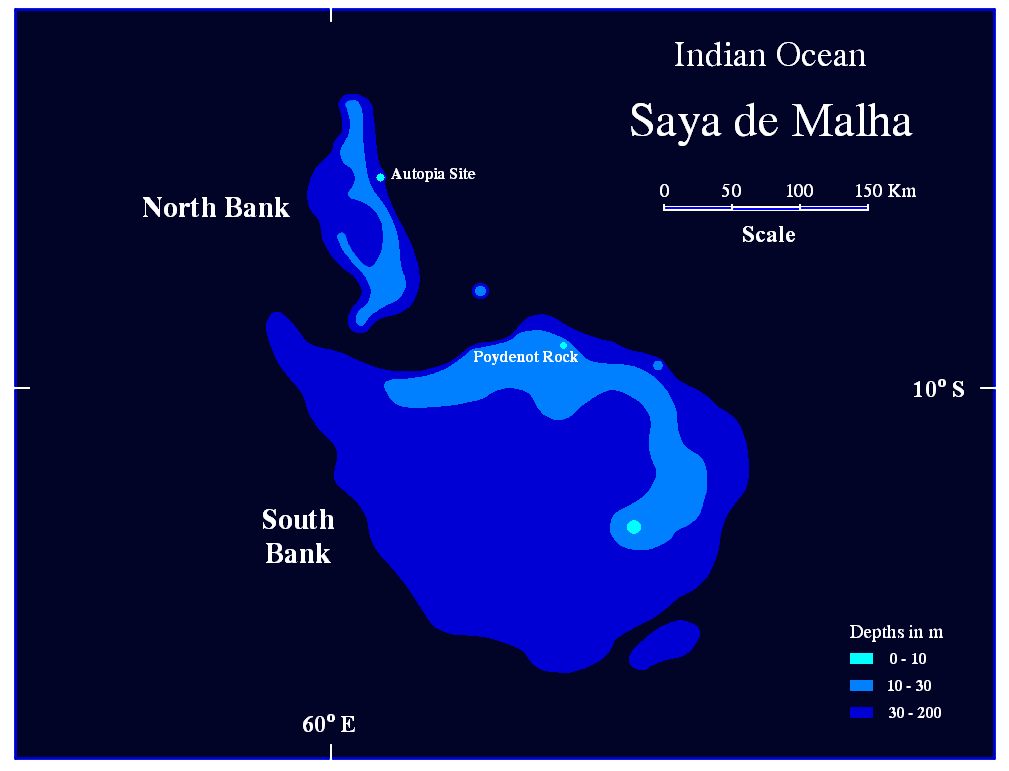
Saya De MalhaSaya de Malha is an important fishing bank located in the north part of the Mascarene Ridge, some 1050 km north-northwest of Mauritius. Geographical and Geological DescriptionThe Saya de Malha Bank is one of the largest submerged banks in the world, located in the Indian Ocean. It is part of the Mascarene Plateau and lies northeast of Madagascar and southwest of the Seychelles. The bank is divided into two main parts: the North Bank and the South Bank. Covering an area of approximately 40,000 square kilometers, it is characterized by shallow waters and extensive seagrass meadows, making it an ecologically significant region. Ecological and Research SignificanceThe Saya de Malha Bank is not only a rich marine habitat but also an area of interest for scientific research due to its unique biodiversity and potential for renewable energy sources like wind and wave energy. Its seagrass beds play a crucial role in carbon sequestration, contributing to the mitigation of climate change. The bank is largely uninhabited and remains one of the least explored underwater regions, offering opportunities for future marine exploration and conservation efforts. Maritime Jurisdiction and ManagementThe Saya de Malha Bank straddles the maritime boundaries of several countries. Only a part of the Saya de Malha Bank falls within the Exclusive Economic Zone (EEZ) of Mauritius. The majority of the bank lies within international waters and is shared with other countries, primarily the Seychelles. Mauritius and Seychelles have both laid claims to parts of the Saya de Malha Bank. In 2011, the two countries signed a treaty to jointly manage a portion of the Mascarene Plateau, which includes parts of the Saya de Malha Bank. Therefore, while a significant portion of the Saya de Malha Bank is managed cooperatively.
|  | |
Nazareth BankThe Nazareth Bank is a large submerged bank in the Indian Ocean, situated northeast of Madagascar and southwest of the Seychelles. It is part of the Mascarene Plateau, a significant geological formation that also includes the Saya de Malha Bank and the Cargados Carajos Shoals. The Nazareth Bank covers an area of about 11,000 square kilometers and has an average depth of around 150 meters. Ecological Importance of Nazareth BankCharacterized by its shallow waters and diverse marine life, the Nazareth Bank is an ecologically important area. It supports a variety of marine species, including fish, corals, and other marine organisms, making it a valuable site for biodiversity. The bank's unique underwater landscape includes coral reefs and seagrass meadows, which are crucial for maintaining the health of marine ecosystems. Research and Sustainable Development PotentialThe Nazareth Bank is also of interest for its potential in marine research and conservation. Its relatively unexplored waters offer opportunities for scientific exploration and the study of marine biodiversity. Additionally, the bank's environment is suitable for renewable energy projects, such as harnessing wind and wave energy, contributing to sustainable development efforts in the region. | 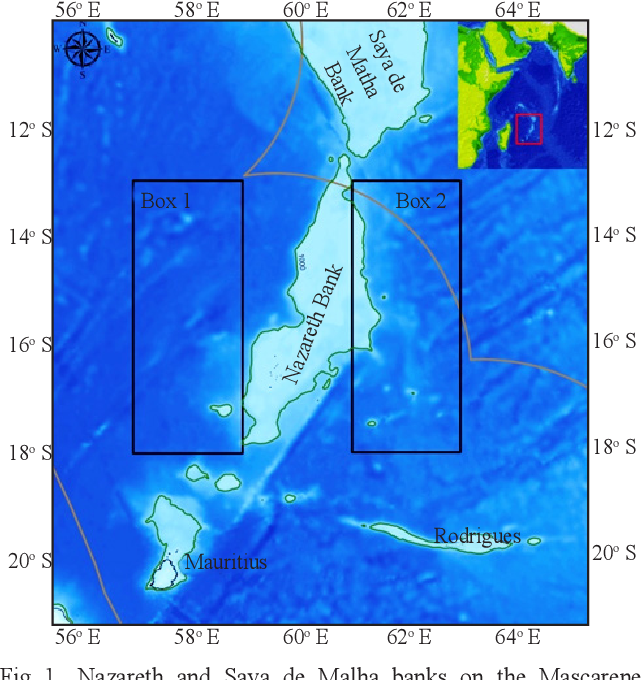 Assessment of chlorophyll-a and sea surface temperature variability around the Mascarene Plateau, Nazareth Bank (Mauritius) using satellite data; V. Ramchandur, S. Rughooputh, R. Boojhawon and B. Motah. | |
Soudan BanksThe Soudan Banks are a group of submerged banks located in the Indian Ocean, to the northeast of Mauritius. These banks are part of the Mascarene Plateau and lie to the north of the Nazareth Bank. The Soudan Banks comprise several distinct banks, including the North Soudan Bank and the South Soudan Bank, among others. Ecological and Economic ImportanceCovering a significant area, the Soudan Banks are characterized by their relatively shallow waters, which support diverse marine life. The banks are known for their rich fishing grounds, making them important for local and regional fisheries. The underwater landscape includes coral reefs and seagrass meadows, which provide habitats for a variety of marine species, including fish, crustaceans, and other marine organisms. Research and Conservation OpportunitiesThe Soudan Banks are relatively remote and less explored compared to other parts of the Mascarene Plateau, offering opportunities for marine research and exploration. These banks hold ecological significance due to their biodiversity and potential role in marine conservation efforts." Potential for Renewable Energy DevelopmentAdditionally, like other parts of the Mascarene Plateau, the Soudan Banks have potential for renewable energy projects, such as wind and wave energy, contributing to sustainable development in the region. | ||
Hawkins BankHawkins Bank is a large submerged bank off the Mascarene Plateau. | ||