Air pollution poses a dual threat, with immediate health risks to humans and longer-term consequences for the natural world.
(a) Adverse Effects on Human Health
Air pollution, particularly when it reaches high levels of concentration, can have severe and far-reaching consequences on human health. Some of the key concerns include:
Respiratory Problems: Inhalation of pollutants such as fine particulate matter (PM2.5) and ground-level ozone can lead to respiratory problems. This includes conditions like asthma, bronchitis, and chronic obstructive pulmonary disease (COPD). Prolonged exposure to air pollution can worsen these conditions and reduce lung function.
Cardiovascular Issues: Air pollution is linked to heart problems. Fine particulate matter and pollutants like nitrogen dioxide (NO2) can enter the bloodstream, leading to heart attacks, strokes, and other cardiovascular diseases. Long-term exposure can increase the risk of these life-threatening conditions.
Cancer Risk: Some air pollutants, like benzene and formaldehyde, are known carcinogens. Prolonged exposure to these substances through polluted air can increase the risk of developing lung cancer and other cancers.
Reduced Life Expectancy: Studies have shown that populations exposed to high levels of air pollution may experience a reduction in life expectancy. This is due to the cumulative health effects of long-term exposure.
Vulnerable Populations: Certain groups, such as children, the elderly, and individuals with pre-existing health conditions, are more vulnerable to the adverse effects, older adults may have weakened immune systems.
Quality of Life: Air pollution can significantly impact the quality of life. It can lead to days lost at work or school due to illness, increased healthcare costs, and overall reduced well-being.
Following consultation with public health agencies and experts, theWorld Health Organization (WHO)publishes a global technical consultation report introducing updated terminology for pathogens that transmit through the air. The pathogens covered include those that cause respiratory infections, e.g. COVID-19, influenza, measles, Middle East respiratory syndrome (MERS), severe acute respiratory syndrome (SARS), and tuberculosis, among others.
The publication, entitled “Global technical consultation report on proposed terminology for pathogens that transmit through the air”, is the result of an extensive, multi-year, collaborative effort and reflects shared agreement on terminology between WHO, experts and four major public health agencies: Africa Centres for Disease Control and Prevention; Chinese Center for Disease Control and Prevention; European Centre for Disease Prevention and Control; and United States Centers for Disease Control and Prevention. This agreement underlines the collective commitment of public health agencies to move forward together on this matter.
Air pollution doesn't only affect humans; it also has profound consequences on the natural environment and ecosystems:
Vegetation Damage: High levels of air pollution, particularly ozone and sulfur dioxide, can damage plants and trees. This damage can reduce crop yields, harm forests, and disrupt ecosystems that rely on healthy vegetation.
Soil and Water Contamination: When certain air pollutants like sulfur dioxide are deposited onto the ground, they can lead to soil and water contamination. This can affect soil quality for agriculture and harm aquatic ecosystems.
Biodiversity Loss: Air pollution can alter ecosystems by harming the species that inhabit them. Some species are more sensitive to pollutants than others, leading to shifts in biodiversity and potential extinctions.
Acid Rain: Airborne pollutants like sulfur dioxide and nitrogen oxides can combine with moisture in the atmosphere to form acid rain. Acid rain can harm aquatic life in lakes and rivers and damage buildings and monuments.
Global Climate Change: Certain air pollutants, including black carbon (a component of PM2.5), contribute to global warming. This affects ecosystems by altering temperature and precipitation patterns, which, in turn, impact species distribution and behavior.
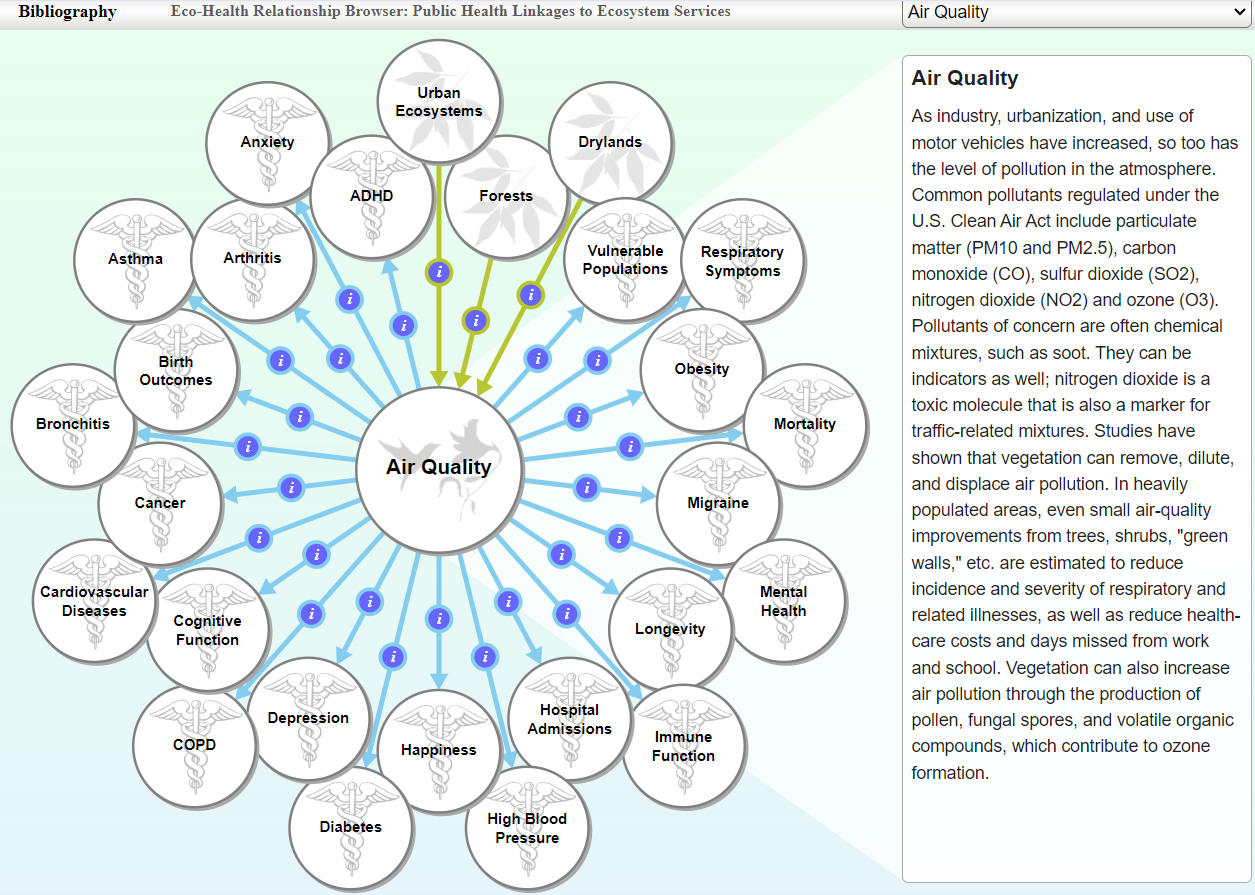
The United States Environmental Protection Agency (EPA) showcases an interactive EnviroAtlas tool, the Eco-Health Relationship Browser. It illustrates scientific evidence for linkages between human health and ecosystem services. This interactive tool provides information about several of USA's major ecosystems, the services they provide, and how those services, or their degradation and loss, may affect people.
Addressing air pollution is crucial not only for safeguarding public health but also for preserving the integrity and resilience of ecosystems and biodiversity.