
The livestock sector in Mauritius is dynamic and essential to the nation's agricultural framework. With continuous efforts to enhance productivity, sustainability, and product quality, it remains a key player in Mauritius's pursuit of a resilient and diversified agricultural economy.
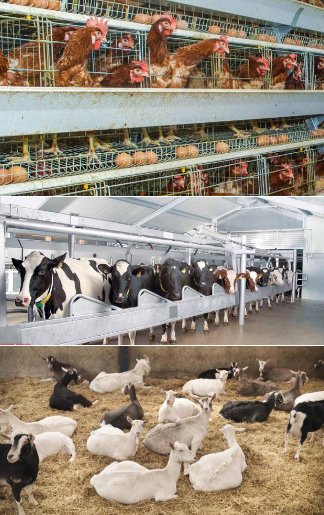
The livestock sector in Mauritius is a pivotal element of the agricultural landscape, significantly contributing to domestic food production, livelihoods, and the overall economy. Despite being traditionally overshadowed by the sugar industry, its importance in food security, supporting rural communities, and fostering economic diversification is increasingly recognized. Livestock farming in Mauritius includes poultry farming, dairy production, and small ruminant farming. It features a mix of large-scale commercial operations and smallholder enterprises, showcasing diverse farming practices and wide population engagement. Poultry Farming DevelopmentsPoultry farming stands out as a critical component of the sector, satisfying a substantial portion of the country's poultry meat and eggs demand. It consists of both commercial farms and small-scale backyard operations, focusing on modernization to improve biosecurity, breeds, and production efficiency. Role of Dairy FarmingDairy farming contributes to reducing import dependency by ensuring a steady supply of fresh milk. Both small and large dairy farms play a role in meeting the nation's nutritional needs through the production of milk and dairy products. Small Ruminant FarmingSmall ruminants such as sheep and goats are raised primarily by smallholders, providing additional protein sources to the local diet and diversifying protein intake. Government Initiatives and SupportThe Mauritian government acknowledges the livestock sector's role in achieving food security and promoting rural development. It supports farmers with training, veterinary services, and improved breeds, and promotes sustainable and ethical farming practices. Addressing Challenges in Livestock FarmingThe sector faces challenges like limited grazing land, the need for enhanced animal husbandry, and the impacts of climate change on feed availability. Strategies to overcome these include adopting sustainable land management, alternative feed sources, and climate-smart farming techniques. Quality and Safety EnhancementsResponding to consumer demands and international standards, recent focus has been on improving the quality and safety of animal products, including measures for traceability and compliance with health standards. Prospects for Growth and DevelopmentAs Mauritius aims for economic diversification, the livestock sector is viewed as having significant growth potential. It not only supports food security and rural livelihoods but also offers value addition opportunities in meat and dairy processing.
|  |
FAREI's Livestock Research Department | ||
The Livestock Research Department comprises the Animal Production and Animal Health Divisions. It has the mandate to conduct strategic research in the livestock and poultry sectors and adapts relevant knowledge and techniques to local conditions. The department fosters close interaction among scientists, farmers and extension staff to ensure that research activities are planned in a multidisciplinary and participative manner. Mission To undertake applied and adaptive cost effective research for development, to boost the livestock sector in order to increase milk, meat, poultry and derived products and to enhance food security in a sustainable way. Objectives
Livestock Strategies The scope of research and development programme is to:
Linkages International Collaboration
National collaboration The Livestock Research Department very often solicits support and cooperation from other stakeholders in Mauritius for optimizing efforts and resources for the benefits of the farming community namely the Agricultural Services and Forestry Service of the Ministry of Agro-Industry and Food Security, the Mauritius Meat Producers Association, the Mauritius Meat Authority, the Mauritius Prisons Service, the Food Security Fund, the Empowerment Foundation, the Global Environment Facility Small Grants Programme – UNDP, Aadicon Biotechnologies Ltd., livestock farmers cooperative societies, etc.
Research Facilities Research Station The department manages one livestock research station, the Curepipe Livestock Research Station CLRS), located at Les Casernes, Curepipe. It provides support in implementing research on various themes related to livestock production and its facilities are used to train livestock farmers and entrepreneurs. It covers an area of 8 hectares and comprises production units for dairy cattle, goats, sheep and rabbits. It also has a fodder unit which includes a germplasm collection of fodder species and plots for testing of local and introduced fodder species. Laboratory Facilities The department has laboratory facilities for research on ruminant nutrition, milk processing and production of parasitoids for the biological control of stable flies. Ruminant Laboratory Facility: For the determination of dry matter degradability in order to assess the efficiency of utilization of various feeds by ruminants and for determination of pH, electrical conductivity, dry matter, bulk density, … Milk Processing Facility: For developing protocols of dairy products, training and demonstration on milk processing and promote agri-business opportunities. Parasitoid Production Unit: For rearing parasitoids (Trichopria sp.) for the biological control of stable fly (Stomoxys nigra). Some 125,000 parasitoids are released weekly in sugar cane fields around deer chassées and farms. |  | |