
By investing in mitigation today, Mauritius can pave the way for a low-carbon and sustainable future, reducing its dependence on fossil fuels, enhancing energy security, and contributing to global efforts to combat climate change. This webpage outlines key mitigation measures currently being implemented across the Energy, Waste, and AFOLU sectors and provides details on the actions and intended targets.
SEE ALSO CLIMATE CHANGE MITIGATION
The Third Nationally Determined Contribution (NDC 3.0) of the Republic of Mauritius (September 2025) commits to a 40% reduction in GHG emissions by 2035, targeting 60% renewable electricity, coal phase-out, and 10% energy efficiency gains. It expands climate action to transport, industry, waste, and blue carbon, while strengthening adaptation to coastal erosion, drought, and disasters. The plan requires about USD 11.3 billion through 2050 and emphasises gender inclusion, youth engagement, and a just transition under the Climate Change Act 2020.
Energy Sector
Energy IndustriesMitigation strategies in the Energy Industries sector are focused on three primary objectives:
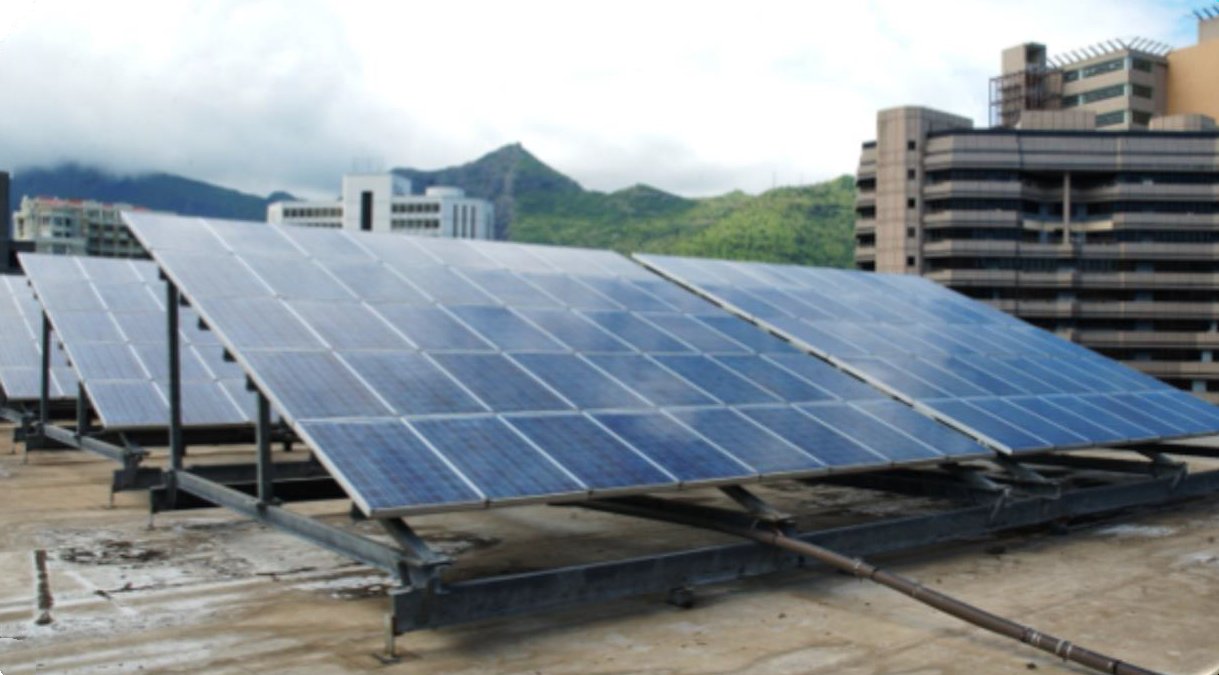
The 2021/2022 budget revised its previous target, planning for 60% of energy from green sources by 2030, with a complete phase-out of coal. Current mitigation initiatives by the Central Electricity Board include:
|
 | |
TransportRoad transport is the predominant mode in Mauritius, complemented by the new Metro Express light rail project. The country boasts over 2,000 km of roads, with nearly 50% as main roads and 3.6% as motorways. About 600,000 vehicles are registered, with buses being the main public transport, constituting roughly 7% of the vehicle fleet and used by over 60% of the population weekly. The Ministry of Energy and Public Utilities has developed a 10-year Electric Vehicle (EV) Integration Roadmap aimed at balancing the cost and benefits of electric cars, acknowledging the current reliance on fossil fuels and the planned shift towards renewable energy. The Metro Express, Mauritius's first Light Rail Transit system, spans 26 km from Curepipe to Port Louis, aiming to reduce traffic congestion and carbon emissions significantly. To modernize public transport, the Government introduced the Bus Modernisation Scheme in 2014, subsidizing 383 buses, including electric models, to update the aging fleet. For more information, read more here. |  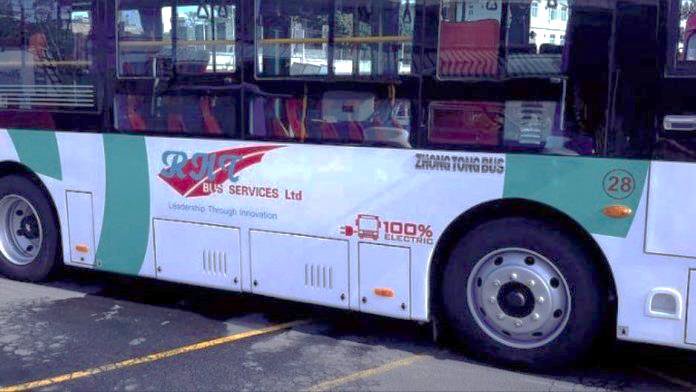 |
| Key Mitigation Actions | Objectives | Quantitative targets (both GHG-related and non-GHG impacts) | GHGs covered | Status | ||
Subsector: Energy Generation Accelerating the transformational shift to a low-carbon economy in the Republic of Mauritius - 2017-2025 | The project will provide the enabling environment for the scaling up of renewable energy in Mauritius thereby bringing the transformational change advocated by the Green Climate Fund (GCF). The project will curtail both the regulatory and infrastructural barriers for a paradigm shift in power generation in Mauritius. | Reduction in greenhouse gas emissions of 4.27 million tCO2e over the lifetimes of the investments enabled | CO2, CH4, N2O | Under implementation | ||
Subsector:Energy Efficiency Mandatory energy labelling - 2017-2022 | Provide information on energy performance of appliances to allow consumers to make informed purchase decisions. | Reduce energy consumption in households through a shift to more energy efficient appliances by 2030. | CO2, CH4, N2O | Under implementation | ||
Subsector: Land Transport Modal shift to a mass transport system (Light Rail) 2017 – 2022 | Reduction of Traffic congestion/carbon emission | Port Louis Immigration Square/Victoria Central to Curepipe Central with an interchange at Rose Hill to Reduit Central Total: x km. 20% of bus commuters and 10% of personal vehicle users are expected to switch to using the LRT Embellishment Project along the Metro Express Alignment is ongoing (End 2021) Implementation of Shuttle Services in Quatre Bornes Implementation of sustainable solar energy Ebene Recreational Park (Nov 2021) End of 2023: MEL intends to implement a solar farm on land available near Barkly to cater for its whole energy demand (Budget to be sought by MLTLR) | CO2, CH4, N2O | Metro Express Operational
Embellishment On-going
| ||
Model Eco Village project - Implementing a biomass to electricity chain in Rodrigues Island (Mauritius) | To be assessed during implementation phase | Under implementation |
Agriculture, Forestry, and Other Land Use (AFOLU) Sector
The agricultural sector in Mauritius has historically been a crucial economic driver but its contribution to GDP has declined from about 30% in the early 1970s to 3.4% in 2013, mainly due to economic diversification into manufacturing and services. Of this 3.4%, the sugar subsector contributes 2.2%. Despite its reduced share, agriculture remains vital, impacting the economy, society, and environment significantly, and employs about 44,200 people. The Ministry of Agro-Industry and Food Security has formulated a strategy for 2016-2020, focusing on sustainable, climate-friendly agricultural practices and protecting farmers' livelihoods. The non-sugar crops subsector, predominantly managed by 8,000 small growers and 375 hydroponic producers, achieves nearly complete self-sufficiency in fresh vegetables and tropical fruits, with some off-season imports like potatoes, onions, and garlic. The transition to bio-farming aims to produce safe, high-quality food, adhering to specific standards and norms. The Livestock sub-sector in Mauritius has struggled to progress due to high production costs, limited land and breeding resources, unstructured markets, and challenges in meeting environmental regulations. Additionally, it faces competition from low-cost imports, expensive quality inputs, and growing consumer concerns about food safety and animal welfare. Consult BUR1 (2021) for various mitigations actions being taken, and other climate projects being implemented for the reduction of greenhouse gas emissions. The Forestry Sector in Mauritius, as a Small Island Developing State with limited land, faces significant climate change vulnerabilities. Sustainable Forest Management (SFM) helps mitigate risks and losses from climate changes, reduce GHG emissions, and fosters environmental rehabilitation, job creation, forest produce supply, food security, ecotourism development, and enhances recreation and national well-being. To protect forests, legislation such as the Forests and Reserves Act (1983, amended in 1986 & 2003), the Shooting and Fishing Leases Act (1966), and the Native Terrestrial Biodiversity and National Parks Act (2015) have been enacted. Moreover, comprehensive strategies and action plans aim to reverse forest loss and degradation, focusing on education, biodiversity conservation, increased tree cover through national campaigns, and promoting urban forestry. A Forests and Reserves Bill is also being prepared to ensure the protection and sustainable management of forest areas for present and future generations. Key mitigation activities by the Forestry Service include: (a) Reforestation/Afforestation and tree planting, (b) Forest protection, including the creation and maintenance of at least 30 km of firebreaks annually, (c) Forest restoration and biodiversity conservation in various reserves and state forest land and (d) Agroforestry. For Projects related to sustainable land management, click here. | 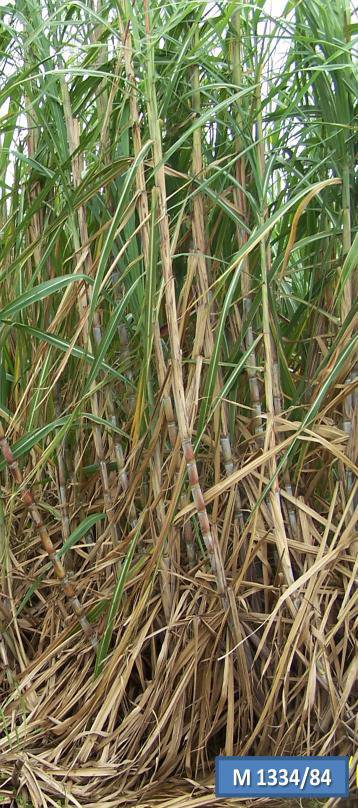 |
| Key Mitigation Actions | Objectives | Quantitative targets (both GHG-related and non-GHG impacts) | GHGs covered | Status | ||
Agriculture | ||||||
| Standards for treated manure from animal waste 2018- 2021 | To develop treated manure standards using proven locally adapted technology through dehydration and solarisation to reduce GHG emission | GHG emission reduction by around 20% of total accounted for by manure management. | CO2, CH4, N2O | Under implementation | ||
| Promotion of small species livestock projects at back yard level - since 2018 | To reduce GHG emission by encouraging farmers to engage in backyard production through rearing of small livestock species such as rabbit, duck and quail | GHG emission reduction by around 1-5% of the total livestock emission | CH4, N2O | Under implementation | ||
Forest & Other Land Use (FOLU) | ||||||
Tree planting and Creation and maintenance of mini-forest, Nature Walk, urban forests, Parks and Garden, etc - 2016- 2024 | • Increase Carbon sequestration; • Improve environment and ecological benefits; • Improve local microclimate; • Improve soil, water quality and air quality; and • Mitigate the impact of natural calamities such as flood. | Planting of at least 100,000 trees annually (until 2024) | CO2 | Under implementation | ||
Forest restoration - Nature Reserves, Mountain, River Reserves, forest plantation - 2020-2030 | • Reduce forest degradation. • Improve environmental and ecosystem Services | 75 ha of mountain reserves restored by 2030 | CO2 | Under implementation | ||
Waste sector
The Solid Waste Management Division is overseeing the new Strategy and Action Plan for Mauritius’ Solid Waste Management and Resource Recovery System. Plans include the vertical expansion of the Mare Chicose landfill to enhance landfill gas extraction and power generation, and potentially adopting anaerobic digestion for the high organic fraction of municipal solid waste to boost biogas production for electricity. However, financial and technical support is needed for feasibility studies on these technologies. In the wastewater sector, the Wastewater Management Authority (WMA) completed four key projects in 2017-2018, including the Plaines Wilhems Sewerage Project and infrastructure rehabilitation in various regions. The 2019-2020 actions aimed to connect 7,000 new households through projects like the Pailles Guibies Phase II and Grand Baie Phase IB Sewerage Projects, alongside the procurement of specialized vehicles and equipment for maintenance. The WMA is committed to achieving the government's goal to connect 50% of the population to sewage systems by 2030, with ongoing and upcoming projects in various regions. While these initiatives may reduce emissions, precise quantification is hindered by the lack of a data tracking system. Not all wastewater projects result in emissions reductions; the impact varies based on the treatment technology and its operation, as indicated by IPCC guidelines. | 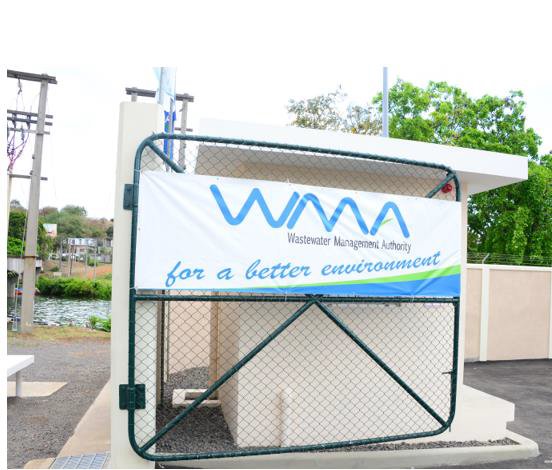 |
| Key Mitigation Actions | Objectives | Quantitative targets (both GHG-related and non-GHG impacts) | GHGs covered | Status | ||
Waste | ||||||
| Strategy and Action Plan for a new Solid Waste Management and Resource Recovery System for Mauritius | Maximising resource recovery and recycling in the short to medium term, while also tapping the energy recovery potential from wastes in the long term. | Not estimated. To be assessed during design and/or implementation phase of specific projects | CO2, CH4, N2O | Under implementation | ||
Industrial Processes and Product Use (IPPU) Sector
The IPPU sector in Mauritius primarily includes the Refrigeration and Air-Conditioning (RAC) sector and a metal recycling industry, notably in steel manufacturing. Under the Montreal Protocol, Mauritius has actively phased out harmful refrigerants like CFCs and HCFCs through the National Ozone Unit of the MESWMCC and other stakeholders. CFC imports were banned in 2005, and HCFCs are being phased out gradually under a management plan running from 2011 to 2025. Following the ratification of the Kigali Amendment in 2019, Mauritius is preparing to develop a management plan for phasing down HFCs, which are potent global warming gases. Alternative refrigerants such as hydrocarbons, carbon dioxide, and ammonia not only reduce ozone depletion and greenhouse gas emissions but also improve energy efficiency. For Projects carried out to phase out Chlorofluorocarbons (CFCs) and Projects carried out under the HPMP to phase out Hydrochlorofluorocarbons (HCFCs) , please click here. |