
This page provides a comprehensive overview of Mauritius' energy production and infrastructure, complete with current statistics, ongoing projects, and future plans.
Current InfrastructureMauritius’ energy infrastructure is a diversified mix of power generation sources designed to cater to the island’s energy needs. The infrastructure includes coal and gas-fired power plants which currently form the backbone of energy production, complemented by renewable energy sources such as solar and wind installations. Additionally, the country harnesses energy from hydroelectric facilities, albeit to a lesser extent. The national grid is supported by an extensive distribution network that ensures energy delivery from generators to consumers across the island. | ||||
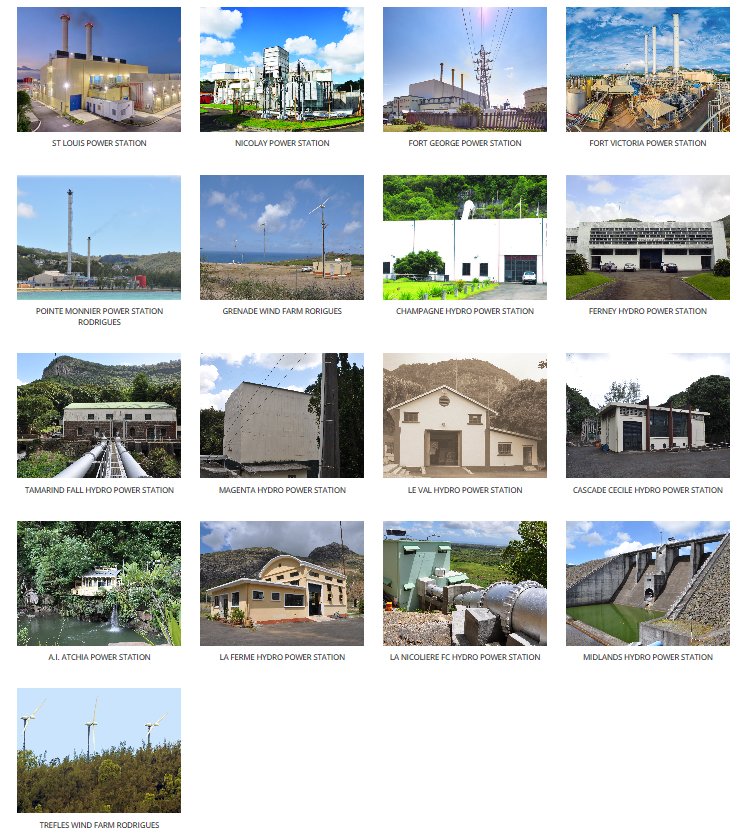
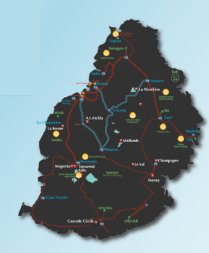
Central Electricity BoardThe Central Electricity Board (CEB) is the entity exclusively responsible for grid electricity transmission and distribution in Mauritius. The CEB has been investing in modernizing and expanding its infrastructure to accommodate renewable energy sources and reduce greenhouse gas emissions. CLICK ON IMAGES BELOW FOR MORE ON CEB POWER STATIONS/NETWORK
Thermal Power Stations
Hydroelectric Plants
Solar PV Farms
| Independent Power Producers (IPPs)Independent Power Producers (IPPs) also play a significant role in the energy sector of Mauritius. IPPs are entities that generate electricity independently from government-owned utilities and sell it to the CEB. In Mauritius, IPPs have contributed to the diversification of the energy mix and the reduction of the country's reliance on fossil fuels. THERMAL
WIND
| |||
Production Capacities and StatisticsMauritius has a total installed energy capacity of approximately 975 MW. Of this, fossil fuels account for about 83%, while renewable energy sources contribute around 17%. In terms of actual energy output, the country generates roughly 3,120 GWh annually, with renewables steadily increasing their share due to new installations and government-backed initiatives. For the latest electrical energy production, click HERE.
| ||||
Investments and UpgradesThe Mauritian government, along with private sector partnerships, is actively investing in the modernization of existing energy infrastructure and the development of new capacities to support sustainable energy goals. Recent investments include upgrades to older fossil fuel plants to improve efficiency and reduce emissions, as well as substantial funding directed towards scaling up renewable energy installations, particularly solar and wind. There is also a significant focus on enhancing the grid's capacity to manage the variability of renewable energies through advanced energy storage solutions and smart grid technologies. | Future OutlookLooking ahead, Mauritius plans to further diversify its energy portfolio by increasing the share of renewables to 60% by 2035. As regards energy efficiency, the target is 10% in energy efficiency gain by 2035 with 2019 as base year in all sectors of the economy. This strategic direction is supported by ongoing investments in cutting-edge technologies and infrastructure enhancements, aimed at bolstering the reliability, efficiency, and sustainability of the energy system. | |||
| ||||
 | ||||