
SOILS OF MAURITIUS | ||
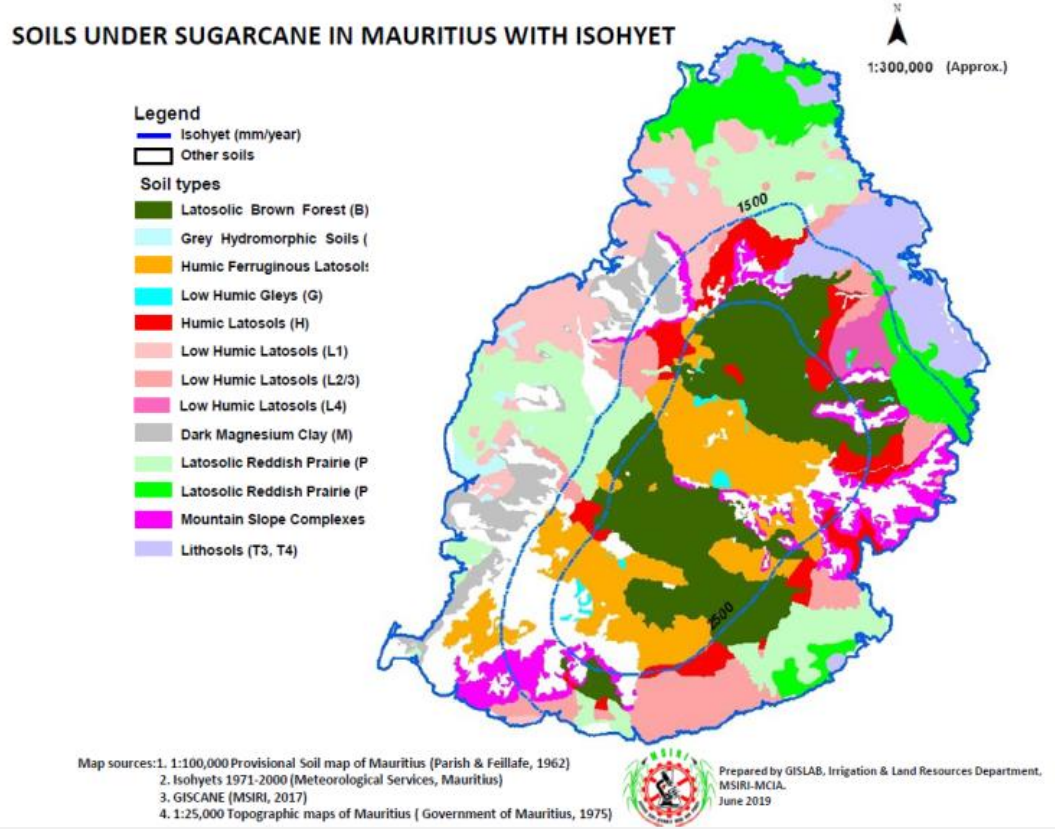
Mauritius features a diverse array of soil types that have developed over time due to a variety of geological, topographical, and climatic factors. The soils of Mauritius are primarily influenced by the island's volcanic origin, with the majority of them deriving from basaltic lava flows. The main soil types found across Mauritius: 1. Volcanic Soils (Andosols) Volcanic soils, predominantly found in the central plateau and the upper mountain slopes of Mauritius, are derived from weathered volcanic materials. Classified scientifically as Andosols, these soils are highly fertile due to their rich mineral content and are ideal for growing sugarcane, tea, and various fruits and vegetables. 2. Coastal Sands (Arenosols) Along the coastal belts, the sandy soils, known scientifically as Arenosols, are characterized by their coarse texture and low nutrient content. These soils have high drainage properties but poor water retention, making them suitable for specific crops like coconuts and certain horticultural plants. 3. Laterite Soils (Ferralsols) In the higher, more humid areas of the island, laterite soils, or Ferralsols, are prevalent. These soils are deep red due to intense weathering and leaching under tropical conditions. Ferralsols are typically less fertile and require careful management and fertilization to be agriculturally productive. 4. Alluvial Soils (Fluvisols) Fluvisols are found in the river valleys and floodplains where sediment from rivers and streams has been deposited. These alluvial soils are very fertile and are particularly suited to intensive agriculture, such as vegetable and sugarcane cultivation. 5. Organic Peat Soils (Histosols) Histosols, found in marshy or swampy areas, are composed mainly of decomposed organic matter. These peat soils are highly fertile and have excellent moisture retention, making them ideal for crops that require substantial water. 6. Sodic and Saline Soils (Solonchaks) Near coastal areas, Solonchaks, or saline/sodic soils, occur due to the accumulation of salts facilitated by sea spray and high evaporation. These soils pose challenges for agricultural use and require specific management strategies to reduce salinity and improve soil structure. | 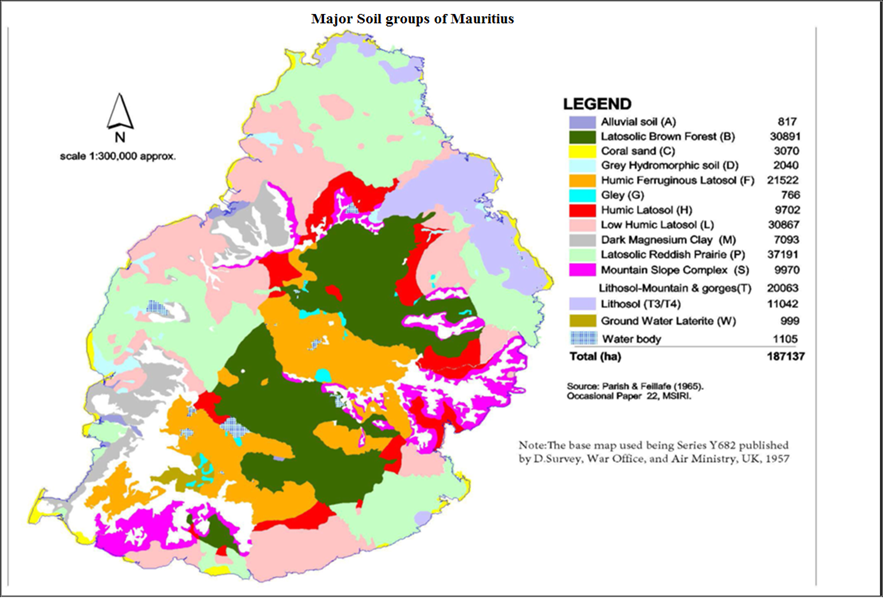 Source: https://statsmauritius.govmu.org/Pages/Statistics/By_Subject/Environment/SB_Environment.aspx
source: MSIRI-MCIA 2019 Other Soil Maps
| |
Soil Management Challenges | ||
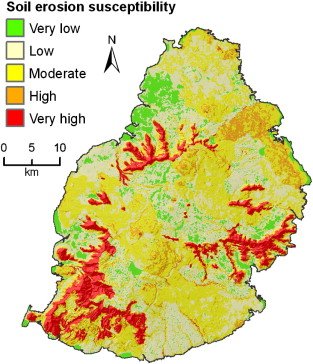
Soil erosion is a significant challenge in Mauritius, particularly on steeper slopes and in areas with high rainfall. Conservation techniques such as terracing, cover cropping, and the construction of retention walls are commonly employed to manage erosion. Additionally, soil fertility management is critical, involving the use of fertilizers and organic amendments to maintain the productivity of the soils. Given its diverse range of soil types and the challenges associated with them, Mauritius continues to develop and implement soil management practices that promote sustainable use and conservation of its soil resources to support its agricultural sector and maintain environmental health. |
| |
Soils and Sugar Cane | ||
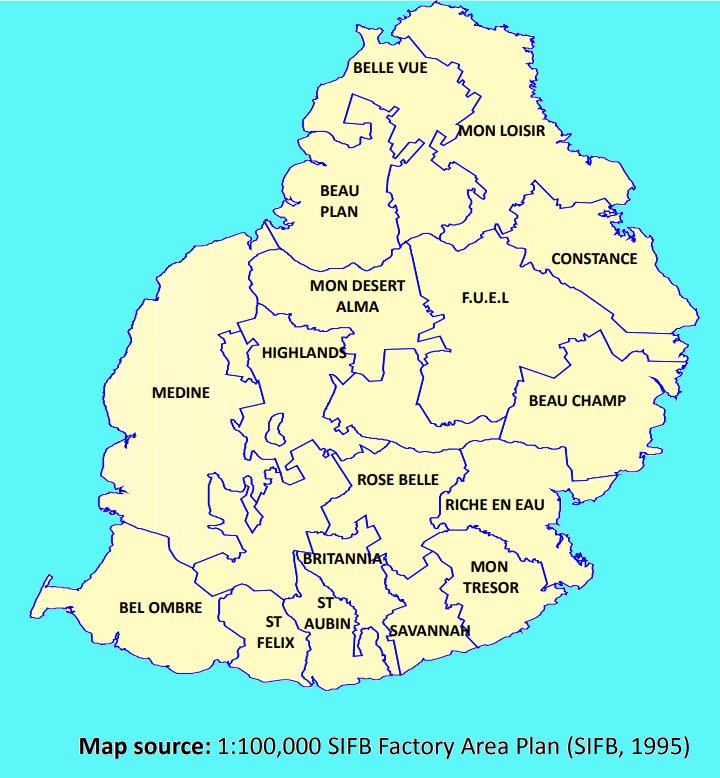
Since 1996, the Mauritius Sugar Industry Research Institute (MSIRI) has been publishing variety recommendation sheets on its website. These sheets, aligned with the factory areas defined by the Sugar Insurance Fund Board (SIFB), aid sugarcane planters in selecting the varieties best suited to their environments. Each sheet covers a specific factory area, detailing soil families and the primary villages they encompass, and includes a table of recommended sugarcane varieties.
|
Click HERE for Variety recommendation adapted to soil map (2019) source: MCIA | |
FAREI carries out ad-hoc analysis of soil from non-sugar agricultural land. Based on past soil analysis from farmers field, a range for some parameters are given here.
For more information, please read more on: | 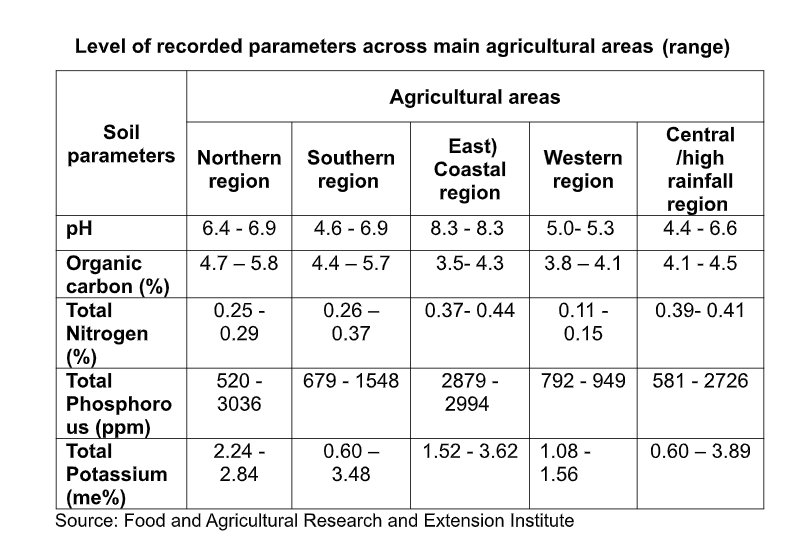 | |