
Air Pollution, Standards and Regulations

Air pollution indicators play a crucial role in assessing exposure risks, quantifying economic and social consequences, and identifying vulnerable population segments.  These indicators provide valuable data for policymakers, planners, and public health officials to design effective mitigation strategies and improve air quality. Standards and regulations related to air quality and environmental protection are crucial for safeguarding human health, preserving ecosystems, and addressing the challenges posed by pollution and climate change. These standards and regulations can vary by country or region, but there are also international agreements and guidelines that influence and set the framework for national regulations. 

   
Air Pollutants

Monitoring and controlling air pollutants is crucial to safeguarding air quality and protecting human health and the environment. The specific pollutants of concern can vary depending on the region, industrial activities, and local sources of emissions.

Click Here for more 


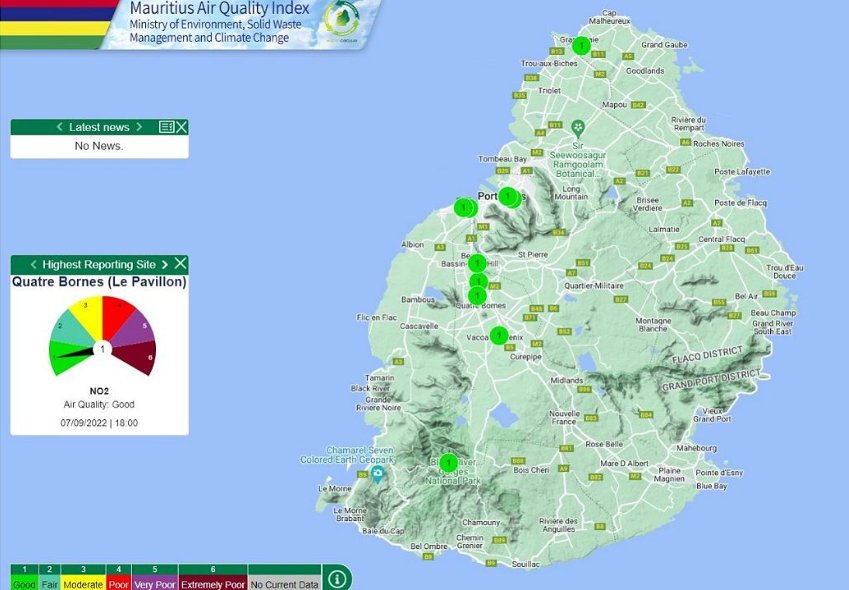
Air quality monitoring at different sites indicates that the air quality is generally good in Mauritius (source: Statistics Mauritius, 2022).                                                          

Sources of Atmospheric Pollution

Fortunately, natural sources of air pollution, such as volcanic eruptions , sand storms and dust storms, are absent in Mauritius.  Mauritius generally experiences good air quality.  However, like many developing countries, it faces environmental challenges that can impact air quality.

Click Here for more.

 
Repercussions of Degraded Air Quality

Degraded air quality has wide-ranging consequences, which can be quantified and assessed using various air pollution-related indicators:

  • Health-Related Costs: Indicators may include the economic burden of healthcare costs associated with air pollution-induced illnesses. This can encompass hospital admissions, doctor visits, and medication expenses related to respiratory and cardiovascular diseases.


  • Diminished Quality of Life: Quality of life indicators may measure the impact of air pollution on daily life. This can include surveys or indices assessing residents' perceived well-being, considering factors like air quality, noise, and access to green spaces.


  • Infrastructure Upkeep: Indicators related to infrastructure may assess the costs of maintaining buildings and structures affected by air pollution. This can include expenses for cleaning and restoring surfaces damaged by pollutants.


  • Reduced Agricultural Productivity: Agricultural indicators may gauge the effects of air pollution on crop yields and livestock health. Reduced agricultural productivity due to ozone or particulate matter exposure can have economic implications.


  • Forest Degradation: Environmental indicators may assess the health of urban forests and green spaces. Air pollution can harm trees and vegetation, leading to indicators measuring tree mortality, leaf damage, and overall ecosystem health.

 
Vulnerable Population Segments

Air pollution indicators should consider vulnerable population segments, such as the very young and the elderly, who are more susceptible to the health effects of poor air quality:

  • Children's Health Indicators: These may include hospitalization rates for pediatric respiratory conditions, school absenteeism due to air pollution-related illnesses, or the prevalence of childhood asthma in urban areas.


  • Elderly Health Indicators: Indicators could assess hospitalization rates for respiratory and cardiovascular diseases among the elderly population in urban areas.


  • Social Equity Indicators: To address disparities, social equity indicators may focus on the distribution of air pollution-related health risks among different demographic groups, considering factors like income, race, and access to healthcare.


Some key aspects of air quality and environmental protection standards and regulations:

Compliance with these standards and regulations is typically enforced through government agencies and regulatory bodies. Non-compliance can result in fines, penalties, or legal action. Environmental agencies and organizations often play a key role in advocacy, research, and enforcement of these regulations to protect the environment and public health.

1. Air Quality Standards:

  • Air quality standards set maximum allowable concentrations of specific air pollutants in the ambient air. These standards are established to protect public health and the environment. The World Health Organisation reports on six major air pollutants, namely:
    • Particulate matter (PM10 and PM2.5)
    • Ground-level ozone (O3)
    • Nitrogen dioxide (NO2)
    • Sulfur dioxide (SO2)
    • Carbon monoxide (CO)
    • Lead (Pb)
  • Standards are typically set for both short-term (e.g., hourly) and long-term (e.g., annual) exposure.


2. Emission Standards:

  • Emission standards are regulations that limit the amount of pollutants that can be released into the atmosphere by industrial processes, vehicles, power plants, and other sources. These standards help control the sources of air pollution.


3. Environmental Impact Assessment (EIA):

  • EIA regulations require environmental assessments for major development projects to evaluate potential environmental impacts and ensure compliance with environmental laws. This process helps prevent or mitigate harm to ecosystems and communities.


4. Noise Pollution Regulations:

  • Noise regulations set limits on permissible noise levels to protect the well-being of communities and individuals. These regulations often include permissible noise levels during the day and night.


5. Water Quality Standards:

  • Water quality standards specify acceptable levels of pollutants in water bodies such as rivers, lakes, and coastal waters. They aim to protect aquatic ecosystems and ensure the safety of water supplies for human consumption and recreation.


6. Hazardous Waste Management:

  • Regulations for the proper handling, transportation, and disposal of hazardous waste are in place to protect human health and the environment. These regulations govern the management of toxic chemicals, hazardous materials, and industrial byproducts.


7. Climate Change Regulations:

  • Many countries have established regulations and commitments to reduce greenhouse gas emissions to combat climate change. These may include carbon pricing, emissions trading, and renewable energy targets.


8. Protected Areas and Conservation Laws:

  • Regulations establish protected areas and conservation measures to preserve biodiversity and ecosystems. These laws may restrict land use, fishing, hunting, or the extraction of natural resources in these areas.


9. International Agreements:

  • International agreements and conventions, such as the Paris Agreement and the Kyoto Protocol, set global targets and guidelines for addressing climate change and reducing greenhouse gas emissions. These agreements encourage countries to cooperate in addressing environmental challenges.


10. Air and Water Quality Monitoring:

  • Regulations often require the establishment of monitoring systems to assess and report on air and water quality, ensuring compliance with established standards.


11. Public Health and Safety Regulations:

  • These regulations may cover a wide range of issues, from food safety and hazardous substances management to building codes that consider environmental factors like energy efficiency and safety.