
The release of effluents, primarily from the industrial and agricultural sectors, is degrading the quality of Mauritius’s water resources. Ensuring universal access to safe drinking water and maintaining consistently high water quality across all regions remains an ongoing commitment for the Government of Mauritius.
In 2005, approximately 351 kg of organic pollutants were emitted daily to the country’s water resources (World Bank 2010). Wastewater discharge from the manufacturing industries includes substantial amounts of dyestuff, heavy metals and complex chemical compounds that contaminate both freshwater and coastal ecosystems.
Inland Water Quality |
With 101 000 ha of land cultivated, or almost half of the total land area, the agricultural sector also plays a key role in both the usage and quality of water resources in the country (FAO 2009). Sugarcane exports contribute significantly to Mauritius’s economy, with 4 533 000 tonnes produced in 2008 alone (FAO 2009). In order to maintain these high yields, farmers in the country use fertilizers, herbicides and pesticides, further deteriorating water quality in the country.
Drinking water quality |
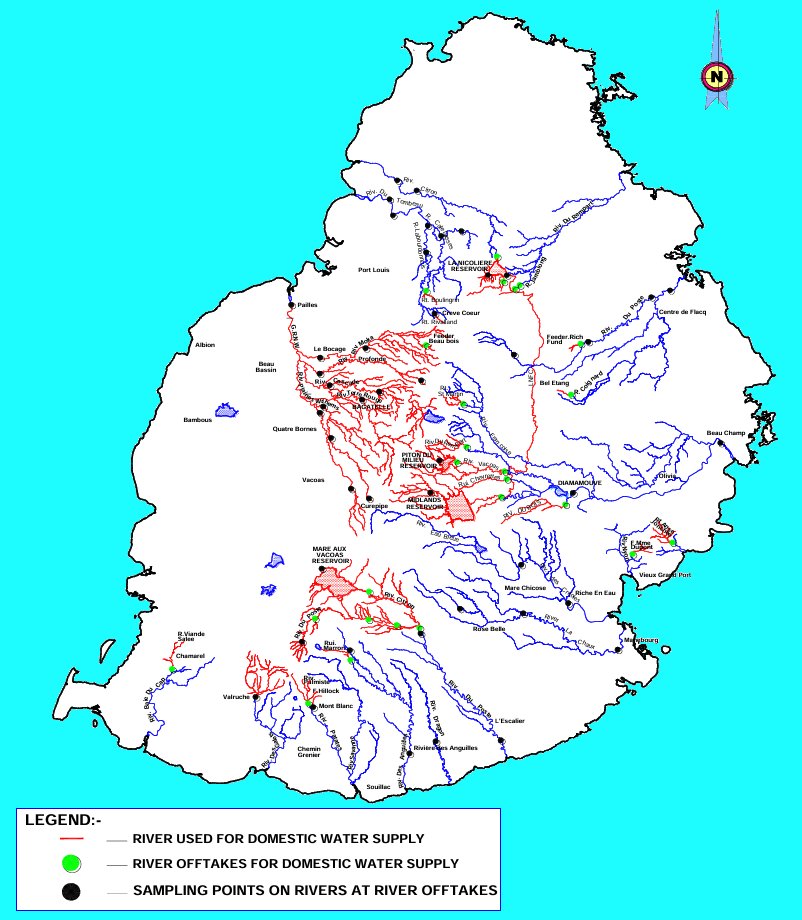 | |
Drinking water quality in Mauritius is generally of a high standard, thanks to the country's commitment to providing safe and clean drinking water to its population. The government of Mauritius has implemented rigorous water quality standards and monitoring systems to ensure that the water supplied to its citizens meets international health and safety guidelines. The water treatment infrastructure, which includes processes such as filtration, chlorination, and disinfection, plays a crucial role in maintaining water quality. Mauritius has taken measures to protect its water sources, including the management of watersheds and controlling pollution to prevent contamination. Additionally, regular water quality testing and monitoring are conducted to identify and address any potential issues promptly. This dedication to clean drinking water has not only benefited the health and well-being of the population but also supports the country's thriving tourism industry.
Surface water qualitySurface water quality in Mauritius varies depending on the specific bodies of water and their proximity to human activities. The island nation has a diverse range of surface water sources, including rivers, streams, lakes, and lagoons.
It's worth noting that while many efforts are in place to protect surface water quality in Mauritius, challenges such as population growth, urbanization, and agricultural expansion continue to put pressure on these valuable resources. Sustainable land management practices and ongoing monitoring and conservation efforts are essential to maintain the quality of surface waters in the country.
Groundwater qualityGroundwater quality in Mauritius is a critical aspect of the country's water resources, as it plays a significant role in supplying both drinking water and supporting agriculture. Several factors impact groundwater quality in Mauritius:
Mauritius has made significant efforts to manage and protect its groundwater resources. The government conducts regular water quality monitoring and has established standards to ensure that the water supplied for drinking is safe. Additionally, community education and awareness programs are in place to encourage responsible groundwater use.
| ||
To maintain and improve groundwater quality, continued vigilance, sustainable land and water management practices, and investments in wastewater treatment and pollution control are essential. The protection of groundwater quality is vital not only for human health but also for the sustainability of agriculture and ecosystems on the island. |
Inland Waters Statistics | ||
Freshwater quality from selected boreholes by selected parameters (Source: Digest of Environment, Table 29, 2023) | ||
River water quality by selected physico-chemical parameters (Source: Digest of Environment, Table 30, 2023) | 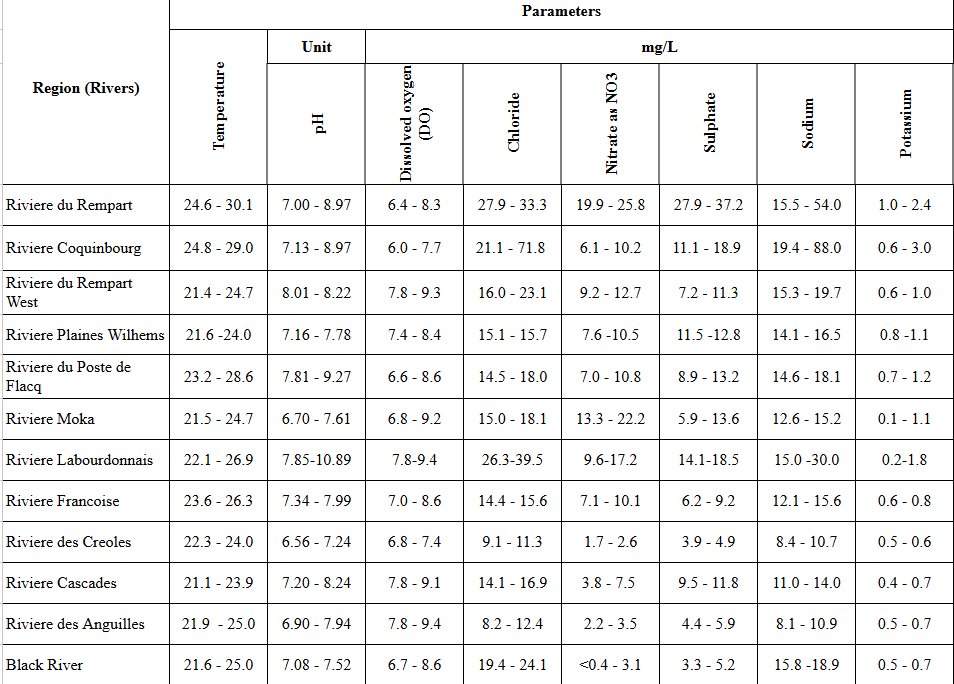
| |
Coastal and Marine Water Quality | ||
| Coastal and marine water quality in Mauritius is of paramount importance due to the country's heavy reliance on its surrounding waters for various purposes, including tourism, fisheries, and recreation. Several factors influence the coastal and marine water quality in Mauritius: | ||
Tourism and Recreational Activities: The country's picturesque coastal areas and beaches attract a significant number of tourists. While tourism contributes to the economy, it also places pressure on coastal waters due to increased human activities and potential pollution. Fishing and Aquaculture: Coastal and marine waters are essential for the livelihoods of local fishermen and the aquaculture industry. Maintaining water quality is crucial to safeguard fish stocks and the seafood industry. Shipping and Port Activities: Mauritius has a bustling port, and shipping activities can introduce pollutants and potential hazards to marine waters. Proper regulations and monitoring are necessary to mitigate environmental risks. Coral Reefs and Biodiversity: The health of coral reefs and marine ecosystems is closely tied to water quality. Pollution and climate change-induced factors can adversely affect coral reefs and the diverse marine life they support. Climate Change and Sea Level Rise: Rising sea temperatures and sea levels, attributed to climate change, can impact coastal and marine water quality. It can lead to coral bleaching events and the intrusion of saltwater into freshwater bodies. Marine Pollution: Pollution from various sources, including industrial discharges, urban runoff, and shipping, can introduce contaminants into coastal and marine waters. Oil spills, in particular, can have devastating consequences for marine ecosystems. Cyanobacterial Blooms: Occasional cyanobacterial blooms in coastal waters can pose health risks to both humans and marine life. Nutrient runoff from agriculture and other sources can contribute to these blooms. To address these challenges, Mauritius has implemented measures to protect coastal and marine water quality. These include stringent regulations, regular monitoring, and the enforcement of environmental standards. The government also promotes sustainable fishing practices and conservation efforts to protect coral reefs and marine biodiversity. Despite these efforts, ongoing vigilance and proactive measures are required to address the complex interplay of factors impacting coastal and marine water quality. The preservation of these vital ecosystems is essential for both environmental sustainability and the economic well-being of the country. | 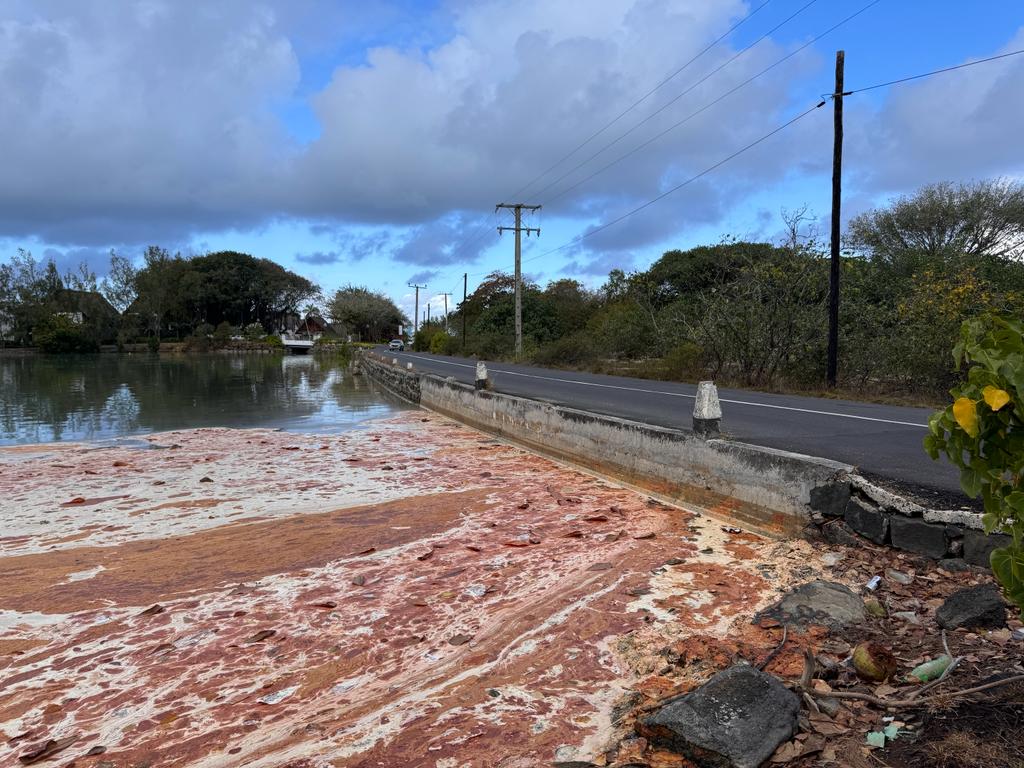 Coral spawning - November 2023 episode (courtesy: S Jawaheer) 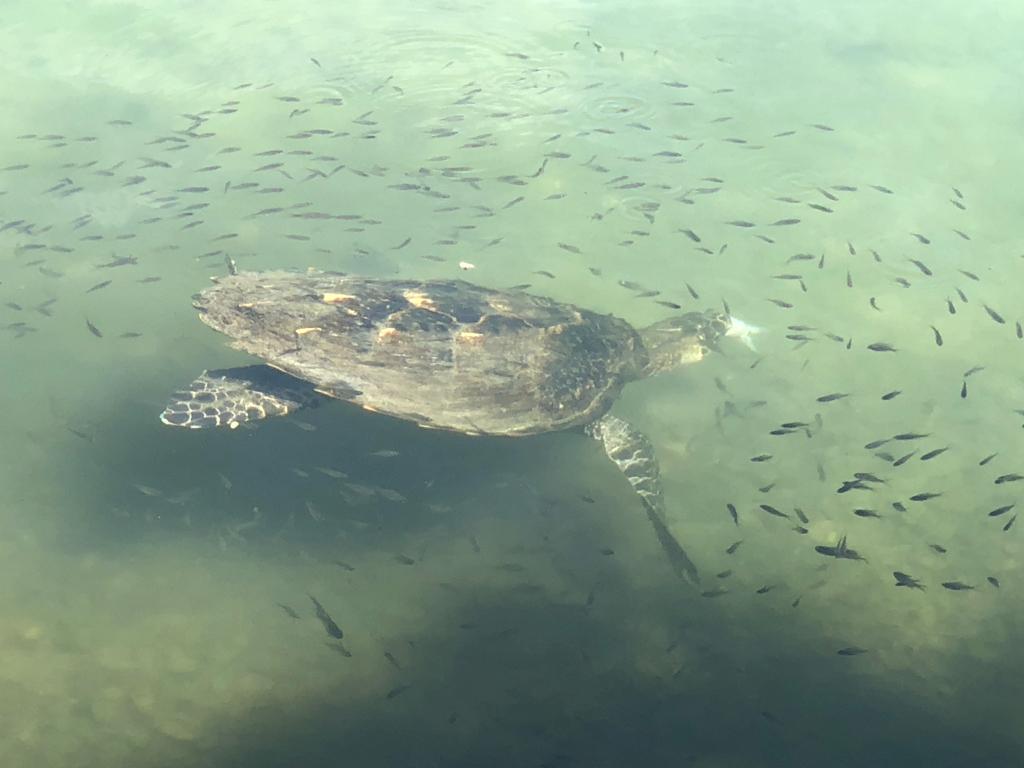 Turtle close to mangroves (courtesy: S Jawaheer) | |
Coastal/Marine Waters Statistics | ||
Range of levels of Nitrate-Nitrogen, Phosphate, and Chemical Oxygen Demand (COD) at established coastal sites (Source: Digest of Environment, Table 31, 2023) | 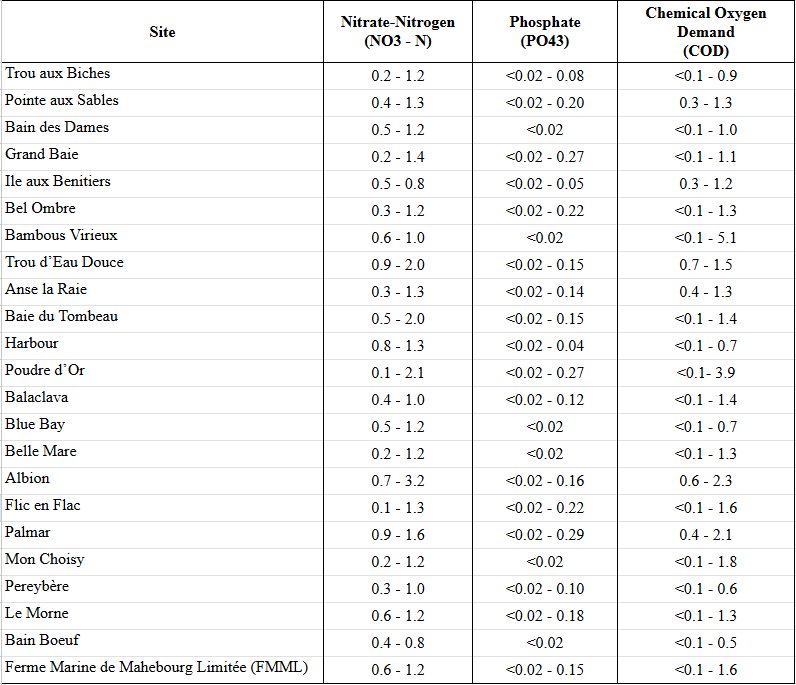
| |
Total Coliforms (TC) and Faecal Coliforms (FC) in coastal water at monitoring site and by station (2023) (Source: Digest of Environment, Table 32, 2023) | 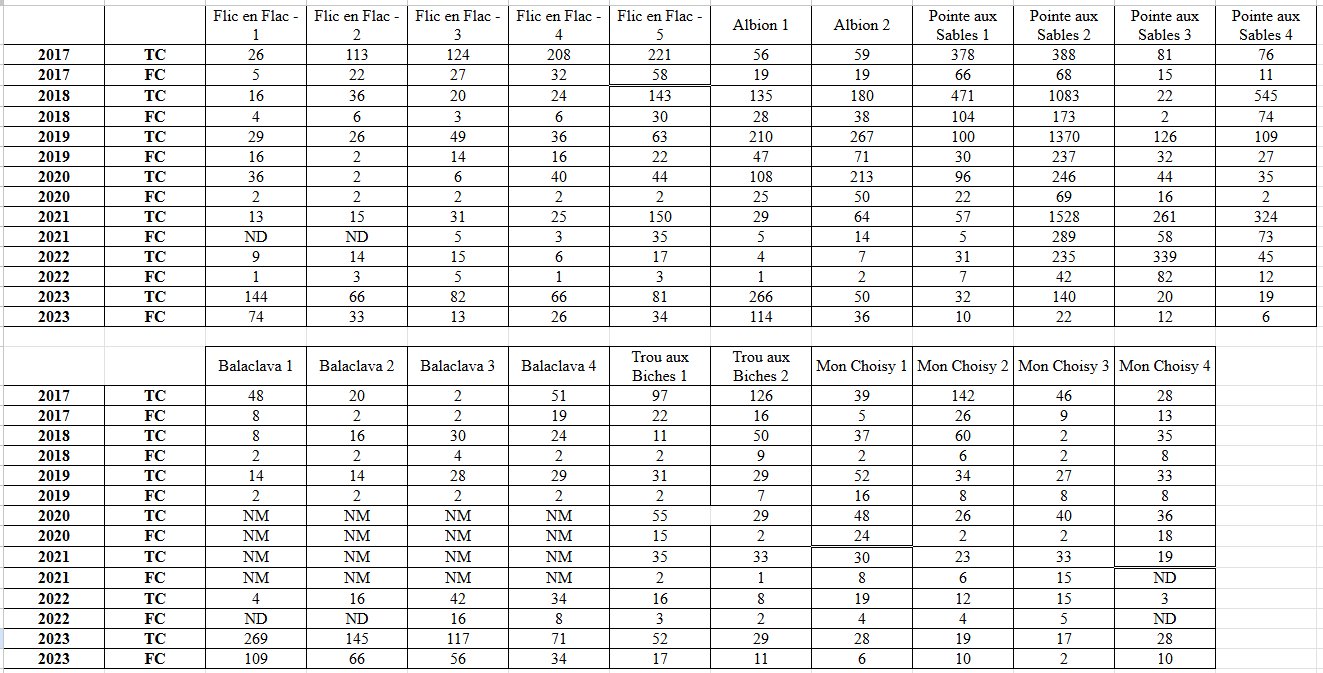 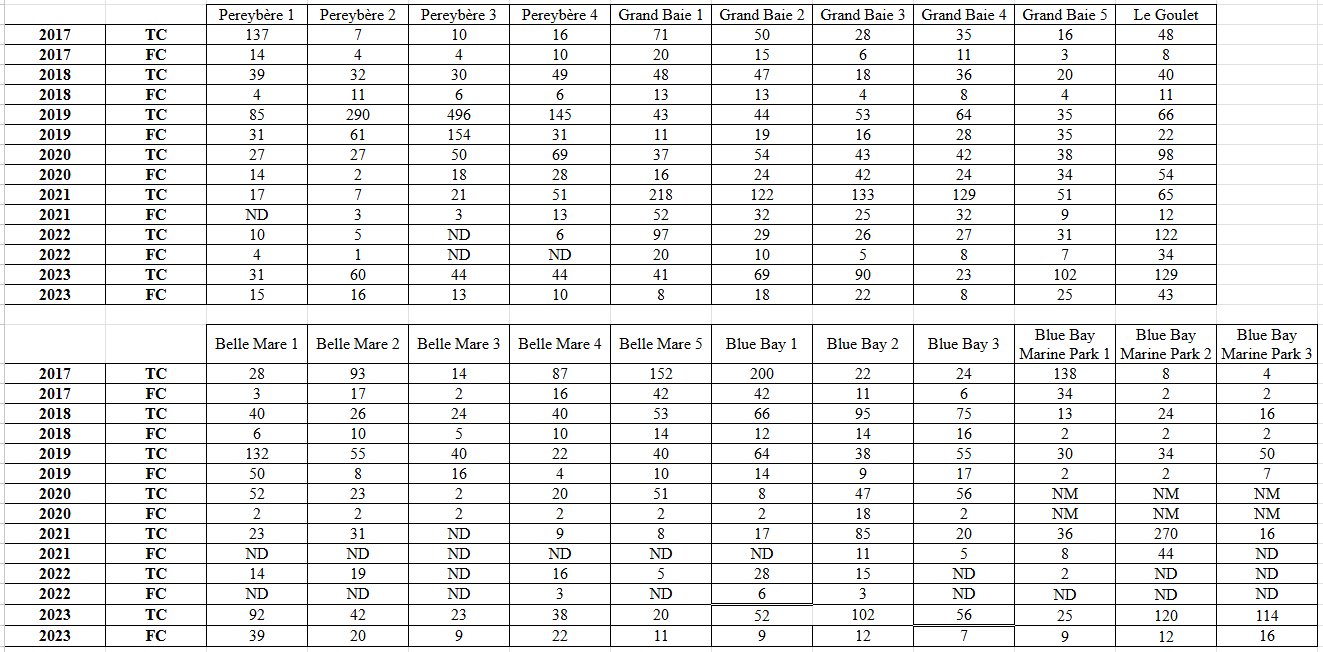 | |
Physical and chemical characteristics of coastal water by level and monitoring site - since 2017 (Source: Digest of Environment, Table 33, 2023) | 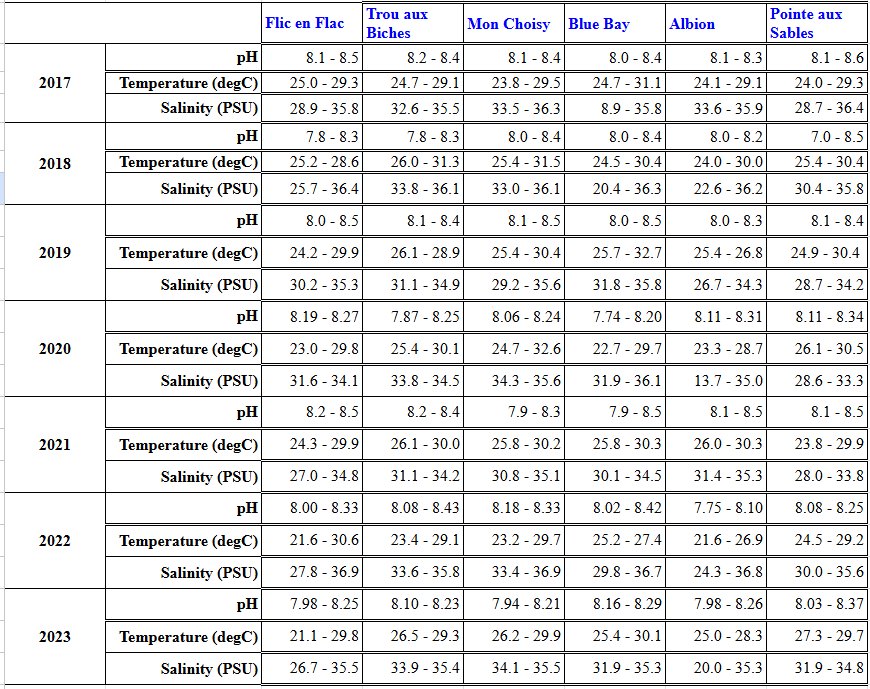 | |
Sea water quality in the lagoon at Terre Rouge Rivulet Bird Sanctuary, 2010 - 2019 (Source: Digest of Environment, Table 34, 2023) | 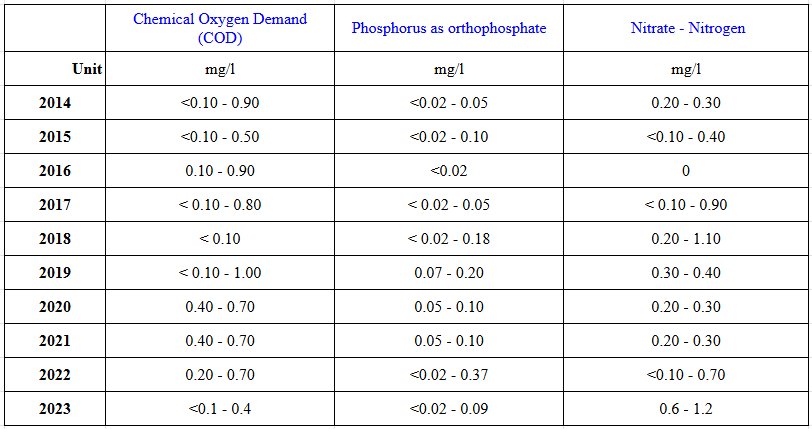 | |