
Risk Profile | ||
Risk assessment considers factors like exposure to hazards, vulnerability, and coping capacity. Addressing these components is crucial for reducing and mitigating disaster risks. Various models focus on different aspects, such as structural or institutional risks, hazards, or human and economic losses. Regardless of the specific focus, disaster risk calculations typically follow the formula: The primary aim of risk indexing is to provide decision-makers, disaster risk reduction (DRR) professionals, and climate change adaptation practitioners with a clear understanding of the level of risk and the resilience capabilities of the community in focus. These risk calculation models support proactive crisis management by helping prioritize resource allocation and coordinate actions that anticipate, mitigate, and prepare for humanitarian emergencies. | source: UNDRR Glossary Capacity: This refers to the combination of strengths, attributes, and resources that an organization, community, or society possesses to manage and lessen disaster risks and to bolster resilience. Disaster Risk: Defined as the potential for loss of life, injury, or damage or destruction of assets within a system, society, or community over a specified period of time. This risk is calculated probabilistically based on four factors: hazard, exposure, vulnerability, and capacity. Hazard: Any natural or human-induced process, phenomenon, or activity that has the potential to cause loss of life, injury, other health impacts, property damage, social and economic disruption, or environmental degradation. Vulnerability: The set of conditions determined by physical, social, economic, and environmental factors or processes, which increase the likelihood of an individual, community, assets, or systems being adversely affected by hazards. | |
INFORM Risk Index | ||
The INFORM Risk Index is a collaborative initiative led by the Inter-Agency Standing Committee (IASC) Reference Group on Risk, Early Warning, and Preparedness, in partnership with the European Commission. It serves as a multi-stakeholder forum aimed at creating shared, quantitative analyses pertinent to humanitarian crises and disasters. The European Commission’s Joint Research Centre is the scientific coordinator of this project. The INFORM initiative includes three operational dashboards: INFORM Risk, INFORM Severity, and INFORM Climate Change. The INFORM Risk Index evaluates the risk of humanitarian crises and disasters across 191 countries based on standard risk dimensions: Hazards and Exposure, Vulnerability, and Lack of Coping Capacity. The Hazards and Exposure dimension assesses both natural and human-induced hazards, while Vulnerability and Lack of Coping Capacity dimensions examine factors affecting populations' abilities to mitigate or worsen risks. Vulnerability measures the resilience of individuals and households in crises, and Lack of Coping Capacity evaluates institutional robustness. Each country is scored from 1 to 10 on these dimensions—where 1 represents the lowest risk and 10 the highest—along with an overall risk score. In the 2025 INFORM Risk Index, Mauritius received a very low risk classification with an overall score of 2.2/10, ranking it as the 154th most at-risk country.
|
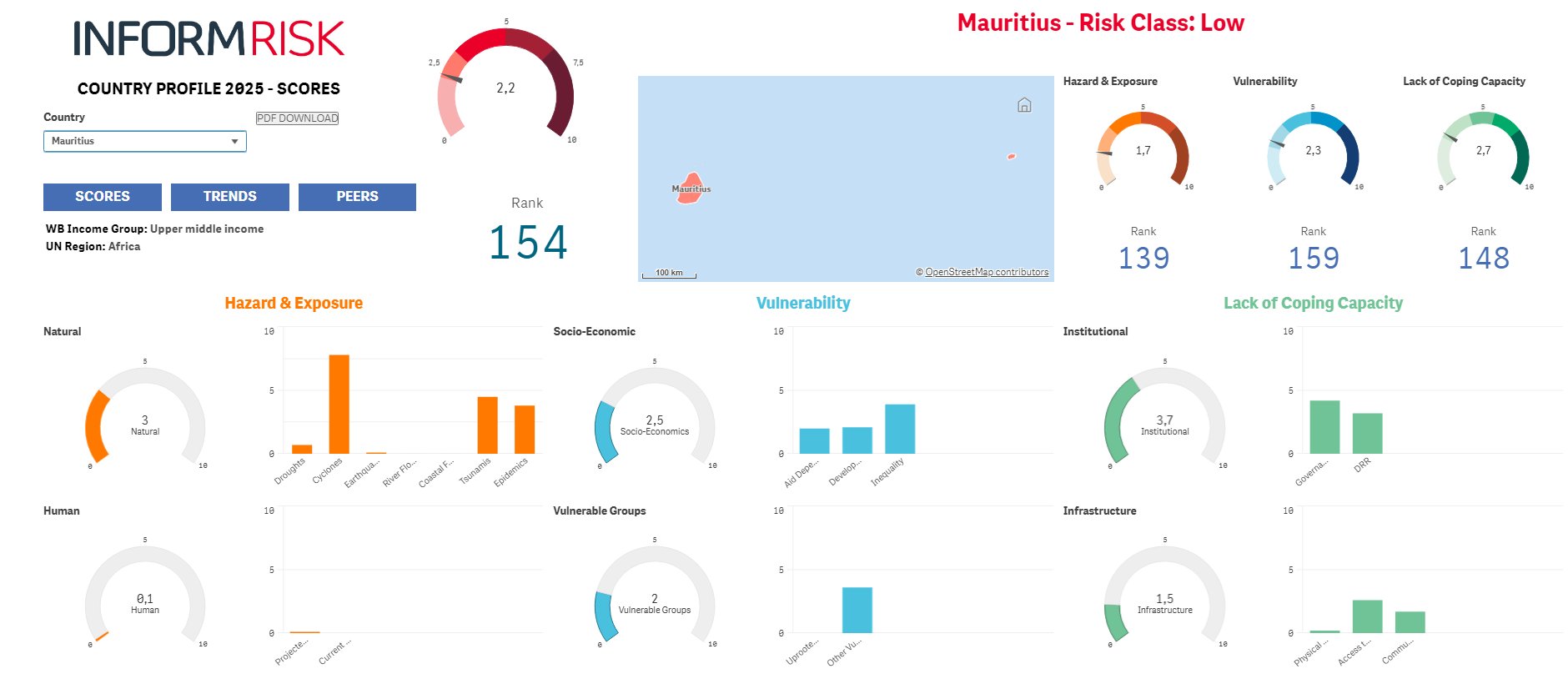 INFORM Risk Index Dashboard - Mauritius (2025) Click on image to access specific scores which include:
and sub-indices scores | |
World Risk Report |
The World Risk Report, produced by Bündnis Entwicklung Hilft, aims to enhance disaster risk awareness among the global populace and policymakers. It equips practitioners with crucial data to quickly adapt to complex situations, particularly in disaster-stricken societies. The report acknowledges that disaster risks are influenced not only by the occurrence and intensity of events but also by political and economic structures which can exacerbate these events into crises. It operates under the premise that societies can implement measures such as effective disaster preparedness and management to mitigate the impacts of extreme events and reduce disaster risk.
| The Concept of the WorldRiskReport Disaster risk is calculated for 193 countries worldwide, based on the interaction between the spheres of exposure and vulnerability (Figure). 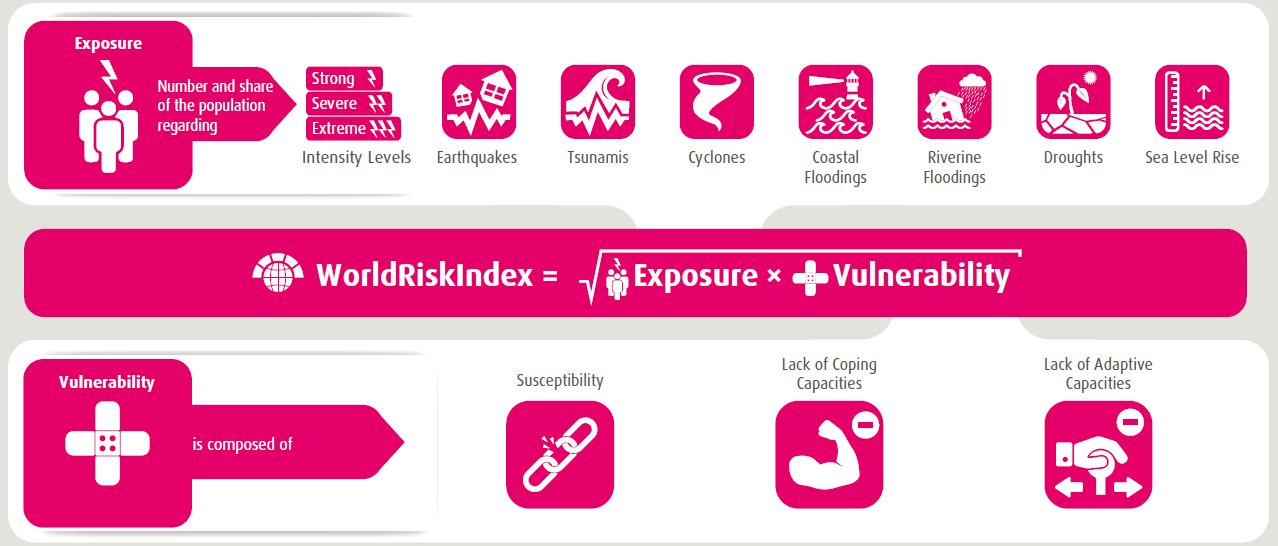 + Exposure to earthquakes, tsunamis, cyclones, coastal flooding, riverine flooding, drought and rising sea levels | |
World Risk Report 2024 | ||
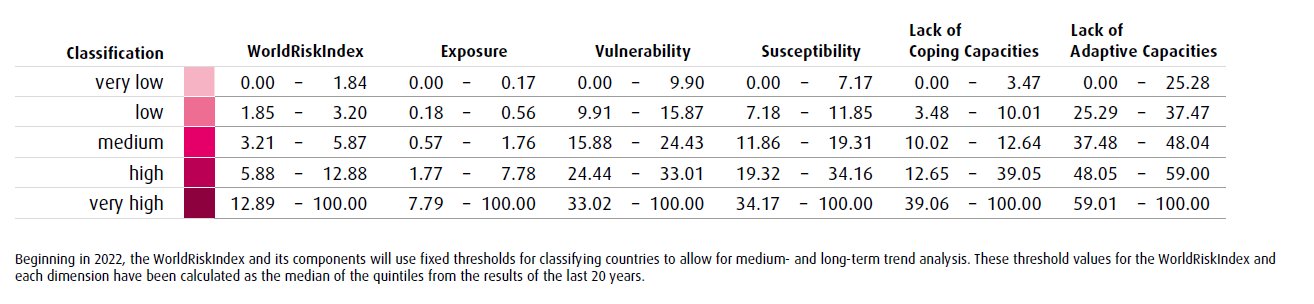
In the 2024 World Risk Report, Mauritius was ranked 104th out of 193 countries, with rankings designed such that the lower the rank (closer to 1), the higher the risk, and the higher the rank (closer to 193), the lower the risk. It covers all United Nations member states and more than 99% of the world’s population. Mauritius received a total Index score of 3.58 on a scale from 0 to 100, where 0 indicates minimal risk and 100 indicates maximum risk, categorizing it within the "medium" risk class. | 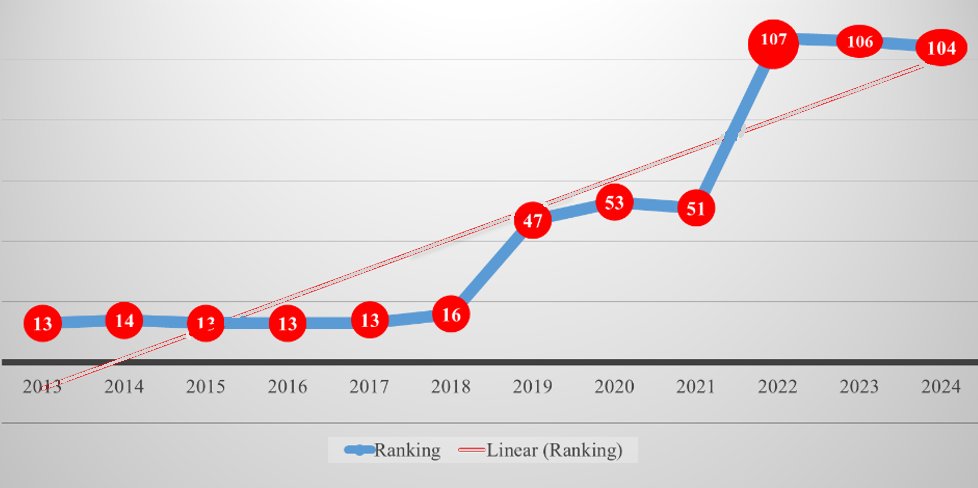 Detailed component scores for Mauritius were as follows: WorldRiskIndex: 3.58 (medium) Exposure: 0.73 (medium) | |
|  | |