
Projects by Mauritius Oceanography Institute
Mapping of oceanic and coastal environments of the Republic of Mauritius: Characterizing and mapping of coastal and oceanic environments (Characterization of Aquaculture sites)
Mauritius, as a Small Island Developing State (SIDS), is particularly vulnerable to the impacts of climate change, including sea-level rise, coastal erosion, biodiversity loss and increasingly intense tropical cyclones. To support sustainable management of its vast marine territory and promote the development of the ocean economy, the Mauritius Oceanography Institute (MOI) is implementing the Mapping of Oceanic and Coastal Environments of the Republic of Mauritius project. The project aims to characterise the physical, chemical and biological properties of Mauritius' coastal and oceanic waters while assessing marine and coastal land use and the overall health of coastal marine ecosystems.
The project involves the collection and analysis of spatial and temporal datasets on key oceanographic parameters such as bathymetry, conductivity, temperature, salinity, turbidity, waves, and current speed and direction. These datasets are integrated into a Geographic Information System (GIS) to establish a comprehensive baseline database for long-term environmental monitoring and to support evidence-based marine planning. The information generated contributes to marine renewable energy development, marine tourism, ocean hazard identification and mitigation, marine conservation, and sustainable coastal development. The project provides a valuable decision-support tool for Government, establishes benchmark datasets for monitoring the status of coastal and oceanic waters, and facilitates investment in aquaculture and other ocean-based industries.
The project supports the identification and prescription of environmentally suitable aquaculture sites, with around 80% of the prescribed aquaculture sites around Mauritius having been surveyed and characterised. In addition to the potential aquaculture sites, priority coastal mapping has been completed in Le Morne, Flic en Flac, Blue Bay Marine Park, Pointe d'Esny, Île aux Aigrettes, Mahebourg, Ferney and Balaclava Marine Park, thereby contributing to a national geospatial database that strengthens marine spatial planning, sustainable resource management and climate resilience across the Republic of Mauritius.
2. Restoring Marine Ecosystem Services by Rehabilitating Coral Reefs to Meet a Changing Climate Future (AF-UNDP funded project)
Corals that survive bleaching events provide a critical opportunity to restore degraded reefs and maintain their ecological functions. However, the rapid pace at which climate change is negatively affecting coral reefs means that conservation measures alone are no longer sufficient to ensure that reefs remain functional and continue to deliver essential ecosystem services to coastal communities, including food security, shoreline protection from storms and erosion, and resilience to sea-level rise. Active intervention through coral reef restoration, particularly using thermally tolerant coral species or genotypes, is therefore required to enhance reef resilience and facilitate adaptation to ongoing and future climate change.
This project seeks to increase climate resilience in the Republic of Mauritius and the Republic of Seychelles by implementing coral reef restoration using thermally tolerant corals as a climate change adaptation measure. The project benefits both countries through on-the-ground coral restoration activities, complemented by a regional capacity-building programme and structured knowledge exchange to strengthen technical expertise and promote best practices in coral reef restoration and climate adaptation.
With regard to the research component on coral genetic structure, the results generated will provide critical insights into patterns of genetic diversity and potential adaptive variation within and among coral populations. This information will support the identification of resilient coral genotypes and inform science-based decision-making for restoration efforts, thereby improving the long-term success and sustainability of reef rehabilitation initiatives.
(Source: Guillaume et al., 2026. “Coral Genetic Structure in the Western Indian Ocean Mirrors Ocean Circulation and Thermal Stress History.” Evolutionary Applications 19(2): e70206. https://doi.org/10.1111/eva.70206.)
Project by University of Mauritius
Exploratory work on ICT/IoT-enabled shrimp aquaculture - Ongoing exploratory work on ICT/IoT-enabled shrimp aquaculture, with focus on small-scale shrimp acclimatisation and controlled culture conditions. The work aims to support sustainable aquaculture through real-time monitoring of key water-quality parameters, use of low-cost sensors and digital tools for improved management of aquaculture systems. The activity is at a preliminary/pilot stage and may contribute to future interdisciplinary work in sustainable aquaculture, blue economy and environmental monitoring.
Project by Albion Fisheries Research Centre
Production of freshwater prawn juveniles
Freshwater prawns (Macrobrachium rosenbergii) were introduced in Mauritius from Hawaii in 1972. Seed production was carried out in a pilot hatchery at Trou d’Eau Douce (1971-1982) and later on continued at the Albion Fisheries Research Centre (AFRC) since 2002.
The production of freshwater prawn juveniles is solely undertaken at AFRC in summer seasons, from October to April. Freshwater prawn represents a commercially important species in Mauritius. At AFRC, juveniles are sold at Rs. 1.25 per unit. The following pictures show the collection of berried female freshwater prawns from a local farm for breeding purposes. Application form is available on the link: Application for fish farming.
_1.jpg)
Production of Red Tilapia Hybrid fingerlings
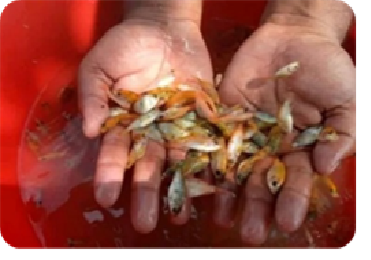
The Red Tilapia Hybrid (Oreochromis spp.) also known as Berri rouge was introduced in Mauritius from Malaysia in 1990. Monosex fish was produced through sex reversal treatment yielding quality seeds with high growth rate and good survival rate. Since 2007, the broodstock of Berri rouge is kept in outdoor concrete ponds at AFRC and are fed on tilapia pellets (red snapper pellets).
Brooders kept in the outdoor ponds spawn naturally in nests and the fish fry (recently hatched) are grown to fingerlings stage. The fingerlings obtained are supplied to fish farmers for backyard culture, aquaponics purposes or for culture in ponds and tanks. Berri rouge fingerlings are sold at a subsidized rate of Rs. 1.25 per unit for less or equal to 100 units to farmers and are free of charge for greater than 100 units. Application form is available on the link: Application for fish farming
Production of silver sea bream fingerlings
The production of silver seabream (Rhabdosargus sarba) fingerlings is undertaken at AFRC where brooders are collected from ponds at AFRC and conditioned in broodstock tanks in the hatchery. Low temperature is favourable for the culture of the species. Spawning occurs naturally under controlled conditions as from June till start of September.
The fingerlings produced by AFRC are released at the different parts of the island notably in Marine Protected Areas which will increase chances of the fish to attain adult size and spawning thus increasing survival of the species.
Marine Ranching
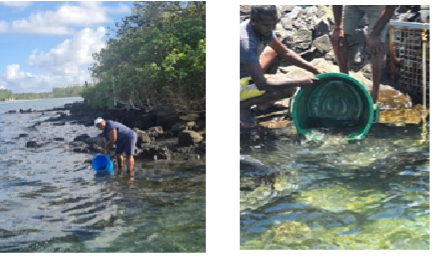
The Ministry embarked on a marine ranching programme, since 1997, whereby Silver Seabream (Rhabdosargus sarba), are being produced at the AFRC for release at selected sites in the lagoon for stock enhancement. Cordonnier (Siganus spp) frys are collected from the lagoon, grown to juveniles and are released back to the lagoon in view of replenishing the declining wild stock.
The benefits of marine ranching are as follows:
To maintain biodiversity and support ecosystems by reintroduction of depleted species;
To restore degraded marine habitats by introducing key species;
Enhance habitat health (example sea cucumbers help clean the ocean floor); and
Release in Marine Protected Areas will increase chances of the fish to attain adult size and spawning thus increasing survival of the species.
Other marine species having high commercial values which are targeted for marine ranching are mud crab (Scylla serrata), Sea urchin (Tripneustes gratilla), Sea cucumber (Holothuria scabra) and marine shrimp (Penaeus monodon). The brooders are procured from the wild, spawning is induced, larval rearing is conducted and juveniles are released to replenish the wild stock.
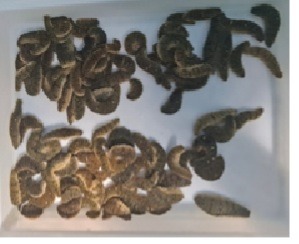
Seed production of seacucumber (sandfish) – Sandfish Resource Enhancement –Mauritius Project
Sea cucumbers are considered to be key organisms in the marine ecosystems where they play an important role in nutrient recycling and bioturbation. Sea cucumber stocks in Mauritius are sparsely distributed and localised depletion has occurred due to over-fishing. This phenomenon has generated interest of this Ministry in pursuing aquaculture interventions to support replenishment of the local stocks of the high value sea cucumber (Holothuria scabra) also known as sandfish. The objective of the project is to produce sea cucumber juveniles that would be used in restoring the sea cucumber stock in the lagoon and at the same time reducing pressure on the wild stock.
A Memorandum of Understanding between the Ministry of Agro-Industry, Food Security, Blue Economy and Fisheries and the University of the Sunshine Coast (UniSC), Australia has been signed to seek assistance of sea cucumber experts for the “Sandfish Resource Enhancement Programme” Project.
Trials for the hatchery production of sandfish are still being undertaken at the AFRC and sea cucumber juveniles will be released at sea to increase wild stock. Link to paper is: (PDF) New initiatives in sandfish mariculture in Mauritius.
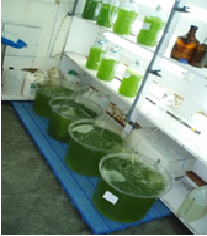
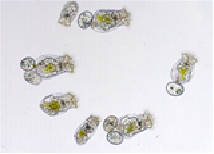
Phytoplankton Culture
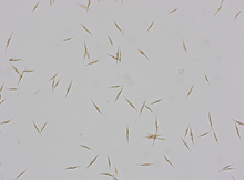
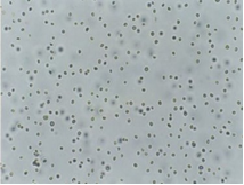
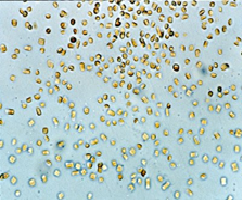
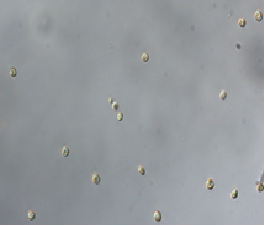
Plankton culture is on-going at AFRC where both phytoplankons and zooplanktons are cultured at the Aquaculture Division. They are destined to be used as live feed for fish larvae. Presently, there are four species of phytoplanktons that are under culture, namely Nannchloropsis sp., Chaetoceros muelleri, Phaeodactylum tricornutum and Dicronema lutheri. Zooplankton include rotifers (Brachionus plicatilis). Daily monitoring and maintenance of culture systems of the plankton species are required for proper growth rate.
Sea urchin Project under the JICA project – “Improvement of Livelihood of Coastal Communities through Sustainable Development of Blue Economy” by ILICO
An agreement was signed on 15 October 2021 between the Republic of Mauritius and the Government of Japan to urgently assist coastal fisher households who have been affected by the Wakasio oil spill incident. In this context, the project “Improvement of Livelihood of Coastal Communities through Sustainable Development of Blue Economy” was approved for implementation. The project last for a period of 4 years starting from May 2022 to April 2026 for the fishers in the south-east coastal region of Mauritius. The project involved the breeding of sea urchins in the hatchery at AFRC and training of officers of the Aquaculture Division on seed production of sea urchins and sea urchins fattening were carried out in cages at sea by fishers in Mahebourg and GRSE. Fishers were given training on the preparation of cages and cheap methods of fattening of sea urchins.
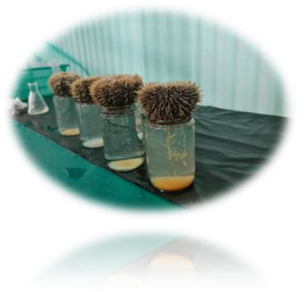
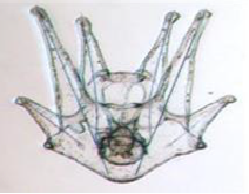
Live feed production
Pure strains of phytoplankton namely Nannochloropsis sp., Phaeodactylum tricornutum and Chaetoceros gracilis are maintained under controlled laboratory conditions all year round. Their mass cultures are undertaken in outdoor tanks as and when required. Zooplankton namely, Brachionus plicatilis, is also maintained under controlled conditions and mass culture is undertaken for sea bream culture. Additional information may also be accessed on Aquaculture Division.

NEREUS Project
This space-based maritime surveillance system, a collaboration between the Mauritius Research and Innovation Council (MRIC) and the Surrey Space Centre, addresses IUU fishing using satellite data and machine learning. The project aims to quantify illegal fishing activities within Mauritius' Exclusive Economic Zone (EEZ) and marine protected areas (MPAs), assisting the government in prosecuting offenders and contributing to the restoration of marine life.
Mauritius ECOFISH Project
This project, implemented by the UNDP in collaboration with the Ministry of Blue Economy, Marine Resources, Fisheries, and Shipping, aims to support sustainable artisanal fishing. The project includes the installation of modern Fish Aggregating Devices, training for young people and women in post-harvest processing, and upgrading fish landing stations. It also seeks to shift fishing efforts from lagoon areas to the high seas to relieve pressure on over-exploited lagoons.
SmartFish Project
Managed by the Indian Ocean Commission and co-implemented by the Food and Agriculture Organization (FAO), this initiative promotes sustainable aquaculture through cage culture. The project focuses on training fishers in cage culture at Poste de Flacq and Quatre Soeurs to diversify income sources for artisanal fishers, encouraging them to become fish farmers. The AFRC (Albion Fisheries Research Centre) provides fish juveniles and technical assistance.
Fishermen Investment Trust (FIT) Cage Culture Initiative
This initiative under the SmartFish Project focuses on small-scale fish farming, particularly cage culture at sea, to reduce pressure on traditional fishing grounds. It aims to create alternative income streams for fishers by helping them transition to aquaculture.