
The critical aspects and challenges of waste management in Rodrigues are outlined. The need for innovative solutions, enhanced regulatory frameworks, and better institutional capacities to address the complex waste management landscape effectively. are emphasised. Also highlighted are the ambitious steps Rodrigues is taking to manage waste effectively and sustainably. By implementing robust policies and fostering community involvement, Rodrigues aims to achieve its zero-waste objectives and enhance overall environmental health.
Overview of Waste Management in Rodrigues | ||
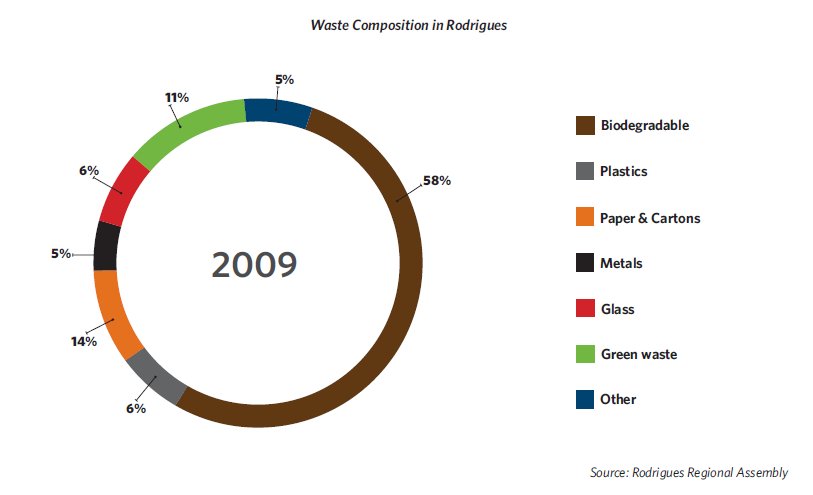
Rodrigues faces unique challenges in waste management due to its isolated location, limited land availability, and growing tourism industry. Effective waste management is essential for maintaining the island’s environmental integrity, public health, and sustainability. The waste sector in Rodrigues includes household waste collection, recycling initiatives, composting efforts, and landfill disposal. In 2020, Rodrigues generated approximately 86 tons of waste per week, with a population of 43,819. A shift from consuming locally produced goods to imported ones has altered waste composition and increased management challenges. As of 2011, all non-hazardous waste was directed to the Roche Bon Dieu landfill, which was nearing full capacity at the time. The increase in consumerism and preference for imported goods over local products is altering waste composition, complicating waste management strategies. The shift in consumption patterns necessitates updated approaches to handling the changing types and volumes of waste produced. 1. Household Waste Collection and Frequency Collection Method: Waste is primarily collected using door-to-door services and community waste bins placed in strategic locations across villages. Households are encouraged to separate their waste to facilitate recycling and composting. Plastic, Glass, and Metal: Dedicated collection bins are available in some public areas. Recyclable materials are sent to Mauritius for processing. Location: The island has a single landfill site for final disposal. Medical Waste Handling Medical waste management in Rodrigues is quite limited, with most of the waste being handled through a single incineration facility at Queen Elizabeth Hospital. The Environment Division has minimal involvement in the process, and the hospital takes primary responsibility for disposal. However, the incinerator itself isn’t always reliable, facing operational challenges from time to time, which can lead to temporary storage issues or delays in proper disposal. Medical waste includes everything from used syringes, bandages, and expired medications to biological waste from hospitals, clinics, and pharmacies. In theory, there’s a system in place for segregation at source, where hazardous waste is separated from general healthcare waste before disposal. But in practice, this isn’t always strictly followed, especially in smaller healthcare facilities that may not have the right infrastructure or trained personnel. When the incinerator is functional, medical waste is burned at high temperatures to minimize risks, but breakdowns can sometimes mean waste accumulates, requiring alternative solutions like temporary storage. There’s no dedicated landfill for medical waste, and improper disposal could pose environmental and health risks, especially if hazardous materials mix with regular waste. Another challenge is waste transportation. With only one main hospital and scattered health centers, getting medical waste from different points across the island to the incinerator can be a logistical issue, especially in rural areas. Some smaller clinics may resort to on-site disposal methods, which may not always follow best practices. There is definitely room for improvement in Rodrigues’ medical waste management system. More consistent monitoring, better enforcement of waste segregation rules, regular maintenance of the incinerator, and possibly exploring alternative disposal methods (like autoclaving for certain types of waste) could help. Public and healthcare staff awareness on safe handling and disposal also needs attention. Without a long-term plan, the risk of environmental contamination and public health concerns from mismanaged medical waste remains an issue. E-Waste Waste Handling E-waste management in Rodrigues is still quite basic, mainly relying on temporary storage because there aren’t any proper recycling facilities on the island. Right now, electronic waste like old computers, phones, and appliances are just stored in containers until they can be shipped to Mauritius for recycling. But this isn't a smooth process—exports are irregular, and transport costs are high, making it an inefficient system. Some people still throw e-waste in regular trash, which is a problem since it contains hazardous materials like lead and mercury that can contaminate the environment. There are a few collection points for e-waste, but coverage is pretty limited, and not everyone knows about them. Public awareness is a big issue—many people don’t really know how to dispose of electronic waste properly, so it sometimes ends up being dumped illegally, especially in remote areas. The Rodrigues Regional Assembly oversees waste collection, but without a dedicated e-waste processing facility, options are very limited. A better system would include more organized collection points across the island, stronger public awareness campaigns, and better coordination with Mauritius-based recycling firms. Maybe even setting up a small-scale dismantling and sorting unit in Rodrigues itself could help reduce costs before shipping materials out for final recycling. Also, having clear policies and regulations would help push businesses and households to dispose of their e-waste properly. Right now, though, e-waste management in Rodrigues is more of a temporary fix than a long-term solution. More structured strategies are needed to make it a sustainable process, both for the environment and for efficient waste handling.
Many households use modern sanitation systems with absorption pits for liquid waste disposal. Cesspool emptier trucks manage septic systems, directing waste to a wastewater treatment plant at Grenade. There are concerns about untreated effluent seeping into the ground and potentially contaminating aquifers, though a comprehensive study to assess these impacts has not yet been conducted. Due to the island's hilly terrain, constructing a sewer network is reported to be impractical. | 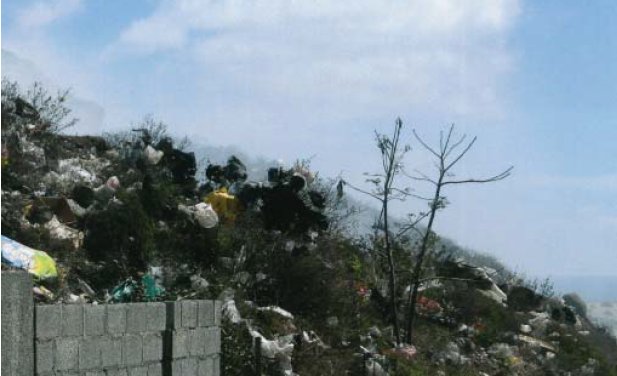
Challenges and Future PlansThe absence of a designated landfill and reliance on an open dumping site since the 1990s have led to occasional fire outbreaks, causing air quality issues and nuisances to surrounding villages. There is limited expertise in managing hazardous waste, including expired paints, chlorine, and chemicals. Efforts to collect and export used batteries for recycling are underway, but electronic waste management remains inadequate. Rodrigues faces several challenges in waste management:
To address these issues, future plans include:
Institutional and Regulatory Challenges The institutions responsible for waste management face significant challenges, including a lack of capacity and issues with enforcing regulations against illegal dumping. There is an urgent need for a holistic approach to manage both solid and liquid waste effectively. This includes establishing monitoring systems for aquifer and seawater quality and developing well-designed facilities for solid waste management. The absence of baseline data impedes the establishment of appropriate environmental standards, while a lack of specialized waste management units hinders focused initiatives.
Circular Waste ManagementCurrently, Rodrigues does not have a fully established circular waste management system, but there are some elements of circularity in its waste management practices. The island still largely relies on linear waste management, where waste is collected, stored, and either sent to landfill or exported to Mauritius for recycling. However, a few initiatives align with circular economy principles, particularly in organic waste composting, recycling, and reusing materials. Existing Circular Waste Management Elements in Rodrigues
While circular waste management is not fully in place, Rodrigues has taken steps toward reducing, reusing, and recycling certain waste streams. However, major gaps exist, especially in local recycling infrastructure, waste segregation, and sustainable waste processing. A more structured waste management policy focusing on circular economy principles could significantly improve waste sustainability on the island. | |
Waste Management Strategies | ||
| ||
| ||
Policy orientation and related strategies for waste management in Rodrigues | ||
| Table below outlines the cross-cutting policy orientations and related strategic actions to enable Rodrigues to achieve its aspiration of becoming a zero-waste Island by 2030 (Environment Master Plan , 2022). | ||
# | Policy Recommendation | Strategy |
1 | To promote circular economy. |
|
2 | To promote sound liquid waste management. |
|
3 | To develop awareness campaigns targeting the private sector, educational institutions and households concerning waste management. |
|
4 | To provide appropriate infrastructures for waste management activities |
|
5 | To improve the existing institutional framework to foster effective waste management |
|