
The Republic of Mauritius Voluntary National Review (VNR) 2024 addresses SDG 14: Life Below Water, aiming to conserve and sustainably use oceans, seas, and marine resources for sustainable development. Mauritius’ status as a Small Island Developing State (SIDS) and its environmental initiatives provide insight into its marine conservation efforts.
SDG 14: Life Below Water in the Mauritius Voluntary National Review 2024
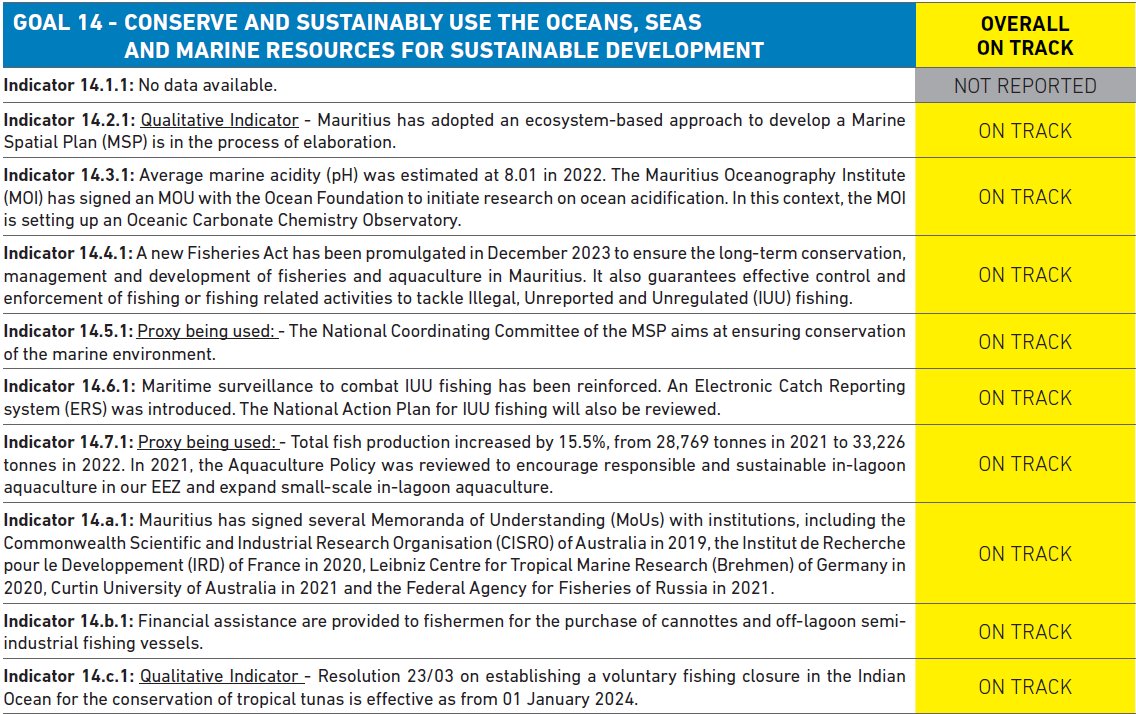
Key Achievements
Marine Ecosystem Protection:
Nature-based solutions, such as mangrove planting, coral farming, and seagrass mapping, enhance marine biodiversity and coastal resilience.
Blue carbon evaluation efforts contribute to sustainable marine resource management.
Sustainable Practices:
Private sector investments, like the Odysseo oceanarium, raise awareness and support research on marine life conservation.
Policies align with a green economy transition, reducing marine pollution and promoting ecological balance.
Climate Resilience:
Efforts to combat sea level rise, coastal degradation, and ocean acidification (noted as vulnerabilities) protect marine habitats.
The exclusive economic zone (EEZ) of 2.2 million km² is managed with sustainability in focus, supporting marine-based livelihoods.
Challenges
Climate Threats: Rising sea levels, marine pollution, and ocean acidification degrade marine ecosystems and coastal communities.
Resource Constraints: High costs of marine conservation and reliance on external funding limit comprehensive action.
Opportunities and Future Outlook
Ecosystem Restoration: Expanding nature-based solutions can further safeguard marine life and coastal areas.
Research and Education: Increased investment in marine science and public awareness can drive sustainable use.
International Support: Partnerships can provide resources and expertise to enhance ocean conservation efforts.
Conclusion
Mauritius progresses toward SDG 14 through marine ecosystem protection, sustainable practices, and climate resilience measures. Climate-related threats and funding challenges persist, but opportunities in restoration and collaboration offer a pathway to conserving life below water.