

The Republic of Mauritius Voluntary National Review (VNR) 2024 addresses SDG 15: Life on Land, focusing on protecting, restoring, and promoting the sustainable use of terrestrial ecosystems, managing forests, combating desertification, halting land degradation, and preserving biodiversity. Mauritius’ environmental strategies and resilience efforts provide a basis for inferring its progress.
SDG 15: Life on Land in the Mauritius Voluntary National Review 2024
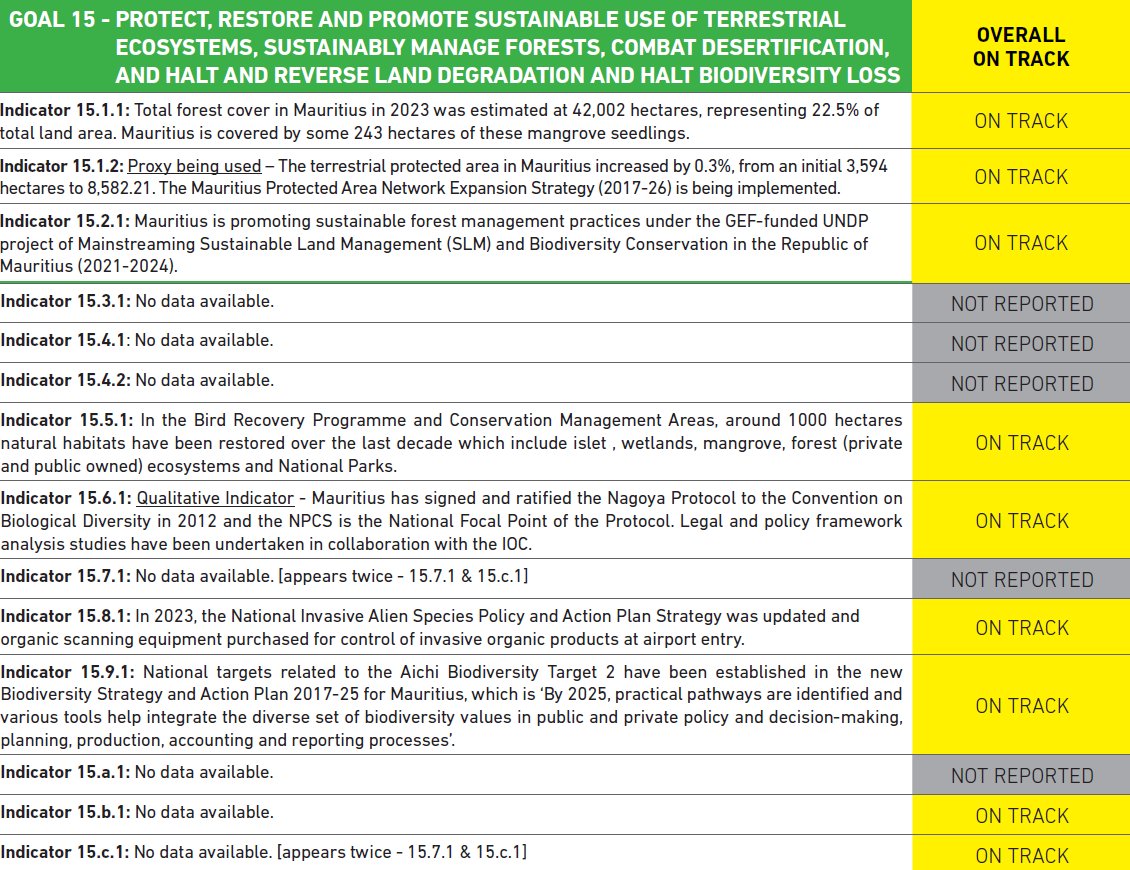
Key Achievements
Ecosystem Restoration:
Nature-based solutions, such as mangrove planting, support terrestrial and coastal ecosystem health and biodiversity.
Efforts to combat land degradation align with sustainable land use practices in agriculture and urban planning.
Sustainable Agriculture:
Approximately 22.2% of land is under sustainable agriculture, incorporating climate-smart and organic methods like permaculture and seaweed compost use.
Certification programs, such as MauriGAP, promote sustainable crop production and land management.
Biodiversity Conservation:
Initiatives to protect natural systems, including partnerships with organizations like the Mauritius Wildlife Foundation, preserve terrestrial biodiversity.
Investments in ecological resilience reflect a commitment to halting biodiversity loss.
Challenges
Climate Impacts: Frequent extreme weather events, like cyclones and floods, degrade land and ecosystems, threatening biodiversity.
Resource Limitations: High adaptation costs and reliance on external support constrain comprehensive land restoration efforts.
Opportunities and Future Outlook
Restoration Expansion: Scaling up nature-based solutions can enhance terrestrial ecosystems and combat degradation.
Sustainable Practices: Further adoption of eco-friendly agriculture can balance productivity and land health.
Collaborative Efforts: Partnerships with research and conservation groups can bolster biodiversity and land management initiatives.
Conclusion
Mauritius advances SDG 15 through ecosystem restoration, sustainable agriculture, and biodiversity conservation. Climate vulnerabilities and funding challenges remain, but opportunities in sustainable practices and collaboration support its efforts to protect life on land.