
The Republic of Mauritius Voluntary National Review (VNR) 2024 addresses SDG 4: Quality Education, focusing on ensuring inclusive, equitable, and quality education while promoting lifelong learning opportunities. Mauritius’ emphasis on education can be inferred from its welfare state policies, stakeholder engagement, and innovation initiatives.

SDG 4: Quality Education in the Mauritius Voluntary National Review 2024
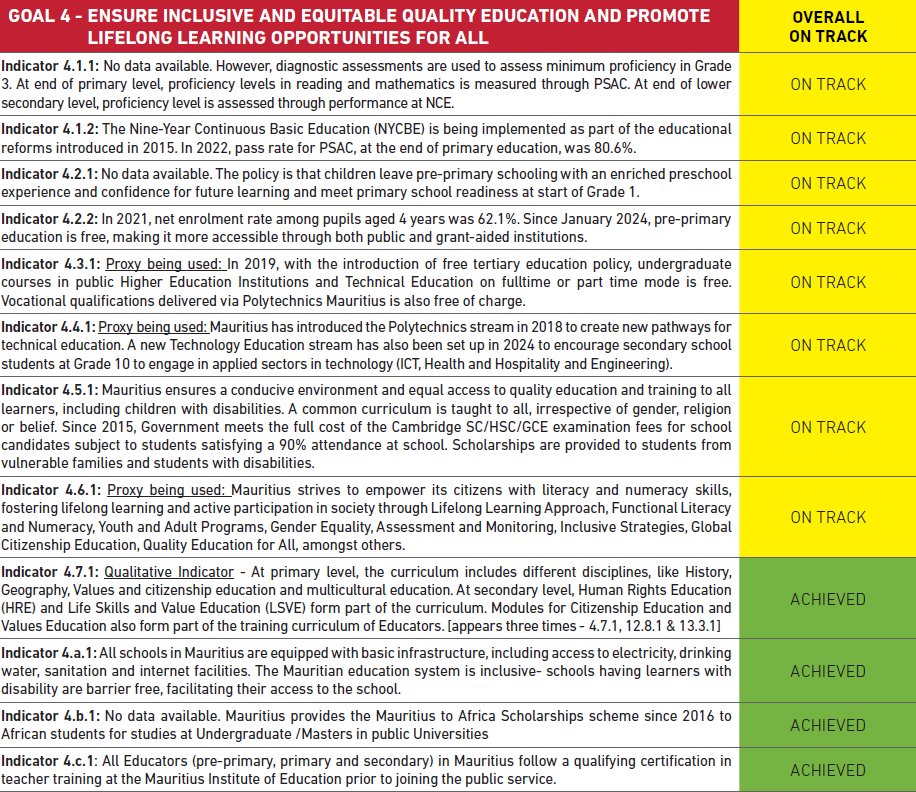
Key Achievements
Access to Education:
Mauritius provides free education at primary and secondary levels, reflecting its commitment to inclusivity as a welfare state.
Targeted support for vulnerable groups includes free school materials, examination fee exemptions, and educational grants, ensuring broad access.
Support for Lifelong Learning:
Programs like the provision of tablets to students in higher grades and free broadband internet to eligible households enhance digital learning opportunities.
Vocational training and start-up tool kits for the unemployed promote skills development and employability.
Stakeholder Engagement and Innovation:
Collaboration with academia, including universities and research councils, fosters educational innovation and aligns programs with sustainable development goals.
Private sector and NGO initiatives, such as fortified learning environments, support vulnerable children's education, enhancing overall learning outcomes.
Challenges
Resource Constraints: An ageing population and competing fiscal demands may limit funding for educational expansion or modernization.
Digital Divide: While digital tools are provided, disparities in access or skills could hinder equitable education, especially in remote areas.
Opportunities and Future Outlook
Educational Enhancement: Investments in social protection and technology can further improve educational infrastructure and teacher training.
Inclusive Growth: Expanding vocational and tertiary education aligns with economic goals, preparing a workforce for a high-income economy.
Partnerships: Strengthened collaboration with private and academic sectors offers potential for innovative teaching methods and research-driven education.
Conclusion
Mauritius advances SDG 4 through free education, targeted support for vulnerable groups, and a focus on lifelong learning, supported by multi-stakeholder efforts. Challenges like resource allocation and incomplete data persist, but opportunities for technological integration and partnerships signal a promising path toward quality education for all.