
The Republic of Mauritius Voluntary National Review (VNR) 2024 addresses SDG 5: Gender Equality, aiming to achieve gender equity and empower all women and girls.

SDG 5: Gender Equality in the Mauritius Voluntary National Review 2024
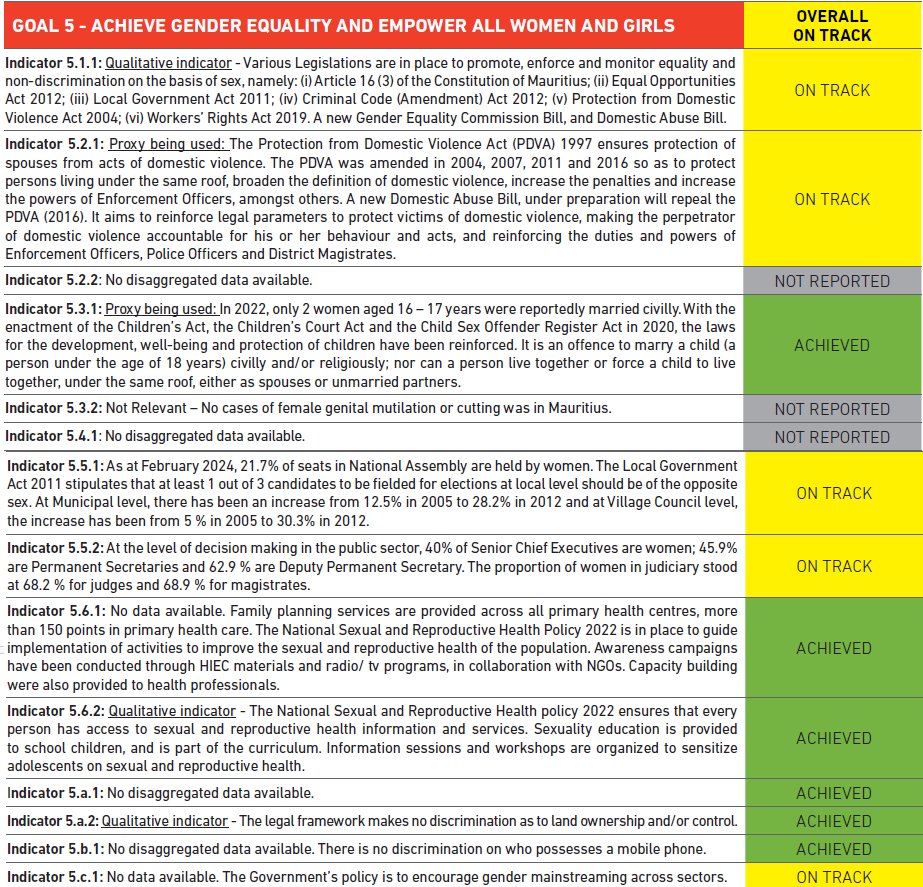
Key Achievements
Policy Integration:
Gender mainstreaming is a central pillar of government policies, ensuring that women’s rights and opportunities are prioritized across sectors.
A progressive tax regime and efforts to narrow the gender pay gap in the private sector enhance economic fairness for women.
Social Support Systems:
Universal basic pensions for widows and vulnerable women, alongside targeted allowances, improve financial security and empowerment.
Educational support, such as free sanitary towels for female students and examination fee exemptions, promotes girls’ access to schooling.
Economic and Social Inclusion:
Investments in social protection, health, and education benefit women disproportionately, fostering greater societal participation.
Initiatives like skills training for women detainees (e.g., rug-making from recycled materials) support rehabilitation and economic independence.
Challenges
Persistent Inequality: Cultural norms or economic disparities may still limit full gender equity, particularly in leadership roles or rural areas.
Resource Allocation: Competing demands, such as an ageing population, could constrain funding for gender-specific programmes.
Opportunities and Future Outlook
Policy Strengthening: Expanding gender-focused reforms can further reduce disparities in pay and representation.
Empowerment Programmes: Increased vocational training and digital access for women can boost economic opportunities and resilience.
Stakeholder Collaboration: Partnerships with NGOs and the private sector offer avenues to address gender-based challenges innovatively.
Conclusion
Mauritius progresses toward SDG 5 by embedding gender equality in policies, enhancing women’s economic security, and supporting education and skills development. While challenges like cultural barriers and incomplete data remain, opportunities for policy enhancement and collaboration pave the way for greater empowerment and equity.