
The Republic of Mauritius Voluntary National Review (VNR) 2024 outlines Mauritius' progress under SDG 1: No Poverty, highlighting its commitment to social inclusiveness as a welfare state. The report details efforts to eradicate poverty, support vulnerable populations, and address emerging challenges through targeted policies and financial mechanisms.
SDG 1: No Poverty in the Mauritius Voluntary National Review 2024
Key Achievements
Universal Social Support:
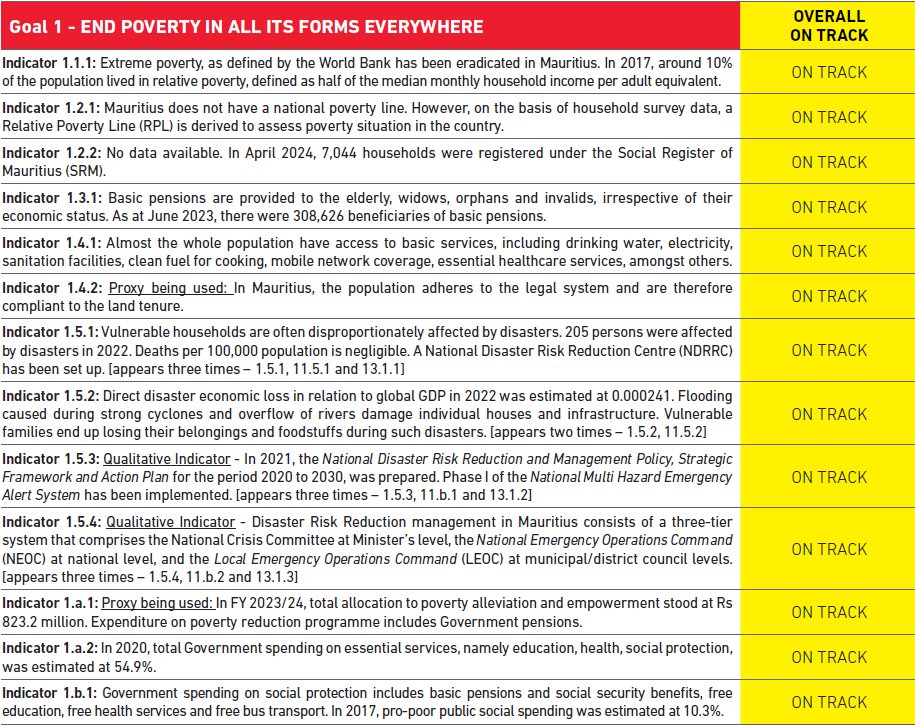
- Mauritius provides basic pensions to the elderly, widows, orphans, and persons with disabilities, regardless of economic status, with 308,626 beneficiaries as of June 2023.
- Additional aid includes social aid, income support for essentials (e.g., rice and flour), unemployment hardship relief, and funeral grants for low-income groups.
- Government expenditure on social security and welfare was approximately 9.3% of GDP in FY 2022/2023, according to Statistics Mauritius.
- Poverty Metrics and Trends:
- Extreme poverty, per World Bank definitions, has been eradicated. Relative poverty is measured using a threshold 40% above the international poverty line of Rs 1,938 per person per month, as set by the Social Integration and Empowerment Act 2016.
- In 2017, 10% of the population lived in relative poverty (half the median monthly household income per adult equivalent). Poverty at USD 6.85/day (2017 PPP) rose to 16% in 2020 due to COVID-19 but fell to 9% by 2024 with economic recovery.
Targeted Programmes:
- The Marshall Plan Against Poverty supports 7,044 SRM-registered families with Rs 39 million in subsistence allowances as of October 2023, and the NSIF has disbursed Rs 3.6 billion since 2016.
- Additional support includes free internet, tablets for students (Grades 10-13), child and crèche allowances, educational fee exemptions, and an 80% housing subsidy with 20% repayment over 15-35 years.
- The NSIF, reformed in 2019, has allocated over Rs 3.6 billion to 472 NGOs by April 2024 to foster social inclusion.
Disaster Relief:
Cyclone and flood allowances (Rs 250 per person per day/night) provided Rs 93.8 million during cyclone Belal (January 2024) and Rs 3.6 million during heavy rainfall (April 2024), alongside food packs for 3,880 families.
Financial Commitment
The FY 2023/24 budget allocated Rs 823.2 million for poverty alleviation, including Rs 594 million in social benefits.
Challenges
- Ageing Population: Increased longevity and declining fertility rates raise pension costs and demand for adapted healthcare, housing, and transportation infrastructure, straining public finances.
Data Management: While a Management Information System exists, regular upgrades are needed to enhance data collection and monitoring.
Opportunities and Future Outlook
- The World Bank projects a decline in poverty (USD 6.85/day, 2017 PPP) from 10% in 2023 to 7% by 2026.
Monitoring and Evaluation Indicators, developed with the Agence française de développement (AFD), aim to improve resource targeting and optimization in the long term.
Conclusion
Mauritius has made strides in reducing poverty through a robust welfare system, disaster response, and targeted support programs. Despite challenges posed by an ageing population and data needs, ongoing reforms and international collaboration signal a positive trajectory toward SDG 1 goals.