
Hazardous Wastes | ||
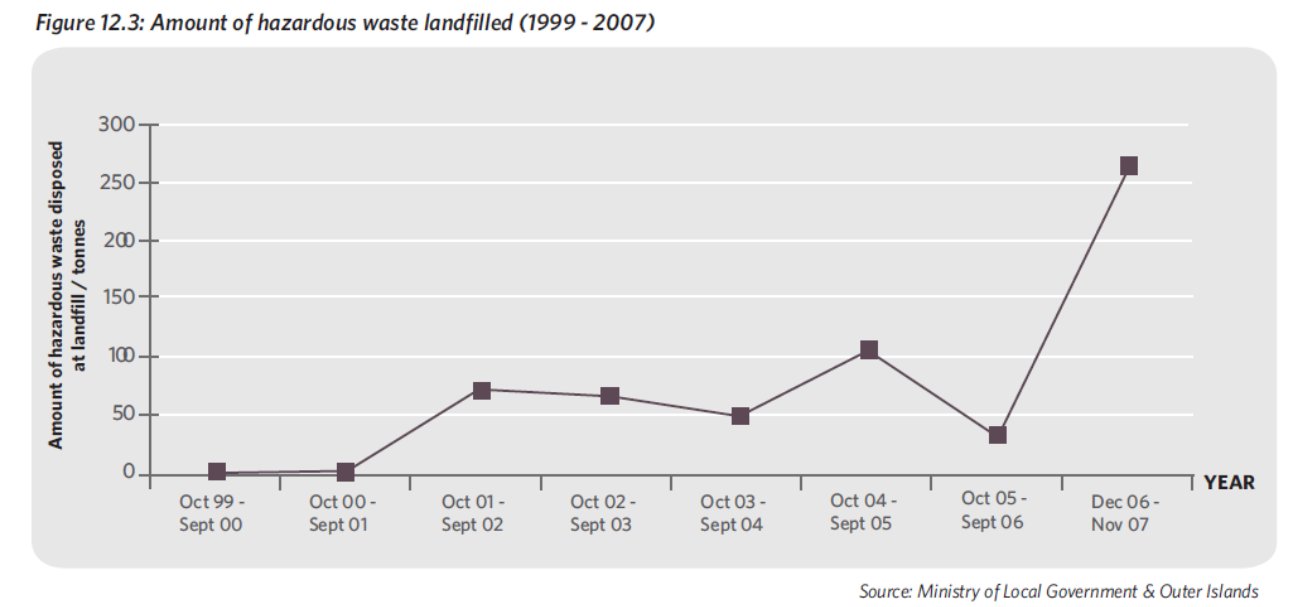
Hazardous wastes are wastes that have the potential to cause harm or damage to human health and the environment due to their hazardous properties. As compared to solid wastes, where an average of 550,000 tonnes were generated in 2024 and disposed at the Mare Chicose landfill, it is estimated that an average of 17,000 tonnes of hazardous wastes are generated annually out of which around 10% comprising laboratory and industrial chemical wastes, paint wastes, obsolete pesticides, pharmaceutical wastes, gas cylinders and waste aerosols, cannot be disposed of locally. Mauritius being Party to both Basel and Bamako Conventions since 1992, global and regional treaties dealing with hazardous wastes, has to ensure that it takes all practicable steps so that hazardous wastes generated on the island are managed in a manner which will protect human health and the environment against the adverse effects which may result from such wastes. Hazardous wastes include, amongst others:
| Definitions As per the Waste Management and Resource Recovery Act 2023, | |
Hazardous Waste Management | ||
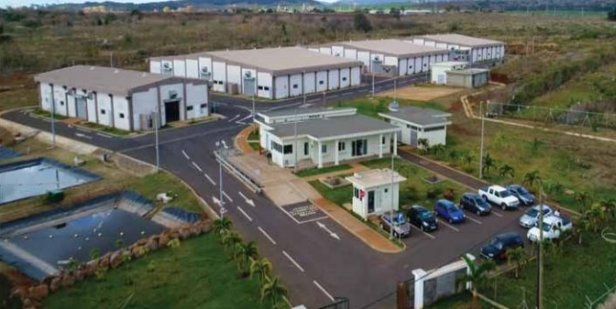
With a view to ensuring compliance to our international obligations and also in its capacity as enforcing agency for hazardous wastes, the Solid Waste Management Division has established an interim hazardous waste storage facility at La Chaumière has been set up and is operational since April 2017. Additionally, it serves as the competent authority for the Bamako and Basel Conventions in Mauritius. | List of prohibited wastes at the facility
| |
Hazardous wastes that cannot be treated and disposed on the island are tested, collected, sorted, pre-treated (if possible), regrouped, re-packaged, labeled, stored and exported to licensed recovery/treatment/ disposal facilities.
Interim Storage Facility for Hazardous Wastes at La Chaumière, Bambous The facility, which is operated by Polyeco S.A, started operations on 24 April 2017 and has provided the necessary infrastructure for the receipt, regrouping, repackaging and safe storage of hazardous chemicals waste collected from hazardous waste generators all around the island prior to their exportation for recovery and disposal to licensed facilities in Europe. Since its operation, the Interim Storage Facility for Hazardous Wastes at La Chaumière has collected some 660 tonnes of hazardous wastes from 230 hazardous waste generators. Approximately 570 tonnes were exported to licensed recovery and disposal facilities. Additionally, 2,714 tonnes of Heavy Fuel Oil waste generated from the Wakashio shipwreck have been collected and exported for treatment. | 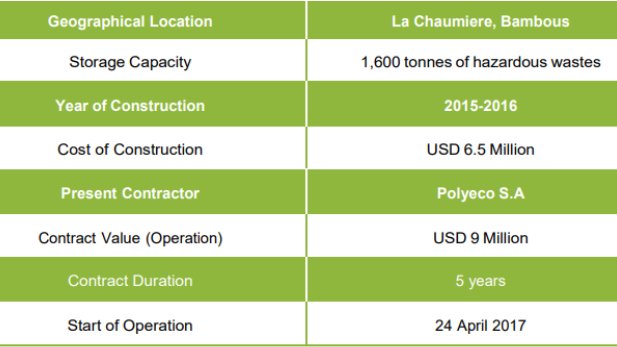 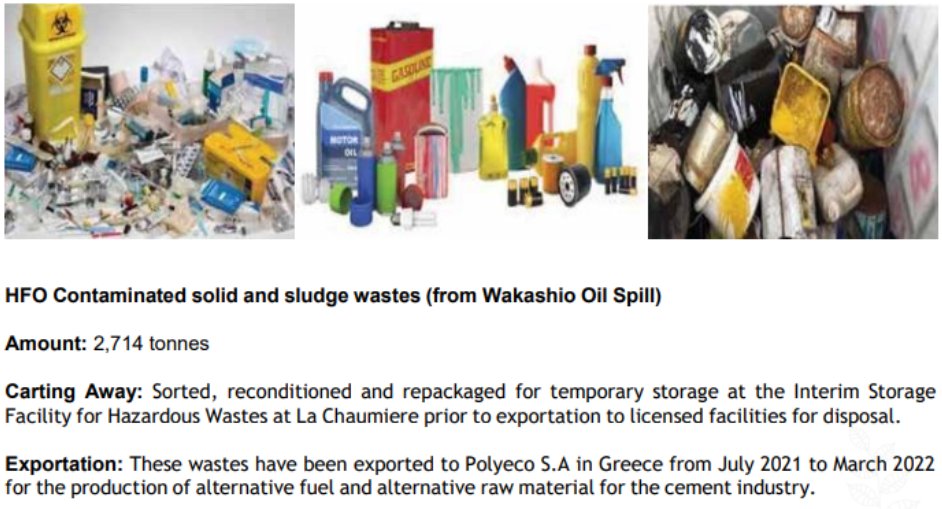 | |
For the Financial Year 2021-2022 (SWMD):
| ||
For the years 2017 - 2022, hazardous wastes collected (source: SWMD, 21/11/23) 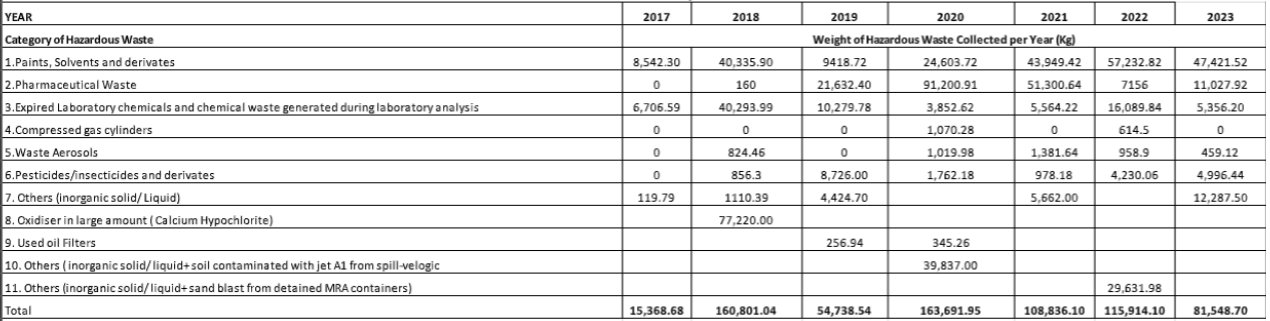 | ||
For the years 2017 - 2022, hazardous wastes exported (source: SWMD, 21/11/23) 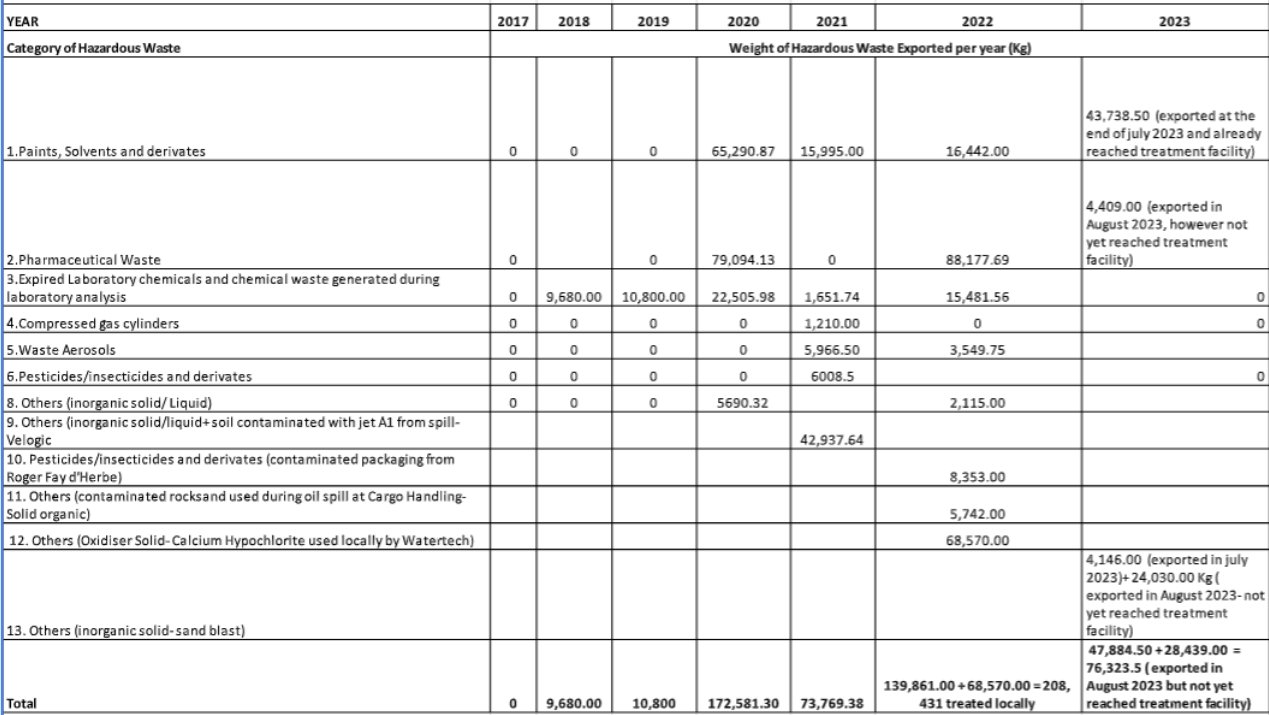 | ||
 | ||
Provision of the Environment Protection Regulation 2001 The Ministry is the Enforcing Agency for hazardous wastes as per the Environment Protection (Standards for hazardous wastes) Regulations 2001. The Environment Protection (Standards for hazardous wastes) Regulations 2001 make provision, among others, for hazardous waste generators to:-
| Procedures for disposal of Hazardous Wastes (source: PAGE (2021), Industrial Waste Management - Cost Disposal request through the computerized hazardous wastes management system. Government has approved the payment of a disposal fee of Rs 100 per kilogram of hazardous wastes (inclusive of VAT) and an additional fee of Rs 2500 (inclusive of VAT) for quantity of hazardous wastes exceeding one tonne by hazardous wastes generators. Upon commitment from generators to pay for the disposal of their hazardous wastes. an assessment visit is scheduled. Following the assessment visit, the generator is informed of the fee to be paid to the Ministry for the disposal of hazardous wastes based on an estimated weight of the wastes assessed. Once the disposal fee is received by the Ministry, collection of the hazardous wastes will then be scheduled. Please note that the exact weight of the hazardous wastes received is then communicated to the generator for any additional payment that may be required. |