
Circular Economy RoadmapAwareness of the circular economy (CE) concept in Mauritius is still in its early stages, with a predominant focus on the recycling aspect of the circular economy framework. Current initiatives are largely fragmented and lack a cohesive framework that could unlock the full transformative potential of the circular economy. Recognizing the need for a more strategic and holistic approach, the Ministry of Environment, with funding from EU and support from UNEP, has developed a 10-year roadmap on the CE for Mauritius (2023-2033). The Roadmap and Action Plan for a Circular Economy in the Republic of Mauritius (2023-2033) - henceforth referred to as CE Roadmap - will serve as a catalyst for sustainable change and presents a clear vision and well-defined strategic plan, specific objectives and a roadmap with key milestones for the next decade. The roadmap focuses on five priority focus areas, namely: (i) Agri-food sector; (ii) Construction and Real Estate; (iii) Consumer Goods; (iv) Mobility and Logistics; and (v) Waste Management.
|  | |
Strategic Pillars | ||
The CE Roadmap distributes various actions across five strategic pillars, which are interrelated. The pillars include: Better Product Design and Sustainable Production: This pillar is fundamental for allowing a higher degree of circulation of products and materials. It also emphasizes the shift towards functions or services rather than products. Sustainable Consumption by Private and Public Actors: For consumption to be sustainable, it is crucial that both private and public entities can easily access and demand sustainable products and services, and extend the lifespan of products. Efficient Waste Management and Recycling: Proper waste management and recycling are vital components that support the infrastructure of a circular economy. Circular Business Models and Innovation: The transition relies on businesses and other stakeholders who drive circularity through innovative business models and creative solutions. Cultural and Mindset Changes: All these efforts depend on a cultural shift and a change in mindset, which are necessary to embed circular economy principles deeply into society. These pillars collectively support the transition to a more sustainable, circular economy where resource use is optimized, and environmental impact is minimized. | 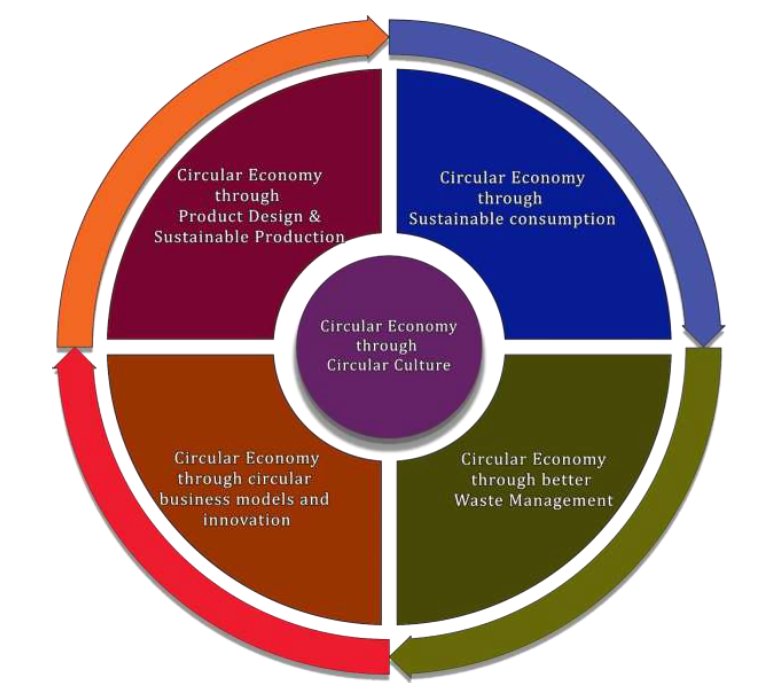 |