
ANIMAL (Animal Welfare) | ||
The Mauritius Society for Animal Welfare (MSAW) has been established under the Animal Welfare Act 2013 as replacement to the Mauritius Society for the Prevention of Cruelty to Animals (MSPCA). The MSPCA was founded in 1958 with the objectives to promote kindness and to prevent or suppress cruelty to animals, to ensure animal's protection and conservation in the context of humane environment. In 2013, the Animal Welfare Act has introduced new concept for pet owners and those responsible for domestic animals. The Mauritius Society for Animal Welfare (MSAW) is administered by a Council. The MSAW's main objectives are:
The Animal Welfare Unit under the aegis of the Ministry of Agro Industry and Food Security has also been set up to deal with issues like illegal breeding, cruelty or ill-treatment of animals. The inspectors of this specific unit can now give formal notices, warnings and even sanctions in some cases. | Read More | |
Small Farmers Welfare Fund | ||
The main services provided by this division are as follows: Manage and optimise its financial and other resources to further the social and economic welfare of small farmers and their families; Set up and develop schemes and projects, including schemes for agro processing enterprises and schemes in respect of loans or other financial assistance, for the welfare of small farmers and their families; Create special funds to operate any scheme set up by the Board and to receive contributions or other monies from small farmers or other sources; Perform such other activity as appears to be necessary for, and conducive to the promotion of, the welfare of small farmers in general. | Read More.. | |
Farming Business | ||
Bio FarmingThe Government announced in the Government Programme 2015-2019 that it will take one of the key measures to promote natural farming and organic production. The National Budget 2015/16 also advocated that “Bio Farming will be one of the priority sectors under the SME Scheme with the introduction of a package of relevant incentives". The Strategic Plan 2016-2020 for the Food Crop, Livestock and Forestry Sector launched by the Ministry of Agro Industry and Food Security also enumerated a set of measures so as to meet the Government’s vision for the promotion of Bio Farming. Information Leaflet on Organic Farming | 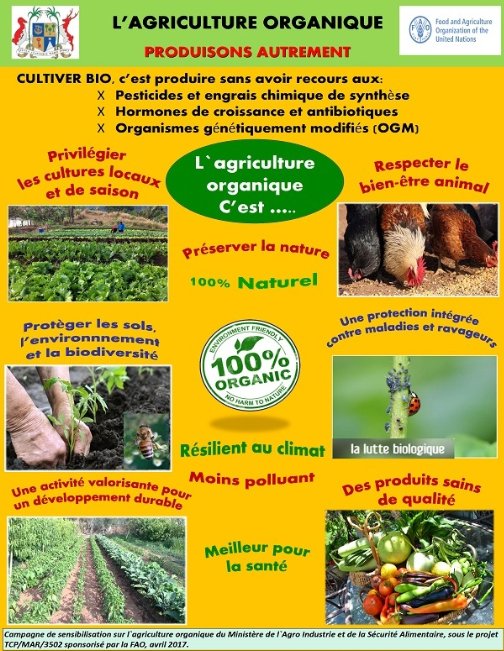 | |
Veterinary Services | ||
The main services provided by this division are as follows:
| Read More.. | |
Pest Control | ||
|  | |
Agricultural Chemistry Division | ||
The Agricultural Chemistry Division provides services for chemical analysis of agricultural materials such as soil, plant, fertilisers, feed and fodder, compost, farm manure and water for various parameters like major and minor nutrients and nutritional composition. The purpose of the chemical analysis is to help the growers (planters) and farmers to determine the soil fertility status of his land, the suitability of water for irrigation, the mineral status of plants/leaves/vegetables and the nutritional value of the animal feed and fodder. The Agricultural Chemistry Division operates a laboratory, providing analytical support services (chemical analysis) to the agricultural communities and livestock breeders. The Agricultural Chemistry Division also issues licenses for the wholesale and retail sale of chemical fertilisers. | Read More.. | |
Agronomy Division (Agricultural Services) | ||
Agricultural biodiversity (e.g., native crop varieties). Conservation status:The National Plant Genetic Resources Unit holds the country’s ex situ collection of PGRFA which includes both seed genebank and field genebank accessions that were sourced within Mauritius. Presently, a total of about 492 seed accessions consisting among others of the following genera: Amaranthus, Phaseolus, Vicia, Cucurbita, Brassica, Vigna, Solanum, Pisum, Cajanus, Abelmoschus, etc., are conserved in the seed genebank of the Plant Genetic Resources Unit (PGRU). 202 accession crops are conserved in the field genebank and include root crops and other vegetatively propagated crops of the genera Ipomoea, Colocasia, Manihot, Dioscorea, etc | ||
Horticulture Division | ||
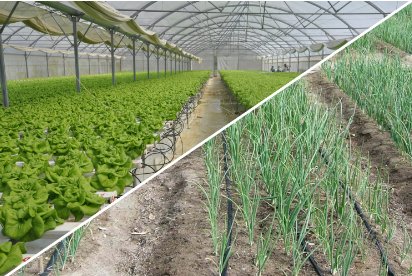
The Horticulture Division produces seeds of more than 30 species of vegetable crops for the planting community and general public. Seed crops are grown on different stations of the Agronomy and Horticulture Divisions where strict and specific norms of production are met. After harvest, seeds are sent to Barkly Experiment Station for processing, testing, packaging and storage. Seeds with prescribed standard of germination are issued to different outlets, including Barkly E.S. for sale to the planting community and general public. Seeds of certain crops such as bean, lettuce, and onion are sold on a voucher system whereby eligible growers are requested to contact their respective regional Extension Offices (FAREI) to procure the necessary voucher. Other vegetable seeds are sold in an open system to growers with cultivation area of up to 1 arpent (about 1 acre), above which a bona fide certificate from the Extension Service (FAREI) is obligatory.
|  | |