
A world without plastics seems inconceivable today. Global plastic production and utilization have reached amazing figures in the last four decades. This widespread use has been attributed to the various useful properties, plastics offer as a material. Plastics are durable, hence persist into the environment for long periods of time before undergoing degradation or fragmenting into microplastics or nano-plastics. Moreover, with trans-boundary movement of plastic wastes, plastic pollution knows no frontier and thus is recognized as one of the most dreadful global challenges, in the Anthropocene era.
Mauritius is not spared from the impacts of plastic pollution. Environmental impacts resulting from mismanaged plastic waste are linked with multi-farious environmental problems such as impacting adversely marine life and terrestrial animals; bioaccumulation of microplastic in the food web; clogging of drains and waterways; proliferations of vector-borne diseases; unsightly environmental landscape; and depletion of non-renewable resources.
Thus, combating plastic pollution including in the marine environment, is imperative.
Plastics and packaging waste represent one of the most pressing environmental challenges in Mauritius. With increasing consumption patterns, urbanization, and tourism, plastic waste generation has surged, leading to environmental pollution, marine debris, and landfill overloading. Despite some recycling initiatives and governmental bans on certain plastic products, Mauritius continues to struggle with plastic waste management, mainly due to low recycling rates, improper disposal, and high dependence on single-use plastics.
Mauritius, a small island developing state in the Indian Ocean, is not spared from the impacts of plastic pollution. Environmental impacts resulting from mismanaged plastic waste are linked with multi-farious environmental problems such as impacting adversely marine life and terrestrial animals; bioaccumulation of microplastic in the food web; clogging of drains and waterways; proliferations of vector-borne diseases; unsightly environmental landscape; and depletion of non-renewable resources.
Thus, combating plastic pollution including in the marine environment, is imperative.
Global Concern | ||
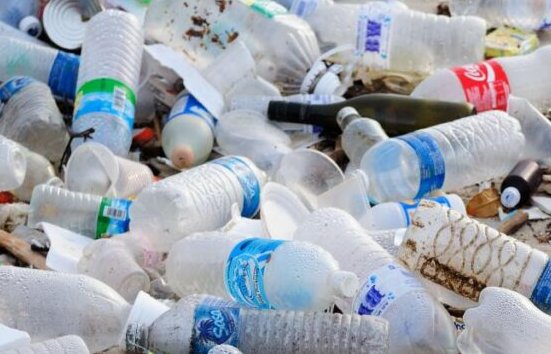
Plastic pollution and marine litter have emerged as pressing environmental challenges of our time. With the relentless production and disposal of plastic materials, our planet has become a dumping ground for an alarming array of plastic debris. From micro-plastics, to larger plastic items such as plastic bottles, single use plastic bags and other single use plastic items, indiscriminate disposal of these items Plastic pollution knows no geographical barriers, thus, addressing the issue of plastic pollution and marine litter, has become an urgent global imperative, demanding concerted efforts from individuals, communities, and governments worldwide. The long residence time of plastics in the environment means that once introduced, they endure for extended periods, contributing to a cumulative and pervasive issue. Bioaccumulation of microplastics and nano-plastics has far-reaching consequences, as these particles enter and accumulate in both terrestrial and aquatic food webs. This implicates plastic pollution as a critical environmental challenge with widespread implications for ecosystems, biodiversity, and potentially human health. The acknowledgment of bioaccumulation underscores the interconnectedness of environmental systems and the urgent need for comprehensive strategies to mitigate the adverse effects of plastic pollution on the planet's ecosystems.
|  | |
Plastic Pollution Fact Sheets (Global)Learn More About Plastic Pollution
| ||
Environmental Impacts of Plastic Waste | ||
Plastic waste has severe environmental impacts, contributing to a range of interconnected problems that affect ecosystems and human well-being. These include: Adverse Impact on Marine Life: Improper disposal of plastic waste often leads to marine pollution. Marine animals, such as sea turtles, seabirds, and fish, can ingest or become entangled in plastic debris, causing injuries, suffocation, and death. Plastic pollution disrupts marine ecosystems and biodiversity. Terrestrial Animal Harm: Land-based animals can also be negatively affected by plastic waste. Ingestion or entanglement in plastic poses risks to wildlife, affecting their health and potentially causing population declines. Terrestrial mammals, birds, and insects may suffer from the presence of plastic in their habitats. Bioaccumulation of Microplastics: Over time, larger plastic items break down into microplastics, which enter the food web. Microplastics can accumulate in aquatic and terrestrial organisms, leading to bioaccumulation as they move up the food chain. This poses risks to both aquatic and land-based species, including humans who consume contaminated seafood. Clogging of Drains and Waterways: Improperly disposed plastic waste can clog drains and waterways, leading to flooding and water pollution. Blocked water systems exacerbate the impact of heavy rains, causing urban flooding and damaging infrastructure. Proliferation of Vector-Borne Diseases: Plastic waste, particularly items that can collect stagnant water (e.g., discarded containers), provides breeding grounds for disease-carrying vectors like mosquitoes. This can contribute to the spread of vector-borne diseases, including malaria and dengue fever. Unsightly Environmental Landscape: Improperly managed plastic waste contributes to an unsightly and degraded environmental landscape. Accumulation of plastic litter in public spaces, natural areas, and oceans diminishes the aesthetic value of landscapes and harms tourism. Depletion of Non-Renewable Resources: The production of plastic involves the extraction and processing of non-renewable fossil fuels. Plastic waste exacerbates resource depletion, contributing to environmental degradation associated with fossil fuel extraction. Climate Change Impacts: The life cycle of plastics, from production to disposal, contributes to greenhouse gas emissions. Incineration of plastic waste releases pollutants and contributes to climate change, impacting air quality and exacerbating global warming. Microplastics in Soil: Microplastics generated from the degradation of larger plastic items can accumulate in soil. This can affect soil health, nutrient cycling, and plant growth, with potential consequences for terrestrial ecosystems. Chemical Pollution: Plastics often contain additives and chemicals that can leach into the environment, leading to chemical pollution. This can have toxic effects on both aquatic and terrestrial ecosystems, impacting plant and animal life. | 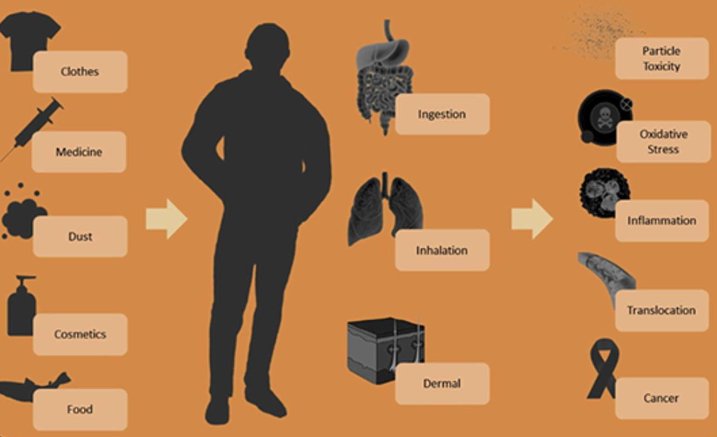 Frias and Nash (2019) defined microplastics as “any synthetic solid particle or polymeric matrix, with regular or irregular shape and with size ranging from 1 µm to 5 mm, of either primary or secondary manufacturing origin, which are insoluble in water”. | |
A challenging pathway for a plastic pollution-free island! | ||
In 2023, the import value of plastics and articles thereof into Mauritius amounted to an approximate value of 161 million U.S. dollars. China was one of the main trade partners of Mauritius in terms of plastic imports with a share of nearly 33 percent. Mauritius, a small island developing state in the Indian Ocean, is not spared from the impacts of plastic pollution. The Government of Mauritius has set an ambitious target to label the island a plastic-pollution free country in view of the serious environmental, economic and social impacts of plastic pollution such as:
| ||
Plastic Waste | ||
In Mauritius, plastic wastes account for more than 75,000 tonnes (14.5 %) of total municipal solid wastes generated annually and are predominantly composed of packaging (plastic bags, plastic bottles and food boxes/packaging). In fact, the percentage of plastic component in municipal waste has gradually increased from 8% in 2000 to 14.5% in 2020. The increase in the percentage of the plastic component in municipal solid wastes has been attributed to the progressive increasing use, and hence disposal, of single-use plastic products.
| 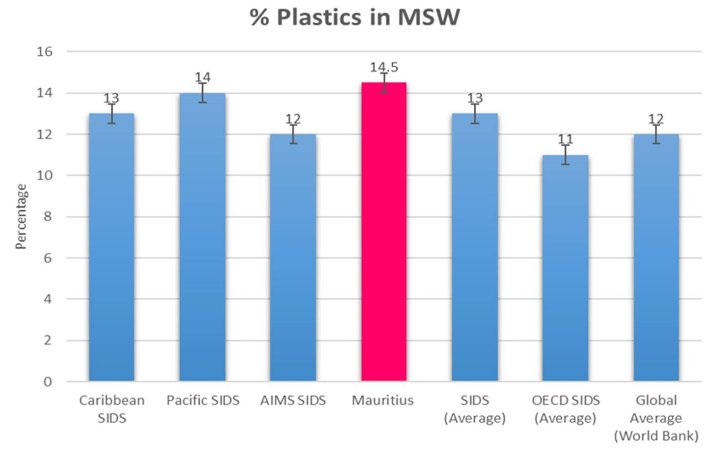 Percentage of plastics in municipal waste in different SIDS regions 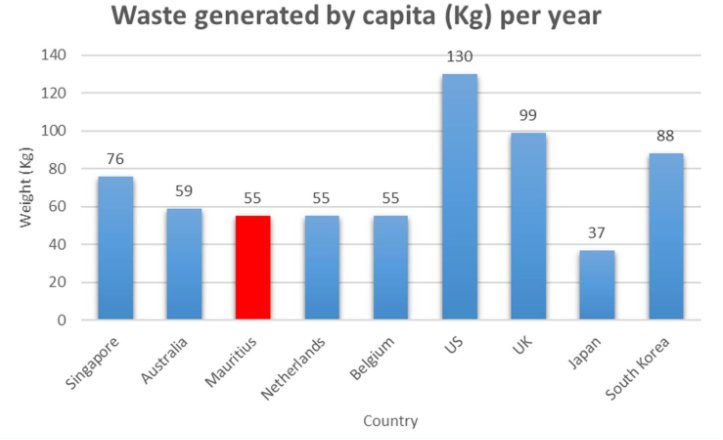 Single-use plastic waste generated by different countries per capita in 2019 | |
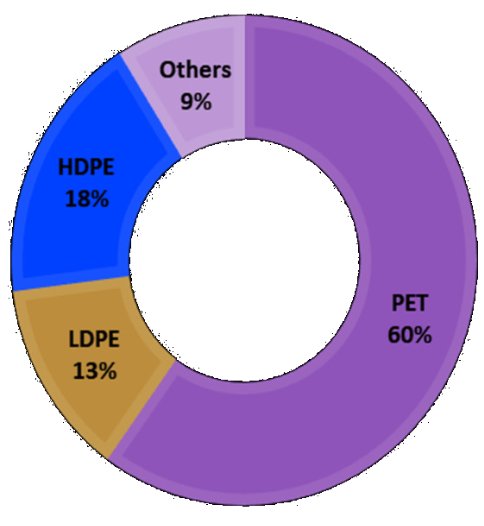
In terms of constituent polymer types, the 2020 plastic waste in Mauritius is approportionated as follows:
| 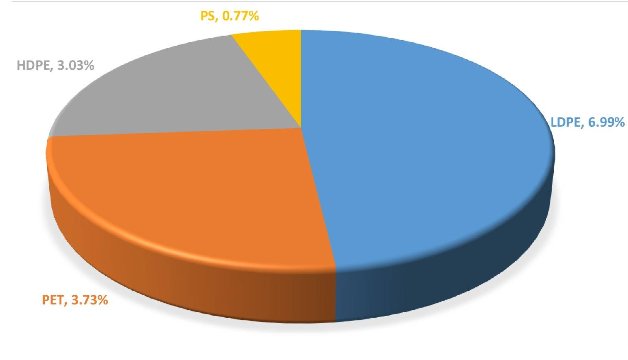 Constituent polymer types in plastic waste | |
Recycling Plastics | ||
In 2025: - To boost up the rate of post-consumer PET bottles collection for recycling, which is varying around 30-40% over the past years, a Financial Incentive Scheme was introduced in January 2014 and as at date, Government is providing Rs. 30 per kg as incentive for local PET recycling and Rs 15 per kg PET exported for recycling.
|
Different polymers recycled in Mauritius 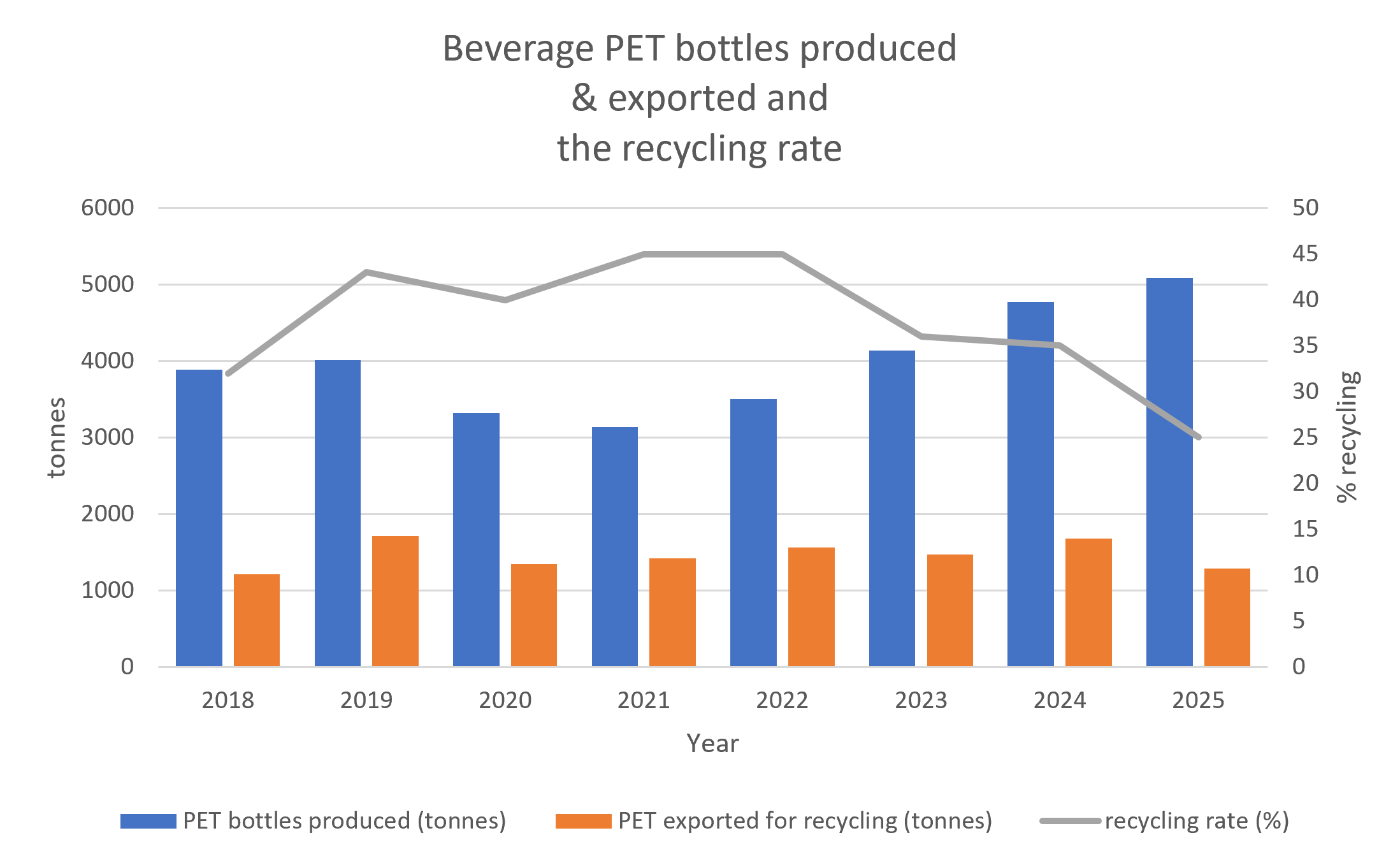 Post-consumer PET collected and exported and the recycling rate | |
Measures to combat plastic pollution in Mauritius | ||
There have been numerous measures taken by Government to tackle plastic pollution and marine plastic litter. These include fiscal incentives as well as policy and regulatory instruments such as the promulgation of the: (15 January 2021) The Environment (Control of Single Use Plastic Products) Regulations 2020; (01 October 2025) Amendment to Regulations - The manufacture, sale , supply and importation of the following 10 non-biodegradable single use plastic products has been banned:-
Following representations from the private sector regarding the challenges and unpreparedness of the local food industry to shift to biodegradable alternatives, four successive moratoria were granted from January 2021 to January 2026 for local packaging of the following: -
In view that manufacturers are still facing challenges and will require additional time to adopt appropriate alternatives, Government agreed on 28 November 2025 to exempt the use of non-biodegradable single use plastic cups, bowls and trays for local packaging of food products up to 14 January 2027 and in parallel establish a Technical Committee with concerned stakeholders. The objective of the Technical Committee is to work on the modalities of a Permit System for the local packaging of food products and imported food products pre-packed in non-biodegradable single use plastic cup, bowl and tray, including the fee structure and its validity. (01 March 2021)- The Environment (Banning of Plastic Bags) Regulations 2020; Amendment to Regulations - 01 October 2025 - the manufacture, sale, supply and importation of plastic bags has been banned except for exempt plastic bags and biodegradable or compostable plastic bags. The type of exempt plastic bags are those designed to be used:
(2001)- The Environment Protection (Polyethylene Terephthalate (PET) bottle Permit) Regulations 2001 - To manage post-consumer PET bottles generated by the local beverage industries based on the Extended Producers Responsibility. Under these regulations, local PET bottling beverage companies are regulated by a PET Bottling Permit system issued by the Ministry of Environment, Solid Waste Management and Climate Change. One of the condition under this Permit system, is the requirement to put in place facilities for the maximum collection of post-consumer PET bottles to be recycled. Plastic Management CommitteePursuant to Section 100 of the Environment Act 2024, a Plastic Management Committee was set up in March 2025. The Plastic Management Committee will serve as a platform with an overarching role to coordinate the implementation of polices, strategies and action plan towards a plastic pollution free Mauritius. The Committee comprises Government, Private and Non-Governmental Organizations. Road Map for a Plastic-Pollution Free Mauritius The Roadmap has been developed with various stakeholders, including Governmental agencies, parastatal bodies, civil society, recyclers, informal collectors, Private Sector stakeholders, NGOs and academia. 27 consultations have been held. Following Government Agreement obtained on 17 April 2026 for this Roadmap, the three documents produced namely NSP; Legal and Policy Analysis; and National Education and Awareness Programme, were made public. These can be accessed on https://environment.govmu.org. Implementing Sustainable Low and Non-Chemical Development in SIDS (ISLANDS) Indian Ocean Project One of the components under the ISLANDS Project, includes a comprehensive supply chain analysis for plastic pellets. The objective of the project is to establish an inventory of plastic pellets flow in Mauritius and provide a detailed understanding of the different sectors, processes and products manufactured from these pellets, to help enhance decision making. Government approval was obtained on 06 February 2026 to establish a Technical Committee with concerned stakeholders to work on the implementation of the recommendations of the above mentioned project, that is, to regulate the importation of plastic pellets so as to progressively reduce and monitor the use of plastic pellets within the national economy. With this forthcoming Regulation, there will be a better control on the raw materials being used for manufacture of plastic products while also prevent the illegal production of banned plastic items. Research and Development for Control of Plastic Pollution Result for the first project has indicated that the tested plastic materials showed a biodegradation rate between 1.4 – 1.8%. An in depth research study with a broader scope has been recommended on the most appropriate biodegradability standards that could be adopted in the plastic related regulations. Result for the second project has demonstrated that on a lab-scale basis, the tested PLA bottles and cups have partially biodegraded under landfilling conditions and are biodegradable under controlled composting conditions. Result for the third project has indicated the presence of microplastics along the eastern coast in the form of fragments, film, foam and fibre. Further research is recommended to determine the possible sources of microplastics (for example, whether from land base or influx by transboundary movement). Result for the fourth project has indicated that the biomass for banana fibres, pineapple leaves and coconut midribs are promising alternatives for single use plastic products. International Collaborations to End Plastic Pollution Moreover, Mauritius has joined the following groups, to enable forceful and collective negotiations of an ambitious treaty to end plastic pollution including in the marine environment: | ||