
The Republic of Mauritius Voluntary National Review (VNR) 2024 addresses SDG 6: Clean Water and Sanitation, focusing on ensuring availability and sustainable management of water and sanitation for all. Mauritius’ environmental and welfare priorities provide a foundation for inferring its efforts in this area.

SDG 6: Clean Water and Sanitation in the Mauritius Voluntary National Review 2024
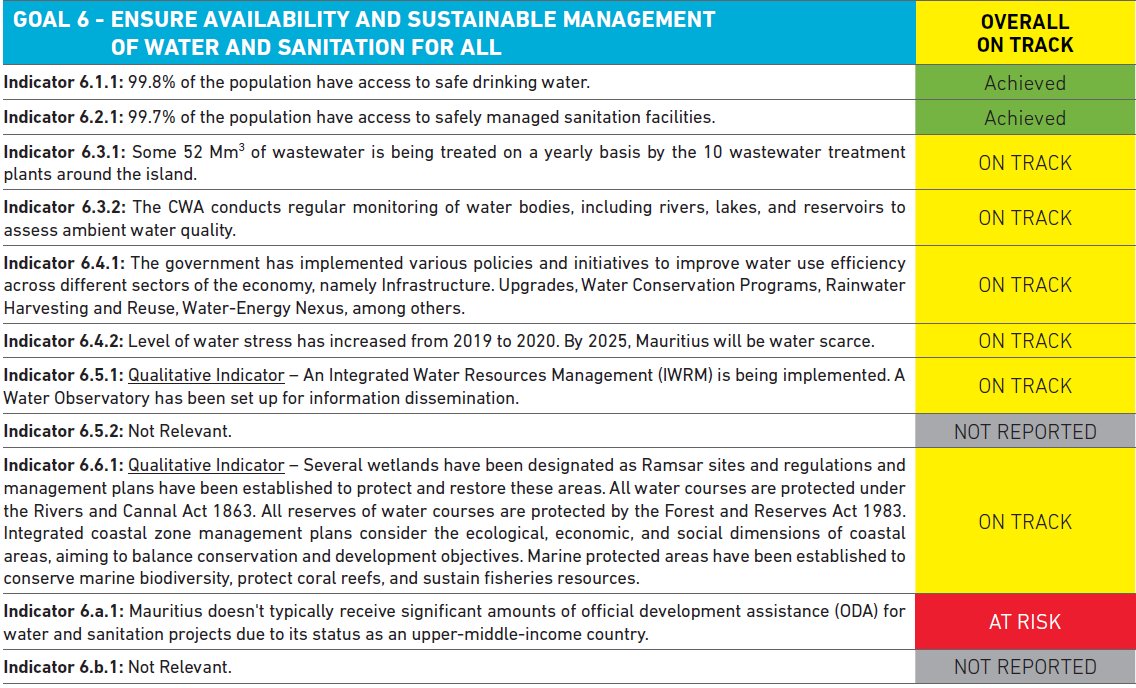
Key Achievements
Water Access and Infrastructure:
Mauritius maintains a robust system for providing clean water, supported by its welfare state commitment to basic services for all citizens.
Investments in water management infrastructure ensure reliable supply, critical for a Small Island Developing State (SIDS) with limited freshwater resources.
Sanitation and Public Health:
Universal access to sanitation facilities is a priority, with efforts to improve public health through adequate waste and water treatment systems.
Disaster response measures, such as aid following floods, indirectly protect water quality by addressing immediate contamination risks.
Sustainable Practices:
Nature-based solutions, like mangrove planting and coral farming, support water ecosystem health and resilience against climate impacts.
Policies align with sustainable resource use, reflecting Mauritius’ transition to a green economy.
Challenges
Climate Vulnerability: Frequent cyclones and flash floods threaten water quality and infrastructure, increasing contamination risks.
Resource Scarcity: As an island nation, limited freshwater availability poses ongoing challenges to meeting growing demand.
Opportunities and Future Outlook
Infrastructure Upgrades: Investments in climate-resilient water systems can enhance supply and quality sustainability.
Innovation: Leveraging technology and research partnerships can improve water management and sanitation efficiency.
Environmental Integration: Expanding nature-based solutions offers long-term benefits for water resource protection and ecosystem health.
Conclusion
Mauritius advances SDG 6 through widespread water and sanitation access, sustainable practices, and disaster resilience efforts. Challenges like climate impacts and resource constraints persist, but opportunities in infrastructure and innovation signal a pathway toward ensuring clean water and sanitation for all.