
NDC Action Plan (2021 - 2030)

The NDC Action Plan (2021 - 2030) has been developed to support the Republic of Mauritius  in the implementation of the updated Nationally Determined Contribution (NDC) submitted  to the Secretariat of United Nations Framework Convention (UNFCCC) on 05 0ctober 2021. The Action Plan is designed to provide overall clarity and guidance on the set of mitigation  and adaptation objectives and measures that have been indicated in the NDC 2021.     

NDC Action Plan (2021 - 2030)

The NDC Action Plan is considered to be a dynamic and living document that will be adjusted and adapted in light of any new climate related policy and/or strategy adopted at the national level.

The actions and interventions included in this Plan seek to address the key sectors  on mitigation and adaptation identified in the updated NDC.  On mitigation, they are energy, transport, waste, industrial processes and product use (IPPU), agriculture and land use, land  use change and forestry (LULUCF).  The adaptation sectors include agriculture, coastal zone,  fisheries and blue economy, health, infrastructure, tourism, water. 

The plan has also catered for cross-cutting sectors namely disaster risk reduction, gender, social security and education.   

Goals and Objectives of the NDC Action Plan

The Nationally Determined Contribution (NDC) Action Plan 2021-2030 is designed to guide Mauritius in implementing its climate commitments under the Paris Agreement. It provides a structured framework for mitigation and adaptation measures to transition towards a low-emission, climate-resilient economy.

The NDC Action Plan serves as a roadmap for Mauritius’ climate action, ensuring a coordinated, well-financed, and transparent approach to achieving its mitigation and adaptation targets. By integrating these actions into national policies, the country is positioning itself as a leader in climate resilience among Small Island Developing States (SIDS).


Key Goals and Objectives:

  1. Reduce Greenhouse Gas (GHG) Emissions

    • Target 40% reduction in emissions by 2030 compared to the Business-as-Usual (BAU) scenario.
    • Achieve this goal through a combination of renewable energy adoption, energy efficiency measures, and transport sector decarbonization.
  2. Strengthen Climate Resilience

    • Implement adaptation strategies across key sectors, including infrastructure, disaster risk reduction, coastal zones, water, biodiversity, agriculture, fisheries, and health.
    • Align national policies with the updated National Climate Change Adaptation Policy Framework (NCCAPF).
  3. Mobilize Financial Resources

    • Implement a blended financing approach, with 35% of funds from national sources (unconditional contributions) and 65% from international climate finance (conditional contributions).
    • Secure funding from mechanisms such as the Green Climate Fund (GCF), Global Environment Facility (GEF), Nationally Appropriate Mitigation Actions (NAMA) Facility. Note that Clean Development Mechanism (CDM) is now replaced by Article 6 of Paris Agreement.
  4. Enhance Policy Coordination and Stakeholder Engagement

    • Ensure the integration of climate strategies across different sectors and policies.
    • Promote stakeholder collaboration, including government agencies, private sector partners, and civil society organizations.
  5. Ensure a Transparent and Measurable Implementation Process

    • Develop a Monitoring, Reporting, and Verification (MRV) system to track progress in achieving the NDC targets.
    • Strengthen institutional capacity and planning to align future climate actions with sustainable development goals.

Alignment of the NDC Action Plan to National Policies and Strategies

The Nationally Determined Contribution (NDC) Action Plan 2021-2030 is built upon key national policies and strategies to ensure a coordinated, low-carbon, and climate-resilient development pathway for Mauritius. The plan aligns with existing strategies while also integrating new measures for mitigation and adaptation.

The NDC Action Plan is fully aligned with national policies, ensuring a structured and transparent approach to reducing GHG emissions and enhancing climate resilience. This integration enables Mauritius to effectively implement its climate commitments while fostering a sustainable, low-carbon future.

Mitigation
Adaptation 

Mauritius' mitigation strategy is rooted in sectoral policies that aim to reduce greenhouse gas (GHG) emissions and transition to a sustainable energy system. The NDC Action Plan builds on several existing policies to enhance energy efficiency and promote cleaner technologies.

Key Policies Supporting Mitigation:
  1. Energy and Renewable Energy

    • Renewable Energy Roadmap 2030: Targets 60% renewable energy by 2030.
    • National Biomass Framework: Supports the transition from coal to biomass energy.
    • Energy Efficiency/Demand Side Management Master Plan: Aims to reduce energy waste.
  2. Transport

    • Electric Vehicle Roadmap: Encourages the transition to low-emission vehicles.
    • Metro Express Expansion Plan: Reduces traffic congestion and carbon emissions.
  3. Waste and Industrial Emissions

    • Waste Management Strategy: Focuses on waste-to-energy initiatives and recycling.
    • HFC Phase-Down Plan: Reduces emissions from refrigerants under the Montreal Protocol.
  4. Agriculture & Forestry

    • Strategic Plan for Food Crop, Livestock, and Forestry: Encourages low-emission farming practices.
    • Forestry Protection and Reforestation Policies: Increase carbon sequestration through tree planting.
Future Considerations 
  • Continuous updates to integrate emerging low-carbon technologies.
  • Development of sector-specific GHG reduction targets.

Mauritius is vulnerable to climate-related disasters, such as coastal erosion, rising sea levels, and extreme weather events. The NDC Action Plan ensures adaptation efforts align with national strategies to protect communities, ecosystems, and infrastructure.

 
Key Policies Supporting Adaptation:
  1. Climate Risk Management

    • National Climate Change Adaptation Policy Framework (NCCAPF): Enhances resilience through nature-based solutions.
    • National Disaster Risk Reduction and Management Action Plan (NDRRMAP): Strengthens disaster preparedness.
  2. Water and Coastal Protection

    • Integrated Land Drainage Master Plan: Reduces flood risks and improves water management.
    • Coastal Zone Management Plan: Addresses coastal erosion and sea-level rise.
  3. Agriculture & Fisheries

    • Smart Agriculture and Sustainable Farming Initiatives: Improve food security in a changing climate.
    • Fisheries and Blue Economy Strategy: Enhances climate resilience of marine ecosystems.
  4. Health and Infrastructure

    • Climate-Resilient Health Systems Plan: Prepares for climate-related diseases.
    • Infrastructure Resilience Strategy: Strengthens public infrastructure against climate risks.
    •  
 
Future Considerations  
  • Integrating climate risk assessments into all national policies.
  • Enhancing public awareness and stakeholder engagement in adaptation measures.

Strategies and Action Plans

 Sectoral Mitigation
Sectoral Adaptation
Cross-cutting Sectoral
List of projects in the mitigation sectorsList of projects in the adaptation sectors 

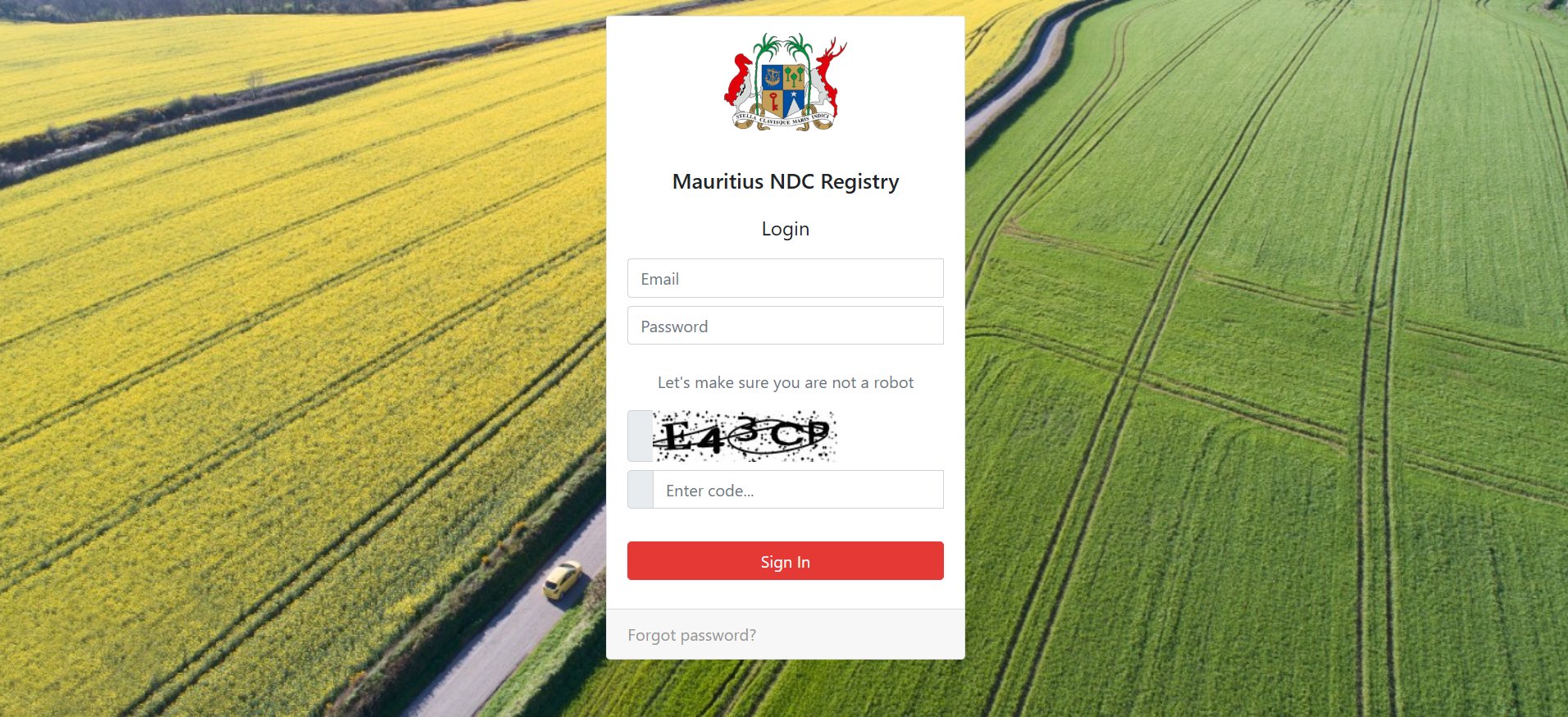
MauNDC Registry: Mauritius’ NDC Measuring, Reporting, and Verification (MRV) System

Under the Paris Agreement, Mauritius is required to monitor and report on the NDC implementation progress and achievement based on established targets and objectives for national climate change mitigation and adaptation. As such, the Ministry of Environment, Solid Waste Management and Climate Change (MoESWMCC) has developed the Mauritius’ NDC Registry Platform, entitled ‘MauNDC Registry’ under the Nationally Appropriate Mitigation Actions (NAMA) project in Mauritius. It serves as a Measuring, Reporting, and Verification (MRV) tool for tracking progress on the implementation of mitigation and adaptation actions outlined in Mauritius’ NDC Action Plan.  MAURegistry is a crucial digital tool for tracking, reporting, and verifying Mauritius' climate actions under its NDC framework. By ensuring transparency, accountability, and efficiency, the platform plays a key role in advancing the country's climate commitments and securing sustainable development in the face of climate change challenges.

The MauNDC Registry would enable MoESWMCC to monitor and report on the implementation and achievement of the NDCs, including both mitigation and adaptation policies and measures, actions plans and indicators. It also includes cross-cutting policies and measures from economic diversification plans with co-benefits for other areas of society such as resilience or health sector.

Purpose 

The primary objectives of the MAURegistry are to:

  1. Monitor NDC Progress – Track mitigation and adaptation measures across various sectors, including energy, transport, waste, agriculture, forestry, and disaster risk reduction.
  2. Ensure Transparency – Provide a centralized digital platform for recording and verifying climate actions, ensuring accountability at both national and international levels.
  3. Facilitate Reporting – Support Mauritius in meeting its obligations under the Paris Agreement, including reporting on climate actions, emissions reductions, and financial needs.
  4. Enable Data Sharing – Serve as a repository for stakeholders, including government agencies, private sector actors, and international partners, to access climate-related data and progress updates.
Stakeholders Involved  

The development and operation of the MAURegistry involve multiple stakeholders:

  • Department of Climate Change (DCC) – Oversees the overall implementation of the system.
  • Ministries & Government Agencies – Responsible for inputting data and monitoring progress in their respective sectors.
  • Private Sector & NGOs – Contribute data and collaborate on climate mitigation and adaptation projects.
  • International Development Partners – Utilize the platform to assess Mauritius’ climate progress and offer funding or technical support.
Key Features 
  • * Sectoral Data Collection & Reporting: Enables government ministries, agencies, and private stakeholders to report sector-specific climate actions.
  • Monitoring & Evaluation (M&E): Assesses the effectiveness of climate policies and projects, helping to improve implementation strategies.
  • Climate Finance Tracking: Records financial support mobilized for mitigation and adaptation projects, ensuring efficient resource allocation.
  • Emission Reduction Tracking: Provides real-time updates on Mauritius’ greenhouse gas (GHG) emissions reductions and progress toward NDC targets.
Importance of MauNDC Registry for Mauritius
  • Strengthens data-driven decision-making in climate action.
  • Enhances Mauritius’ credibility in global climate negotiations by providing transparent reporting on progress.
  • Supports evidence-based policy formulation for climate resilience and sustainability.
  • Helps secure international climate finance by demonstrating effective implementation and tracking mechanisms.