
Mauritius is a small island nation with a diverse range of terrestrial habitats, each playing a vital role in supporting the island's biodiversity. Agricultural land is a managed agroecosystem where production and environmental outcomes are shaped by farming practices. Agroecological practices, integrated pest management, functional biodiversity, soil-health practices, crop rotation, vegetative cover and reduced reliance on synthetic products can contribute to biodiversity-friendly farming when properly implemented.
Biodiversity-Related ODE Sites:
- Rodrigues Biodiversity: Terrestrial (Flora; Fauna); Coastal & Marine; Wetlands;
- Mauritius Biodiversity: Terrestrial (Flora; Fauna); Coastal & Marine; Wetlands;
- National Parks and Conservation Service: Flora; Fauna; Islet Biodiversity; Ramsar Sites - Wetlands; Protected Endemic Sanctuaries;
Terrestrial Biodiversity | ||
The flora and fauna of Mauritius has a relatively high level of diversity and endemism as a result of the island’s location, age, isolation and varied topography. Rodrigues is recognized for its unique but highly threatened terrestrial biodiversity. The island's ecological challenges include significant species extinction and endangerment, particularly among its native fauna and flora. Biodiversity is essential for maintaining ecological balance and providing vital services such as erosion control, flood control, carbon sequestration, and temperature regulation. The National Parks and Conservation Service (NPCS) and the Forestry Service are institutions which have initiated several actions to raise public awareness and education on the conservation of Mauritian native biodiversity together with the promotion of ecotourism. The Mauritian Wildlife Foundation (MWF) plays a crucial role in conserving the unique biodiversity of Mauritius, spearheading efforts to restore native habitats, reintroduce endangered species, and educate the public on environmental protection. The Gerald Durrell Endemic Wildlife Sanctuary (GDEWS), also known as the Black River Aviaries, has been set up in 1976 by the Forestry Service and International Council for Bird Preservation (now Birdlife International) for saving endangered birds and bats, endemic to Mauritius and Rodrigues. The sanctuary is run jointly by the National Parks and Conservation Service and Mauritian Wildlife Foundation, with the help of the Durrell Wildlife Conservation Trust. | 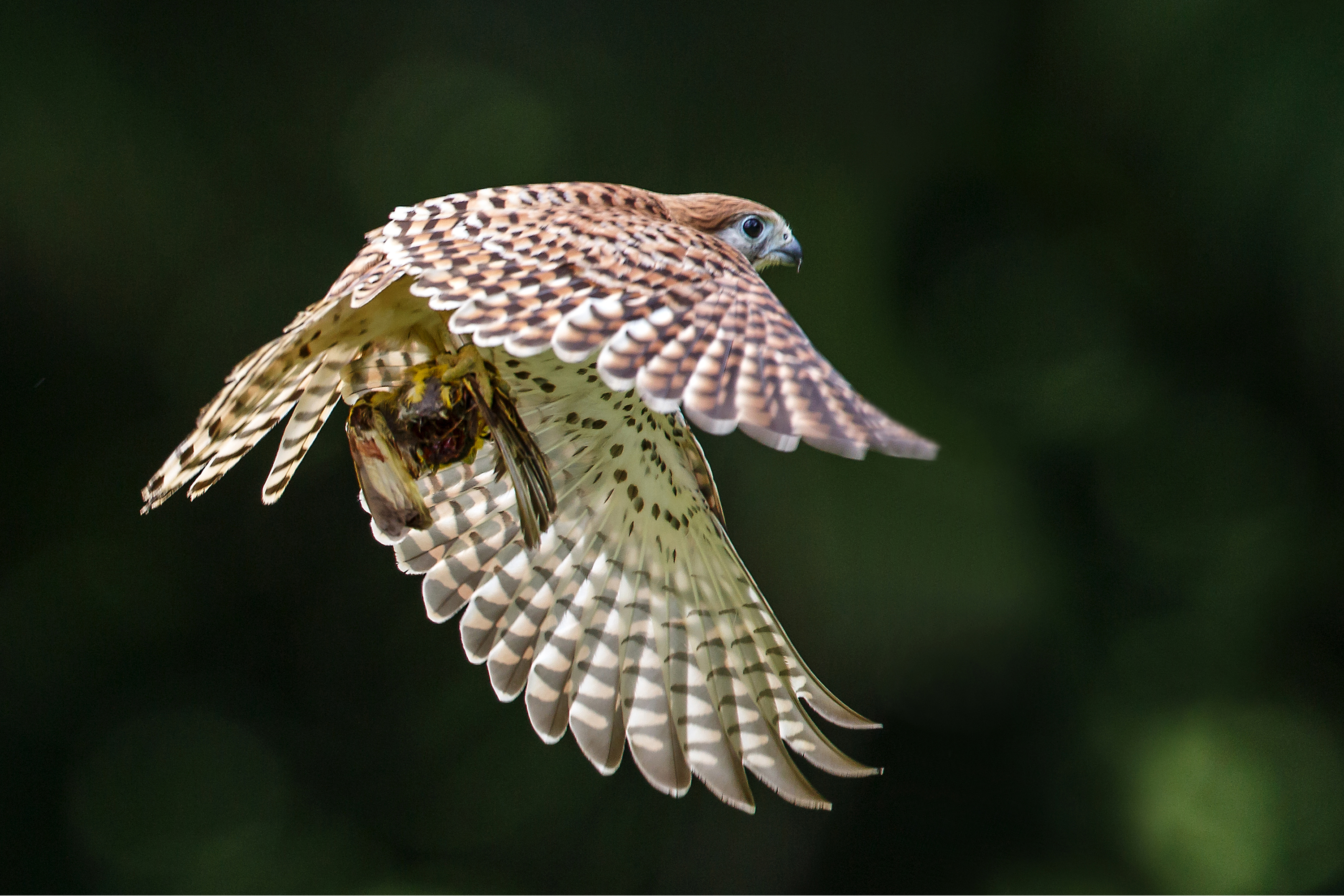 Mauritius Kestrel - credit: Jacques de Spéville (MWF) 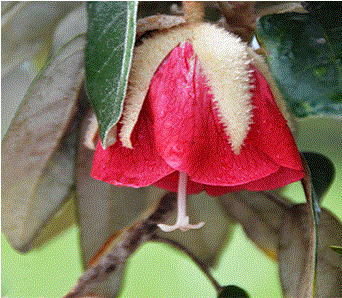 | |
Forest Biodiversity | ||
Forests, both in Mauritius and Rodrigues, are inhabited by a diversity of indigenous flora and fauna. The forests of Mauritius, though diminished over the years due to human activity, remain crucial ecosystems. They are home to a variety of unique and endangered plant and animal species. Efforts are ongoing to protect and restore these forests. In contrast to the lush forests, agriculture is another important terrestrial habitat. The fertile lands of Mauritius support various crops and plantations. While agriculture is essential for the country's economy and food production, it's also a habitat for diverse species like pollinators and crop pests. Despite the reduction of its forests due to human activities, these areas remain essential for hosting endangered species and are under active restoration. Agriculture also plays a vital role, supporting the economy and providing habitat for species like pollinators. | 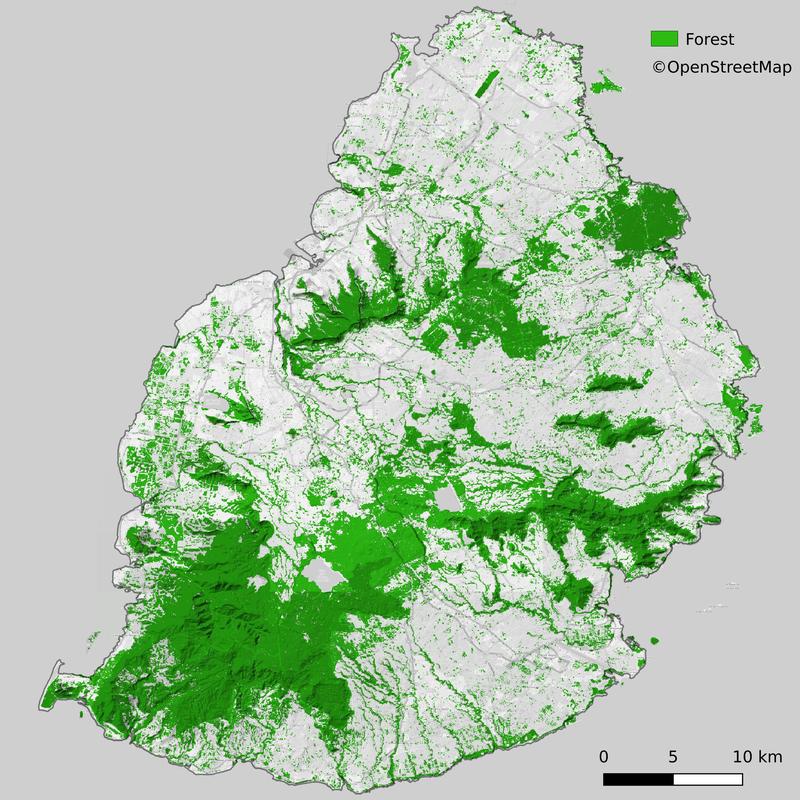 | |
The status of fauna in Mauritius shows that snails and birds are in fact of more concern, as shown below:
|
Agricultural Land Biodiversity | |
Agricultural land refers to the share of land area that is arable, under permanent crops, and under permanent pastures. Agricultural land is an important terrestrial habitat for biodiversity since it plays a significant role in shaping and supporting various plant and animal species. While the primary purpose of agricultural land is to produce food and other agricultural products, sustainable farming practices and agroecosystems can contribute to biodiversity conservation. The type and degree of biodiversity in agricultural land can vary significantly based on factors like the type of crops grown, farming practices, and regional climate. It is therefore important to adopt the concept of agroecosystem. The different crop species and varieties grown on agricultural land can provide habitat and food sources for various wildlife, including birds, insects, and small mammals. Agricultural land (% of land area) in Mauritius was reported to be at a peak of 56.2% from 1976-1987 down to 43.06% in 2021 (Figure 1a) of which 37.56 % was arable land. As seen in the Figure 1b below, the percentage of agricultural irrigated land showed a peak of 23.1% in 2002 and was down to 17.8% in 2021. Sugarcane is the dominant crop in Mauritius, covering about 50,000 ha—roughly 75% of arable land. While the structure has evolved, historical data show that around the 1990s, about nineteen large estates accounted for ~55% of cane area, with the remainder held by thousands of small planters. | |
Figure 1a | |
Figure 1b
| |
The flora and fauna of Mauritius has a relatively high level of diversity and endemism as a result of the island’s location, age, isolation and varied topography. |
Main Threats
The main threats affecting plant diversity are :
- genetic erosion,
- small population sizes and fragmentation,
- invasive alien species (destruction of the linkage between flora and fauna) and
- climate change (NPCS).
However, certain damaging invasive species that are present in Mauritius such as monkeys and red whiskered bulbuls (Pycnonotus jocosus) for example have not been introduced to Rodrigues. The physical isolation of Rodrigues presents opportunities for invasive species prevention and management. However, the fact that it is politically part of the Republic of Mauritius makes the imposition of the necessary biosecurity measures a challenge. Similar biosecurity challenges and opportunities exist for the islets around Mauritius and Rodrigues and the Outer Islands that are part of the Republic of Mauritius. Consequently habitat restoration is a priority in Mauritius and Rodrigues. All islands have recently greatly advanced some aspects of plant conservation, while gaps are also apparent. Advances include conservation strategies, ex situ conservation. Gaps include lack of government support (Mauritius, Rodrigues) and of local scientific expertise (Baider et al., 2010).
IUCN Red List Categories | ||
The IUCN Red List is the world’s most comprehensive information source on the global conservation status of wild species and their links to livelihoods. Far more than a list of species and their status, it is a powerful tool to inform and catalyse action for biodiversity conservation, critical to protecting the natural resources we need to survive. | Positive trends have been registered for endemic species of which 5 fauna species (4 birds and 1 bat) have been down-listed the last four years on IUCN Red List of Threatened Species from Critically Endangered to Endangered (Mauritius echo parakeet (Psittacula eques), Mauritius fody (Foudia rubra)), Endangered to Vulnerable (Mauritius fruit bat (Pteropus niger)), and Vulnerable to Near Threatened (Rodrigues fody (Foudia flavicans), Rodrigues warbler (Acrocephalus rodericanus)). Negative trends have been registered for two bird species: Mauritius kestrel (Falco punctatus) and Mauritius cuckoo-shrike (Coracina typica) from 2002 to 2013. In 2010, largely due to the habitat restoration work, the population of Rodrigues warbler has increased from 30 individuals in 1970s to 4,000 individuals in 2010. In Rodrigues, the protection and monitoring of fauna concerns the Rodrigues fruit bat (Pteropus rodricensis), and two endemic and endangered birds species: the Rodrigues fody and the Rodrigues warbler. The major threats to these species are IAS, cyclones and habitat loss. | Number of threatened species per major taxonomic group:
source: IUCN |
| ACCESS OPEN DATA FOR THESE INDICATORS AND MORE | MCA Smart Agriculture Smart Agriculture Phase 2 report MCA sugar statistics Invasive alien plant and animal species Fauna population, Republic of Mauritius Flora population, Republic of Mauritius Status of endangered flora Evolution of some fauna population of endemic species, Republic of Mauritius Areal estimates for the various Environmentally Sensitive Areas (ESA) by type and sub-category, Republic of Mauritius Terrestrial protected areas, Republic of Mauritius Forest area by category Changes in forest-land cover Forest plantations by type of plants |