
Biodiversity-Related ODE Sites:
- Rodrigues Biodiversity: Terrestrial (Flora; Fauna); Coastal & Marine;
- Mauritius Biodiversity: Terrestrial (Flora; Fauna); Coastal & Marine; Wetlands;
- National Parks and Conservation Service: Flora; Fauna; Islet Biodiversity; Ramsar Sites - Wetlands; Protected Endemic Sanctuaries;
Coastal and Marine Habitats |
Coastal and Marine habitats have a relatively high salt or salinity content, with seawater typically containing around 3.5% salt (35 parts per thousand). They cover the majority of the Earth's surface, with a range of diverse ecosystems from the shallowest coastal zones to the deepest ocean trenches. Environmental CharacteristicsMarine habitats experience a narrower range of temperature variations compared to freshwater habitats, with temperatures generally becoming cooler as depth increases. Furthermore, the oxygen concentrations tend to be lower in deeper waters due to reduced mixing and photosynthetic activity. As depth increases, the water pressure in marine habitats rises significantly. Biodiversity and AdaptationsMarine habitats support a remarkable biodiversity including microorganisms, fish, invertebrates, marine mammals, coral reefs, algae, and other aquatic plants. Marine organisms have developed specialized adaptations to cope with the challenges of living in saltwater environments, including dealing with high salinity, pressure, and fluctuations in temperature and light levels. Human Impacts and Conservation IssuesMarine habitats are increasingly impacted by human activities, including overfishing, pollution, habitat destruction, and climate change. These impacts can have significant consequences for marine ecosystems. Climatic Significance of OceansOceans play a crucial role in regulating the Earth's climate by absorbing and distributing heat. They also store large amounts of carbon, influencing global carbon cycles. Ocean currents and tides play a significant role in shaping marine habitats, affecting the distribution of nutrients and organisms. They also influence climate patterns and weather. |
Coastal and Marine Biodiversity | ||
The coastal region comprises sandy beaches, coastal dunes, rocky shores, nearby wetlands, and mangroves. Additionally, the area includes lagoon corals. fringing coral reefs, seagrasses along with their diverse marine life. Marine biodiversity plays a crucial role in supporting the local economy and community well-being through a variety of ecosystem services. These services range from provisioning (such as food and medicine), to regulatory functions (including climate regulation and coastal protection), to cultural benefits (providing recreational and spiritual enrichment). According to the National Marine Ecosystem Diagnostic Analysis of 2012, the estimated economic value of these services was some $31.2 trillion. As a small island, Mauritius depends heavily on its coastal ecosystems, particularly for its tourism industry, which features many coastal-based hotels. The coastal communities, especially fishers, also rely deeply on these resources. Thus, the health of these ecosystems is vital for sustaining both local livelihoods and the tourism sector, enhancing recreational opportunities for residents and visitors alike. | ||
Rodrigues' biodiversity in certain taxa is somewhat limited compared to other regions, exhibiting gaps in species that are typically found elsewhere in the area. More.. Mainland Mauritius is encircled by a 322 km long coastline, bordered by 150 km of protective coral reefs that enclose approximately 243 km² of lagoon areas. Mauritius is rich in marine biodiversity: Coral reefsFive types of reefs: fringing, reefs, atolls, reef flats and barrier reefs; 43 genera of hard corals; 159 species from 16 families [National Biodiversity Strategy and Action Plan 2017 – 2025]. One endemic coral: acropora rodriguensis. The fringing coral reef plays a pivotal role in shielding the Mauritian coastline from waves originating in the open ocean, contributing significantly to tropical ocean ecology. (More..) AlgaeThe algal flora is rich with over 160 genera of marine algae having been identify in coastal waters. Over 36 species of seaweeds have been identified in Mauritian waters, including enteromorpha, ulva, sargassum, caulerpa spp., padina and halimeda. MacrofaunaMacrofauna consists of 10 major faunal groups consisting of polychaetes, pelecypods, isopods, ophiuroids, tanaidaceans, amphipods, gatropods, branchiopods, echiurid worms, and sipunculids. Polychaetes are the most important macrobenthic group, followed by peracarid crustaceans and molluscs. Among crustaceans, the isopods are more frequent than either amphipods or tanaidaceans. Benthic (seabed) faunaWhile comprehensive data on the distribution of benthic fauna around Mauritius are limited, available research indicates a significant presence of commercially valuable marine species such as crabs, shrimps, lobsters, molluscs, octopuses, and sea cucumbers. In Rodrigues, there has been a noted decline in the abundance of these species, yet they continue to hold considerable commercial value. Numerous species of crabs, shrimps, lobsters, molluscs, octopuses, and sea cucumbers thrive in abundance and hold significant commercial value. In Mauritius, fisheries target four crab species and five species of penaeid shrimps, along with two species of deep-water shrimps. Additionally, two types of lobsters are harvested in the waters around Mauritius and St. Brandon. The marine invertebrate population also includes polychaetes, bivalves, and isopods. Among other marine groups, amphipods play a crucial role, while among crustaceans, isopods are more prevalent than either amphipods or tanaidaceans. FishAround 340 species of fish have been identified in the waters of Mauritius. DNA-based assessment of market fish resulted in the identification of 186 fish species, comprising 41 unreported species and three potentially new species. Around 40 are of economic importance within the inshore area, with a different composition and relative abundance in the near shore waters of each island within the country. The main families of fish that are caught are lethrinids, siganids, mullets, scarids and groupers. Reef and demersal fish (fish that feed at the bottom of seas or lakes) stocks are over-exploited and no substantial increase in fish production in these areas is expected in future. (see also databases). More.. MangrovesMauritius hosts two mangrove species, Rhizopora mucronata and Bruguiera gymnorhiza, with an estimated total mangrove cover of around 181 hectares. Mangrove wetlands act as a natural buffer, regulating surface water runoff to the lagoon by neutralising pollutants, nutrients, and sediments that could otherwise harm the lagoon ecosystem. Mangroves serve as a crucial habitat for juvenile fish and invertebrates. More.. Marine MammalsThe Exclusive Economic Zone (EEZ) of Mauritius is also home to various marine mammals, including dolphins, whales, seals, sea lions, and the now-extinct dugongs, which were once common in Mauritian lagoons but disappeared due to extensive hunting and predation. Seventeen species of marine mammals have been recorded, mostly during migrations between Antarctica and tropical regions for calving. Dolphins are more commonly sighted than whales, though specific breeding and nursery grounds for dolphins have not been identified. Whale watching has become a popular tourist attraction in Mauritius, and marine mammals are protected under the Fisheries Act of 2023. Marine ReptilesMarine turtles such as the hawksbill and green turtle are frequently seen in shallow coastal waters of Mauritius. Although the population trends of these turtles are unclear, there are concerns about potential declines. BirdsInformation on seabirds and shoreline birds in Mauritius is relatively scarce. The Rivulet Terre Rouge Estuary Bird Sanctuary, located in the northeastern part of the island near Port Louis Harbour, functions as a crucial wintering habitat and tidal mudflat for migrating shorebirds. According to a bird survey conducted in 1997, the sanctuary annually hosts between 100 and 1,000 migratory birds. This includes 11 regular species and 4 to 5 vagrant species, highlighting its importance as a biodiversity hotspot for avian species. | 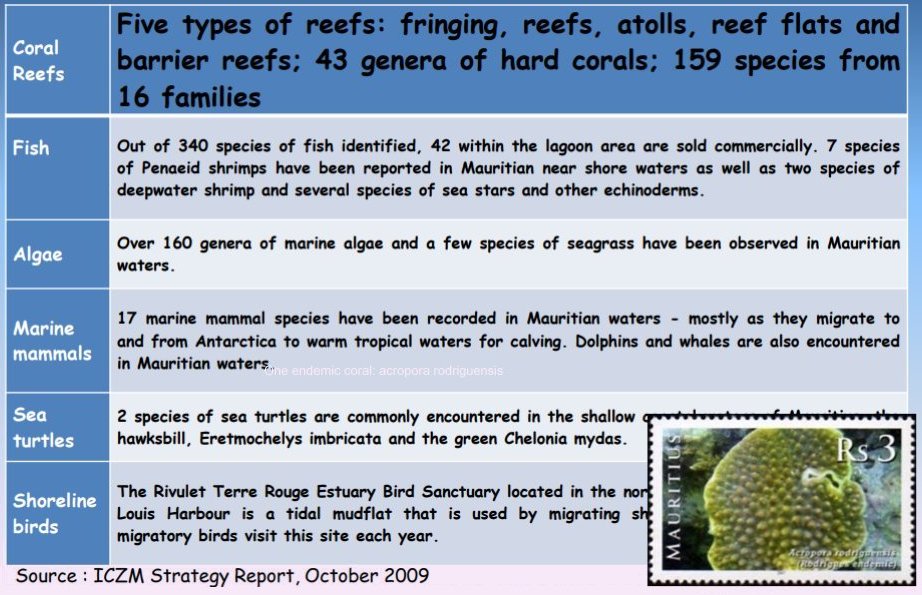
Click on Image for enlarged version
| |
.jpg)