
We detail the critical state of terrestrial biodiversity in Rodrigues, outlining the primary threats and highlighting the urgent need for comprehensive strategies to mitigate these challenges and preserve the island's natural heritage. It also details the proactive measures Rodrigues is undertaking to enhance terrestrial biodiversity conservation. These efforts are crucial for maintaining the island's ecological balance and ensuring sustainable development in the face of global environmental challenges.
Biodiversity-Related ODE Sites:
- Rodrigues Biodiversity: Terrestrial (Flora; Fauna); Coastal & Marine; Wetlands;
- Mauritius Biodiversity: Terrestrial (Flora; Fauna); Coastal & Marine; Wetlands;
- National Parks and Conservation Service: Flora; Fauna; Islet Biodiversity; Ramsar Sites - Wetlands; Protected Endemic Sanctuaries;
Rodrigues is recognized for its unique but highly threatened terrestrial biodiversity. The island's ecological challenges include significant species extinction and endangerment, particularly among its native fauna and flora. Biodiversity is essential for maintaining ecological balance and providing vital services such as erosion control, flood control, carbon sequestration, and temperature regulation.
Flora |
Historical accounts paint a picture of Rodrigues as a lush island with dense forests dominated by endemic ebony trees. Sadly, these forests have been largely cleared for agriculture and firewood. The island's rich flora comprises around 270 different species, including trees, shrubs, herbs, and climbers. The national flower of Mauritius, Trochetia Boutoniana, is also found on Rodrigues. It has bright red tubular flowers that bloom in abundance. MORE: Flora (Mauritius, Rodrigues)
| 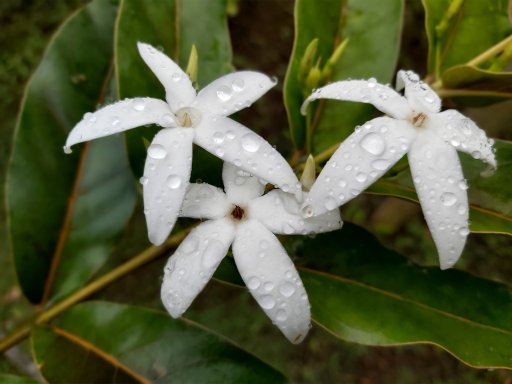 cafe marron flowering (courtesy: MWF) |
Fauna |
Rodrigues was once home to a unique and diverse range of animal species, many of which were found nowhere else on Earth. Historically, the island supported large populations of endemic birds and reptiles, including the now-extinct Rodrigues Solitaire—a flightless bird closely related to the dodo. Today, while much of the original fauna has been lost due to habitat destruction and introduced species, Rodrigues still harbors important biodiversity. Notable fauna includes the Rodrigues Fruit Bat (Pteropus rodricensis), one of the world’s rarest flying foxes, which is now under active conservation. The island’s coral reefs and lagoons are rich in marine life, supporting a variety of fish, invertebrates, and sea turtles. Rodrigues remains a priority site for species recovery and ecological restoration in the region. | 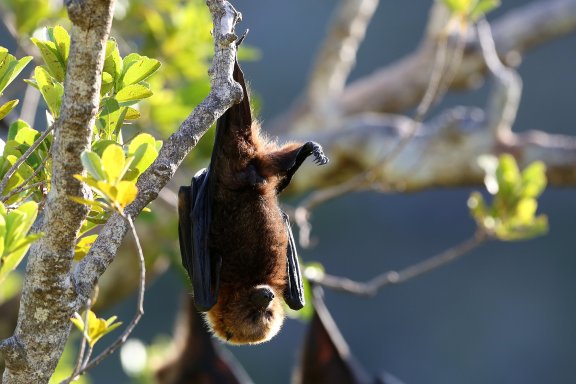 Pteropus rodricensis [courtesy: top: MPC; bottom: Jacques de Speville) |
Threats to Biodiversity |
The spread of invasive alien plant species, such as Acacia nilotica, poses a severe threat to native biodiversity. Management efforts focus on protecting native species unless alien species are deemed crucial for the survival of native ones. Deforestation, inappropriate land management, and climate change impacts are leading to the degradation of Ecologically Sensitive Areas (ESAs). This includes a decline in fodder productivity and crop yields, which affects the island's overall ecological health.
Invasive Species and Biodiversity ThreatsThe spread of invasive alien plant species, such as Acacia nilotica, poses a severe threat to native biodiversity. Management efforts are primarily focused on protecting native species unless the alien species are deemed essential for the survival of native ones. Factors such as deforestation, inappropriate land management, and the impacts of climate change are leading to the degradation of ESAs. This includes a decline in fodder productivity and crop yields, which affects the island's overall ecological health. Conservation Efforts in RodriguesThe Rodrigues Environmental Education Programme aims to raise awareness among local communities about the importance of biodiversity conservation. Notable areas include the Rodrigues Integrated Agriculture Research Park and the François Leguat Giant Tortoise and Cave Reserve, which are crucial for preserving Rodrigues' unique terrestrial biodiversity. Grande Montagne, Anse Quitor, Île aux Sables, and Île aux Cocos have been designated as nature reserves under the Forest and Reserves Act of 1983. These reserves are essential for conserving endangered plants such as Zanthoxylum paniculatum, Polyscias rodriguesiana, Badula balfouriana, and Gouania leguatii. Fragments of native forest are rich in biodiversity but are highly threatened by alien invasive plants, exotic animals which prevent their regeneration, and development projects such as roads, hotels, and the airport. Café Marron, known for its medicinal properties, is an example of a highly threatened native plant in Rodrigues. Community Involvement and International SupportPlants are propagated by NGOs and government-run nurseries. A highly successful project funded by the EU employs villagers in village nurseries to grow plants. A community educator from the Mauritian Wildlife Foundation regularly visits primary schools to raise awareness about environmental issues and the importance of conservation. A recent project funded by the UNDP GEF SGP, "Sustainable use of Rodriguan Endemic plants," has established areas for plants used for medicinal and artisanal purposes, providing material for villagers for traditional practices. Studies on the use of different types of Vacoas, an important plant in the handicraft sector, are also underway to support local industries. These structured efforts reflect a comprehensive approach to tackling environmental challenges in Rodrigues, focusing on education, protection, and sustainable use of natural resources. | Nature Reserves
| |
Conservation Challenges and Policy Gaps
| ||
Strategic Needs for Improvement
| ||
Terrestrial Biodiversity Management in Rodrigues |
Conservation Goals and Strategies
Institutional Coordination and Public Engagement
Educational and Awareness Programs
Community-Led Conservation Projects
|
Policy orientation and related strategies for terrestrial biodiversity in Rodrigues |
The comprehensive policies and strategies aimed at achieving the set objectives are detailed below (RoM 2022):
# | Policy Recommendation | Strategy |
1 | To ensure that all current and future developments maintain the integrity of existing biodiversity or improve its preservation and that any loss of ecosystem services be compensated accordingly, using Strategic Environmental Assessment and Natural Capital Accounting. |
|
2 | To increase awareness, participation and engagement of stakeholders at all levels for the protection of terrestrial biodiversity. |
|
3 | To improve, coordinate, and harmonise institutional and legislative frameworks, enhance accountability and transparency, and effectively enforce terrestrial biodiversity conservation. |
|
4 | To provide financial support and fiscal incentives to the private sector and NGOs to promote biodiversity conservation and its sustainable use and remove incentives and easements that threaten biodiversity. |
|
5 | To promote research, baseline data, and access to such data to support evidence-based policy and management of terrestrial biodiversity. |
|
6 | To secure existing biodiversity conservation areas and create new ones across Rodrigues. |
|
7 | To make the transition towards and encourage the adoption of organic agriculture or climate-smart agriculture to enhance the economic and social environment and to promote livestock herd management system to sustain and nurture basic natural resources. |
|
8 | Promote livestock herd management system to sustain and nurture basic natural resources. |
|