Geography: - Area: 108 km² (18.3 kilometers long, 6.5-8 kilometers wide)
- Location: 650 km northeast of Mauritius; Coordinates: Latitude: 19°43”S and Longitude: 63°25”E
Climate: Mild tropical maritime Relief: - Mascarene archipelago (Youngest and smallest island)
- Volcanic in origin, featuring a central ridge and steep slopes leading down to a coral reef that surrounds the island.
- Highest peak: Mont Limon, 398 m
- Lagoon: 240 km² (width: 50 m to 10 km); 6 MPAs
- Reef: Fringing reef, 90 km
- Islets: At least 18
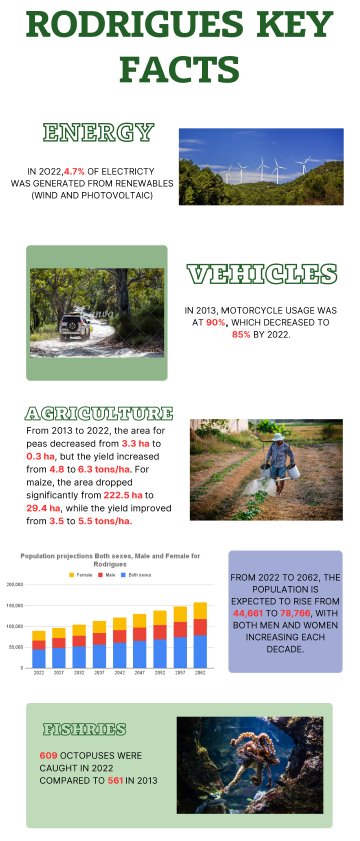
Population: - Total Population: Population 44,661 (Estimated, mid-2022)
- Demographics: The population is predominantly Creole, with a mix of African, Malagasy, and European ancestries.
Political Status: - Granted autonomous status in 2002, which includes its own Regional Assembly and Executive Council to govern local affairs.
- The island is administratively divided into 14 districts.
Economy: - Main Industries: The economy is primarily based on fishing, agriculture, and tourism.
- Agriculture: Key products include livestock, vegetables, and tropical fruits.
- Tourism: Known for its beautiful beaches, unique flora and fauna, and cultural heritage, tourism is a growing sector.
Environment: - Biodiversity: Rodrigues is home to several endemic species of flora and fauna. Conservation efforts are significant due to the fragile ecosystem.
- Natural Resources: Natural resources cautiously used, with a focus on sustainable practices due to its vulnerability to environmental challenges like soil erosion and water scarcity.
Infrastructure: - Transport: Rodrigues has one airport, Sir Gaëtan Duval Airport, which connects it to Mauritius and other destinations.
- Education: The island is equipped with basic educational facilities.
- Health: The island is equipped with basic health facilities, although more complex cases are often referred to Mauritius.
Culture: - Languages: Rodriguan Creole; English and French are also widely used, especially in official contexts.
- Festivals and Music: Local culture is rich with festivals like the Festival Kreol, traditional Sega music, and unique culinary traditions.
| |  |